Archive for the ‘Partners In Crime’ Category

Chaos at Carnegie Hall by Kelly Oliver Banner

Chaos at Carnegie Hall

by Kelly Oliver

December 5 – 30, 2022 Virtual Book Tour

Synopsis:

Chaos at Carnegie Hall by Kelly Oliver

Agatha Christie meets Downton Abbey in the Fiona Figg and Kitty Lane Mystery series opener.

Can Fiona catch a killer and find a decent cup of tea before her mustache wax melts?

1917. New York.

Notorious spy, Fredrick Fredricks, has invited Fiona to Carnegie Hall to hear a famous soprano. It’s an opportunity the War Office can’t turn down. Fiona and Clifford are soon on their way, but not before Fiona is saddled with chaperon duties for Captain Hall’s niece. Is Fiona a spy or a glorified babysitter?

From the minute Fiona meets the soprano aboard the RMS Adriatic it’s treble on the high C’s. Fiona sees something—or someone—thrown overboard, and then she overhears a chemist plotting in German with one of her own countrymen!

And the trouble doesn’t stop when they disembark. Soon Fiona is doing time with a group of suffragettes and investigating America’s most impressive inventor Thomas Edison.

When her number one suspect turns up dead at the opera and Fredrick Fredricks is caught red-handed, it looks like it’s finally curtains for the notorious spy.

But all the evidence points to his innocence. Will Fiona change her tune and clear her nemesis’ name? Or will she do her duty? And just what is she going to do with the pesky Kitty Lane? Not to mention swoon-worthy Archie Somersby…

If Fiona’s going to come out on top, she’s going to have to make the most difficult decision of her life: the choice between her head and her heart.

Book Details:

Genre: Historical Cozy Mystery
Published by: Boldwood Books
Publication Date: November 2022
Number of Pages: 298
ISBN: 9781804831564
Series: The Fiona Figg Mysteries
Book Links: Amazon | Barnes & Noble | Goodreads

Read an excerpt:

* * *

Inside, the cabin was the opposite of Hugo Schweitzer’s. Whereas the German’s room was disorderly and repulsive, this man’s berth was tidy and attractive. In fact, it hardly looked occupied. The bed was made in a neat military style. There wasn’t an article of clothing nor a personal item in sight. A faint scent of pine and citrus graced the room. Like a familiar embrace, the uniform order and pleasing smell put me at ease.

Hugo Schweitzer’s disgusting mess had allowed clues to remain hidden in plain sight. This man’s neatness required clever hiding places. Where would I hide a secret document in this room? Under the mattress? In the wardrobe? Sewn inside an article of clothing?

I crossed the room. Getting to the wardrobe was considerably easier than it had been in Schweitzer’s clutter. When I opened the wardrobe, a waft of pine and citrus caressed my nostrils again. I thought of Archie. When would I see him again?

Concentrate, Fiona. Now was not the time to behave like a lovesick schoolgirl.

Two neat suits hung on hangers, spaced apart like sentries guarding a gate. One was a uniform. A British uniform. Could this traitor be in the British army? The other was a black evening suit. Whatever the blackguard was wearing under that trench coat constituted his third and final outfit. There were no more.

Standing to attention at the bottom of the wardrobe were two tall black boots. I bent down to get a closer look. Inside a boot would make a decent hiding place.

“Looking for something?” a man’s voice boomed from behind me.

I gasped and squeezed my eyes shut tight.

If only I were wearing my maid’s costume—although what maid would be cleaning at this time of night? I should have changed into Harold the helpful bellboy. At least then I’d be dressed as a man. As it was, I was wearing a flimsy evening gown and as vulnerable as a lamb in a ship full of wolves. Did I dare turn around and face my accuser?

“Did you find it?” The voice was closer now… and softer… and familiar.

Good heavens. I whipped around and practically flew into his arms. “Archie.”

He chuckled. “I should have known I’d find you breaking into my room.” He pulled me into an embrace. “Fiona. Dear Fiona.” He kissed the top of my head.

I buried my head in his shoulder. Ahhh. The scent of pine and citrus… and those horrible Kenilworth cigarettes. The scent of Lieutenant Archie Somersby.

My heart was racing. From being scared out of my wits, or from being in Archie’s embrace, I didn’t know. “What are you doing here?”

“I could ask you the same.” He held me tighter.

“You, first.” I inhaled his familiar presence.

“I will tell you, but only because it’s necessary.” He pulled out of the embrace and held me out at arm’s length. “It’s crucial that you don’t expose me.”

“Expose you?” I had to censor my imagination. His earnest green eyes framed by those dark lashes and that wild lock of chestnut hair falling across his forehead made it deuced difficult.

“I’m on an important mission.” He fortified his countenance with a steely gaze. “You mustn’t let on that you know me. In fact, you should stay away from me.” He pulled a gold pocket watch out of his waistcoat pocket and glanced at it.

I pulled my arm out of his grip. “Does your mission involve Hugo Schweitzer?” My tone was pained, but I couldn’t help it. I wished my feelings for him weren’t so strong. After all, I hardly knew him. Still, I knew he worked for British Intelligence, despite Fredrick Fredricks’s accusations to the contrary. Afterall, who was more trustworthy? A German spy or a British soldier, an especially attractive one too?

Archie tilted his head and gave me a quizzical look. “How did you know?”

“I saw you together earlier on deck.” Without a doubt, the trench coat and fedora Archie was wearing, along with his sleek silhouette and graceful gait, were identical to those of my mysterious compatriot and Hugo Schweitzer’s clandestine companion.

He laughed. “I should have known that was you watching us.” He kissed me on the cheek. “Fiona, you’re an ace. I’ve never met a girl quite like you.” His eyes danced mischievously.

The way he was laughing, I didn’t know whether to be insulted or flattered. Wait a blooming minute. “Did you forget something?” I’d seen that amused expression before. “Why did you return to your cabin?”

“To catch you in the act, love.” Archie grinned.

“So, you saw me in the corridor?”

He raised his eyebrows and nodded. “Afraid so.”

I punched his shoulder. “And instead of saying anything, you pulled this trick?”

“I’m sorry.” He intercepted my hand and brought it to his lips. “Can you forgive me?”

I pulled out of his grip. “Only if you can tell me about Mr. Schweitzer and the chemists’ war.”

“You know I can’t do that.” He sighed. “It’s classified.”

“What does the war have to do with aspirin, the headache remedy?”

He led me to the bed, sat down, and patted the bedcover, inviting me to sit too.

My cheeks flamed. It was only then that I realized I was alone in a gentleman’s room… after midnight, no less. Dilly Knox’s words echoed through my head. “Our Fiona will do anything for King and country, don’t you know.” That only strengthened my resolve. I was on official business and not a romantic getaway.

I took a seat on the bed and tucked my gown tightly around my thighs. “You were going to tell me about aspirin?”

“You’re nothing if not persistent.” Archie smiled and put his arm around my shoulders.

I scooted to the head of the bed and out of his reach. “Aspirin?”

He shook his head. “You really are quite a girl.”

I folded my arms over my chest and glared at him.

“Righto.” His smiled faded. “Aspirin is made from a chemical called phenol.”

Phenol. I’d heard Hugo Schweitzer mention it. And phenol was in the letter from the Kaiser. The Kaiser’s letter. Should I tell Archie about the letter? Or report it to Captain Hall first? “What does phenol have to do with the war?”

“We need phenol to make trinitrotoluene.” Archie gave me a knowing look.

I gave him an ignorant stare in return. “What is trinitrotoluene?”

“TNT.”

“The explosive?”

He nodded.

“Golly.” Still, why did it matter if aspirin and TNT shared one element? How did that affect the war? Could aspirin be turned into an explosive?

“Golly is right.” When he smiled, tiny dimples appeared at the corners of his mouth.

I had to stop myself from reaching across the bed to touch that tempting lock of wavy hair… and those dimples. Stop it, Fiona. You’re on an espionage mission and not on holiday. A holiday with Archie… how divine. Stop! Just stop.

“I’m sorry we can’t work together in the open.” He took my hand and kissed it. “But for now, I’m undercover and I have to stop Schweitzer at all costs.”

“I have a confession.” I sat on my hands to keep from touching him. “I broke into Hugo Schweitzer’s cabin.”

Archie sat up straighter. “Go on.”

“He has a briefcase full of papers and letters… in German.”

“Yes,” Archie said encouragingly.

“One of the letters was from the Kaiser.” I glanced over at him.

“I don’t suppose you can recount the letter verbatim?” He raised his eyebrows. He’d seen me do it before.

“I don’t suppose you have a pencil and paper?” I released my hands from their bondage.

Archie got up and went to the dressing table. He opened the top drawer and pulled out a sheet of paper and then withdrew a pencil from his breast pocket and held it up.

I joined him and sat down at the table.

He placed the paper on the table in front of me and handed me the pencil. “Work your magic, my love.”

My pulse quickened. Did Archie just call me my love? My cheeks warmed. With a smile in my heart, I closed my eyes and let the words form before my mind like captions across a black screen. I didn’t know what they meant, but I could see them as clearly as if I were holding the letter in my hands. I opened my eyes and began setting to paper what I had seen. My hand was flying across the page. When I finished, I scanned my reproduction and then held it up to Archie. He’d been breathing over my shoulder as I wrote, which was deuced distracting.

As he read, the grim look on his face spoke volumes. “Good God,” he gasped. “So that is what they’re up to. And the phenol plot goes all the way to the Kaiser himself.” He dropped the paper on the dressing table. “Schweitzer is siphoning off phenol from the allies on orders from the Kaiser himself.”

Siphoning off phenol. The chemical needed to make explosives. So that was the phenol plot.

The corners of his mouth turned up ever so slightly. “Fiona, you’re a genius.”

I couldn’t help but smile.

His eyes hardened. “I’ve got to stop him.” Archie’s hand trembled as he ran it through his hair. “I’ve got to stop Schweitzer.”

I gazed up at him with as much resolve as I could muster.

“You mean we’ve got to stop him.”

***

Excerpt from Chaos at Carnegie Hall by Kelly Oliver. Copyright 2022 by Kelly Oliver. Reproduced with permission from Kelly Oliver. All rights reserved.


Author Bio:

Kelly Oliver

Kelly Oliver is the award-winning and bestselling author of three mystery series: the seven-book suspense series, The Jessica James Mysteries; the three-book middle grade series, Pet Detective Mysteries; and the four-book historical cozy series, The Fiona Figg Mysteries.

Chaos at Carnegie Hall is the latest Fiona Figg mystery, and the first to feature sidekick, Kitty Lane.

When she’s not writing novels, Kelly is a Distinguished Professor of Philosophy at Vanderbilt University.

To learn more about Kelly and her books, go to:
www.KellyOliverBooks.com
Goodreads
BookBub – @KellyOliverBook
Instagram – @KellyOliverBook
Twitter – @KellyOliverBook
Facebook – @KellyOliverAuthor


Tour Participants:

Visit these other great hosts on this tour for more great reviews, interviews, guest posts, and giveaway entries!
Click here to view Chaos at Carnegie Hall by Kelly Oliver Tour Hosts


GIVEAWAY:

This is a giveaway hosted by Partners in Crime Tours for Kelly Oliver. See the widget for entry terms and conditions. Void where prohibited.
https://kingsumo.com/g/fktq6s/chaos-at-carnegie-hall-by-kelly-oliver


Her Sister’s Death by K. L. Murphy Banner

Her Sister’s Death

by K. L. Murphy

November 28 – December 23, 2022 Virtual Book Tour

Synopsis:

Her Sister's Death by K. L. Murphy

She wanted the truth. She should have known better.

When her sister is found dead in a Baltimore hotel room, reporter Val Ritter’s world is turned upside down. An empty pill bottle at the scene leads the police to believe the cause of death is suicide. With little more than her own conviction, Val teams up with Terry Martin, a retired detective who has his own personal interest in the case, to prove that something more sinister is possible.

In 1921, Bridget Wallace, a guest on the brink of womanhood, is getting ready to marry an eligible older man. But what seems like a comfortable match soon takes a dark turn. Does the illustrious history of the stately Franklin hotel hide another, lesser known history of death?

Book Details:

Genre: Mystery
Published by: CamCat Books
Publication Date: December 2022
Number of Pages: 352
ISBN: 9780744307399 (ISBN10: 0744307392)
Book Links: Amazon | Barnes & Noble | Goodreads | CamCat Books

Read an excerpt:

PRESENT DAY

CHAPTER 1

VAL
Monday, 9:17 a.m.

Once, when I was nine or maybe ten, I spent weeks researching a three-paragraph paper on polar bears. I don’t remember much about the report or polar bears, but that assignment marked the beginning of my lifelong love affair with research. As I got older, I came to believe that if I did the research, I could solve any problem. It didn’t matter what it was. School. Work. Relationships. In college, when I suspected a boyfriend was about to give me the brush-off, I researched what to say before he could break up with me. Surprisingly, there are dozens of pages about this stuff. Even more surprising, some of it actually works. We stayed together another couple of months, until I realized I was better off without him. He never saw it coming.

When I got married, I researched everything from whether or not we were compatible (we were) to our average life expectancy based on our medical histories (only two years different). Some couples swear they’re soul mates or some other crap, but I considered myself a little more practical than that. I wanted the facts before I walked down the aisle. The thing is, research doesn’t tell you that your perfect-on-paper husband is going to

prefer the ditzy receptionist on the third floor before you’ve hit your five-year anniversary. It also doesn’t tell you that your initial anger will turn into something close to relief, or that all that perfection was too much work and maybe the whole soul-mate thing isn’t as crazy as it sounds. If you doubt me, look it up.

My love of research isn’t as odd as one might think. My father is a retired history professor, and my mother is a bibliophile. It doesn’t matter the genre. She usually has three or more books going at once. She also gets two major newspapers every day and a half dozen magazines each month. Some people collect cute little china creatures or rare coins or something. My mother collects words. When I decided to become a journalist, both my parents were overjoyed.

“It’s perfect,” my father said. “We need more people to record what’s going on in the world. How can we expect to learn if we don’t recognize that everything that happens impacts our future?” I fought the urge to roll my eyes. I knew what was coming, but how many times can a person hear about the rise and fall of Caesar? The man was stabbed to death, and it isn’t as though anyone learned their lesson. Ask Napoleon. Or Hitler. My dad was right about one thing though. History can’t help but repeat itself.

“Honey,” my mother interrupted. “Val will only write about important topics. You know very well she is a young lady of principle.” Again, I wanted to roll my eyes.

Of course, for all their worldliness, neither of my parents understands how the world of journalism works. You don’t walk into a newsroom as an inexperienced reporter and declare you will be writing about the environment, or the European financial market, or the latest domestic policy. The newspaper business is not so different from any other—even right down to the way technology is forcing it to go digital. Either way, the newbies are given the jobs no one else wants.

Naturally, I was assigned to obituaries.

After a year, I got moved to covering the local city council meetings, but the truth was, I missed the death notices. I couldn’t stop myself from wondering how each of the people died. Some were obvious. When the obituary asks you to donate to the cancer society or the heart association, you don’t have to think too hard to figure it out. Also, people like to add that the deceased “fought a brave battle with (fill in the blank).” I’ve no doubt those people were brave, but they weren’t the ones that interested me. It was the ones that seemed to die unexpectedly and under unusual circumstances. I started looking them up for more information. The murder victims held particular fascination for me. From there, it was only a short hop to my true interest: crime reporting.

The job isn’t for everyone. Crime scenes are not pretty. Have you ever rushed out at three in the morning to a nightclub shooting? Or sat through a murder trial, forced to view photo after photo of a brutally beaten young mother plastered across a giant screen?

My sister once told me I must have a twisted soul to do what I do. Maybe. I find myself wondering about the killer, curious about what makes them do it. That sniper—the one that picked off the poor folks as they came out of the state fair—that was my story. Even now, I still can’t get my head around that guy’s motives.

So, I research and research, trying to get things right as well as find some measure of understanding. It doesn’t always work, but knowing as much as I can is its own kind of answer.

Asking questions has always worked for me. It’s the way I do my job. It’s the way I’ve solved every problem in my life. Until now. Not that I’m not trying. I’m at the library. I’m in my favorite corner in the cushy chair with the view of the pond. I don’t know how long I’ve been here.

How many hours.

My laptop is on, the screen filled with text and pictures. Flicking through the tabs, I swallow the bile that reminds me I have no answer. I’ve asked the question in every way I can think of, but for the first time in my life, Google is no help.

Why did my sister—my gorgeous sister with her two beautiful children and everything to live for—kill herself? Why?

***

Sylvia has been dead for four days now. Actually, I don’t know how long she’s been dead. I’ve been told there’s a backlog at the ME’s office. Apparently, suicides are not high priority when you live in a city with one of the country’s highest murder rates. I don’t care what the cause of death is. I want the truth. While we wait for the official autopsy, I find myself reevaluating what I do know.

Her body was discovered on Thursday at the Franklin, a Do not Disturb sign hanging from the door of her room. The hotel claims my sister called the front desk after only one day and asked not to be disturbed unless the sign was removed. This little detail could not have been more surprising. My sister doesn’t have trouble sleeping. Sylvia went to bed at ten every night and was up like clockwork by six sharp. I have hundreds of texts to prove it. Even when her children were babies with sleep schedules that would kill most people, she somehow managed to stick to her routine. Vacations with her were pure torture.

“Val, get up. The sun is shining. Let’s go for a walk on the beach.”

I’d open one eye to find her standing in the doorway. She’d be dressed in black nylon shorts and neon sneakers, bouncing up and down on her toes.

“We can walk. I promise I won’t run.”

Tossing my pillow at her, I’d groan and pull the covers over my head. “You can’t sleep the day away, Val.”

She’d cross the room in two strides and rip back the sheets. “Get up.”

In spite of my night-owl tendencies, I’d crawl out of bed. Sylvia had a way of making me feel like if I didn’t join her, I’d be missing out on something extraordinary. The thing is, she was usually right. Sure, a sunrise is a sunrise, but a sunrise with Sylvia was color and laughter and tenderness and love. She had that way about her. She loved mornings.

I tried to explain Sylvia to the police officer, to tell him that hanging a sleeping sign past six in the morning, much less all day, was not only odd behavior but also downright suspicious. He did his best not to dismiss me outright, but I knew he didn’t get it.

“Sleeping too much can be a sign of depression,” he said. “She wasn’t depressed.”

“She hung a sign, ma’am. It’s been verified by the manager.” He stopped short of telling me that putting out that stupid sign wasn’t atypical of someone planning to do what she did.

Whatever that’s supposed to mean.

The screen in front of me blurs, and I rub my burning eyes. There are suicide statistics for women of a certain age, women with children, women in general. My fingers slap the keys. I change the question, desperate for an answer, any answer.

A shadow falls across the screen when a man takes the chair across from me, a newspaper under his arm. My throat tightens, and I press my lips together. He settles in, stretching his legs. The paper crackles as he opens it and snaps when he straightens the pages.

“Do you mind?”

He lowers the paper, his brows drawn together. “Mind what?” “This is a library. It’s supposed to be quiet in here.”

He angles his head. “Are you always this touchy or is it just me?”

“It’s you.” I don’t know why I say that. I don’t even know why I’m acting like a brat, but I can’t help myself.

Silence fills the space between us as he appears to digest what I’ve said. “Perhaps you’d like me to leave?”

“That would be nice.”

He blinks, the paper falling from his hand. I’m not sure which of us is more surprised by my answer. I seem to have no control over my thoughts or my mouth. The man has done nothing but crinkle a newspaper, but I have an overwhelming need to lash out. He looks around, and for a moment, I feel bad.

The man gets to his feet, the paper jammed under his arm. “Look, lady, I’ll move to another spot, but that’s because I don’t want to sit here and have my morning ruined by some kook who thinks the public library is her own personal living room.” He points a finger at me. “You’ve got a problem.”

I feel the sting, the well of tears before he’s even turned his back. They flood my eyes and pour down over my cheeks. Worse, my mouth opens, and I sob, great, loud, obnoxious sobs.

I cover my face with my hands and sink lower into the chair, my body folding in on itself.

My laptop slips to the floor, and I somehow cry harder. “Is she all right?” a woman asks, her voice high and tight. The annoying man answers. “She’ll be fine in a minute.”

“Are you sure?” Her gaze darts between us, and her hands flutter over me like wings, nearing but never touching. I recognize her from the reference desk. “People are staring. This is a library, you know.”

I want to laugh, but it gets caught in my throat, and comes out like a bark. Her little kitten heels skitter back. I don’t blame her.

Who wouldn’t want to get away from the woman making strange animal noises?

“Do you have a private conference room?” the man asks. The woman points the way, and large hands lift me to my feet. “Can you get her laptop and her bag, please?”

The hands turn into an arm around my shoulders. He steers me toward a small room at the rear of the library. My sobs morph into hiccups.

The woman places my bag and computer on a small round table. “I’ll make sure no one bothers you here.” She slinks out, pulling the door shut.

The man sets his paper down and pulls out a chair for me. I don’t know how many minutes pass before I’m able to stop crying, before I’m able to speak.

“Are you okay now?” I can’t look at him. His voice is kind, far kinder than I deserve. He pushes something across the table. “Here’s my handkerchief.” He gets to his feet. “I’m going to see if I can find you some water.”

The door clicks behind him, and I’m alone. My sister, my best friend, is gone, and I’m alone.

***

“Do you want to talk about it?” the man asks, setting a bottle of water and a package of crackers on the table.

Sniffling, I twist the damp, wadded up handkerchief into a ball. I want to tell him that no, I don’t want to talk about it, that I don’t even know him, but the words slip out anyway. “My sister died,” I say.

“Oh.” He folds his hands together. “I’m sorry. Recently?” “Four days.”

He pushes the crackers he’s brought across the table. “You should try to eat something.”

I try to remember when I last ate. Yesterday? The day before? One of my neighbors did bring me a casserole with some kind of brown meat and orangey red sauce. It may have had noodles, but I can’t be sure. I do remember watching the glob of whatever it was slide out of the aluminum pan and down the disposal. I think I ate half a bagel at some point. My stomach churns, then rumbles. The man doesn’t wait for me to decide. He opens the packet and pushes it closer. For some reason I can’t explain, I want to prove I’m more polite that I seemed earlier. I take the crackers and eat.

He gestures at the bottle. “Drink.”

I do. The truth is, I’m too numb to do anything else. It’s been four days since my parents phoned me. Up to now, I’ve taken the news like any other story I’ve been assigned. I’ve filed it away, stored it at the back of my mind as something I need to analyze and figure out before it can be processed. I’ve buried myself in articles and anecdotes and medical pages, reading anything and everything to try and understand. On some level, I recognize my behavior isn’t entirely normal. My parents broke down, huddled together on the sofa, as though conjoined in their grief. I couldn’t have slipped between them even if I wanted to. Sylvia’s husband—I guess that’s what we’re still calling him—appeared equally stricken. Not even the sight of her children, their faces pale and blank, cracked the shell I erected, the wall I built to deny the reality of her death.

“Aunt Val,” Merry asked. “Mommy’s coming back, right? She’s just passed, right? That’s what Daddy said.” She paused, a single tear trailing over her pink cheek. “What’s ‘passed’?”

Merry is the youngest, only five. Miles is ten—going on twenty if you ask me—which turned out to be a good thing in that moment. Miles took his sister by the hand. “Come on, Merry. Dad wants us in the back.” I let out a breath. Crisis averted.

My sister has been gone four days, and I haven’t shed a tear. Until today. The man across the table clears his throat. “Are you feeling any better?” “No, I’m not feeling better. My sister is still dead.” God, I’m a bitch. I expect him to stand up and leave or at least point out what an ass I’m being when he’s gone out of his way to be nice, but he does neither. “Yes, I suppose she is. Death is kind of permanent.”

I jerk back in my chair. “Is that supposed to be funny?”

Unlike me, he does apologize. “I’m sorry. That didn’t come out right. I never did have the best bedside manner for the job.”

I take a closer look at the man. “Are you a doctor?”

He half laughs. “Hardly. Detective. Former, I mean. I never quite got the hang of talking to the victims’ families without putting my foot in my mouth. Seems I’ve done it again.”

My curiosity gets the best of me. He’s not much older than I am. Mid-forties. Maybe younger. Definitely too young for retirement. “Former detective? What do you do now?”

“I run a security firm.” He lifts his shoulders. “It’s different, has its advantages.”

The way he says it, I know he misses the job. I understand. “I write for the Baltimorean. Mostly homicides,” I say. “That’s a good paper. I’ve probably read your work then.”

Crumpling the empty cracker wrapper, I say, “I’m sorry I dumped on you out there.”

He shrugs again. “It’s okay. You had a good reason.” I can’t think of anything to say to that.

“How did she die, if you don’t mind my asking?”

The question hits me hard. What I mind is that my sister is gone. My hands ball into fists. The heater in the room hums, but otherwise, it’s quiet. “They say she died by suicide.”

The man doesn’t miss a beat. “But you don’t believe it.” He watches me, his body still.

My heart pounds in my chest and I reach into my mind, searching for any information I’ve found that contradicts what I’ve been told. I’ve learned that almost fifty thousand people a year die by suicide in the United States. Strangely, a number of those people choose to do it in hotels. Maybe it’s the anonymity. Maybe it’s to spare the families. There are plenty of theories, but unfortunately, one can’t really ask the departed about that. Still, the reasoning is sound enough. For four days, I’ve read until I can’t see, and my head has dropped from exhaustion. I know that suicide can be triggered by traumatic events or chronic depression. It can be triggered by life upheaval or can be drug induced, or it can happen for any number of reasons that even close family and friends don’t know about until after—if ever. I know all this, and yet, I can’t accept it.

Sylvia was found in a hotel room she had no reason to be in. An empty pill bottle was found on the nightstand next to her. She checked in alone. Nothing in the room had been disturbed. Nothing appeared to have been taken. For all these reasons, the police made a preliminary determination that the cause of death was suicide, the final ruling to be made after the ME’s report. I know all this. My parents and Sylvia’s husband took every word of this at face value. But I can’t. Sylvia is not a statistic, and I know something they don’t.

“No. I don’t believe it.” I say, meeting his steady gaze with my own.

He doesn’t react. He doesn’t tell me I’m crazy. He doesn’t say “I’m sorry” again. Nothing. I’m disappointed, though I can’t imagine why. He’s a stranger to me. Still, I press my shoulder blades against the back of the chair, waiting. I figure it out then. Former detective. I’ve been around enough cops to know how it works. It’s like a tribe with them. You don’t criticize another officer. You don’t question anyone’s toughness or loyalty to the job. You don’t question a ruling that a case doesn’t warrant an investigation, much less that it isn’t even a case. So, I sit and wait. I will not be the first to argue. It doesn’t matter that he’s retired and left the job. He’s still one of them. In fact, the more I think about it, I can’t understand why he’s still sitting there. I’ve been rude to the man. I’ve completely broken down in front of him like some helpless idiot. And now, I’ve suggested the cause of death that everyone—and I mean everyone—says is true is not the truth at all.

He gets up, shoves his hands in his pockets.

This is it. He’s done with me now. In less than one minute he’ll be gone and, suddenly, I don’t want him to leave. I break the silence.

“I’m Val Ritter.” “Terry Martin.”

I turn the name over in my brain. It’s familiar in a vague way. “Terry the former detective.”

“Uh-huh.” He shifts his weight from one foot to the other. “Look, I’m sorry about your sister. You’ve lost someone you love, and the idea that she might have taken her own life is doubly distressing.”

“I’m way past distressed. I’m angry.”

“Is it possible that you’re directing that anger toward the ones that ruled her death a suicide instead of at your . . .” His words fall away.

“My sister?” “Yes.”

“I might be if I thought she did this.” I cross my arms over my chest. “But I don’t. This idea, this thing they’re saying makes no sense at all.”

Terry the former detective’s voice is low, soothing. “Why?”

My arms drop again. I’m tempted to tell him everything I know, which admittedly isn’t much, but I hold back. This man is a stranger. Sure, he’s been nice, and every time I’ve expected him to walk out the door, he’s done the opposite. But that doesn’t mean I can trust him.

“I’m sorry if my question seems insensitive,” he says. His voice is soft, comforting in a neutral way, and I can picture him in an interrogation. He would be the good cop. “No matter how shocking the, uh, idea might be, I have a feeling you have your reasons. You were close—you and your sister?” “We were.” I sit there, twisting the handkerchief in my fingers. The heat-

er makes a revving noise, drops back to a steady hum. “We talked all the time, and I can tell you she wasn’t depressed. That’s what they kept saying. ‘She must have been depressed.’ I know people hide things, but she was never good at hiding her emotions from me. If anything, she’d been happier than ever.” I give a slow shake of my head. “They tried to tell me about the other suicide and about the pills and the sign on the door and—” I stop. I hear myself rambling and force myself to take a breath. “If something had been wrong, I would have known.”

Terry the former detective doesn’t react, doesn’t move. He keeps his mouth shut, but I know. He doesn’t believe me, same as all the others. I can tell. There is no head bob or leading question. He thinks I’m in denial and that I will eventually accept the truth. He doesn’t know me at all.

The minutes pass, and I drink the water. I realize I feel better. It’s time to leave. “I should be going.” I hold up the crumpled rag in my hand. “Sorry I did such a number on your handkerchief. I can clean it, send it to you later.”

He waves off the suggestion. “Keep it.”

I gather my items and apologize again. “Sorry you had to witness my meltdown out there.”

“It happens.”

I’m headed out the door, my hand on the knob, when he breaks protocol.

“What did you mean by ‘the other suicide’?”

CHAPTER 2

TERRY
Monday, 10:02 a.m.

The woman—Val, I remind myself—hesitates. I can see she’s wary, worried I don’t believe her. I don’t know that I do, but I am curious. “What

did you mean? There was another suicide?”

“A month ago, maybe a little longer, a woman killed herself in the same hotel. She jumped off the roof, which apparently was no easy task since there were all kinds of doors to go through to get up there. Of course, what happened to her was horrible, but it has nothing to do with my sister. I don’t know why they’re acting like it does.”

My jaw tightens. “Which hotel?”

“The Franklin.”

I look past her and think maybe I should be surprised, but nothing about that hotel surprises me. “The Franklin,” I say, echoing her words.

The Franklin is one of Baltimore’s oldest hotels. Built in 1918, it’s fifteen stories high with marble columns and archways at the entrance. Along with the Belvedere, before it became condos, and the Lord Baltimore, the Franklin is a destination, a swanky place that’s attracted film stars and

politicians for decades. Somewhere along the line, it fell into disrepair and the famous guests went elsewhere. For a brief time, the management offered rooms for short-term rentals, desperate to keep the hotel from plunging further into the red. Twenty years ago, the hotel was sold to an investment group. They declared the hotel historic, sunk tens of millions of dollars into it, and reopened it in grand style. The governor and the mayor cut the big red ribbon. Baseball stars from the Orioles and a well-known director were photographed at the official gala. It was a big to-do for the city at the time. Since then, it’s remained popular—one of the five-star hotels downtown, which, of course, means that a night there doesn’t come cheap. That’s the press release version.

But there’s another one. Lesser known.

Val is calm now, watching me, and I catch a glimpse of the reporter. “Do you know it?” she asks.

“Yeah, I know it.” Stories have circulated about the hotel through the years. Some are decades old while others have been encouraged by the hotel itself. Ghost tours are popular these days, and the Franklin tour is no exception. “It has a history. For a while, it was called the Mad Motel.”

She flinches. “What?”

“According to my grandfather, people seemed to die there. Most deaths occurred right after the Depression, victims of the stock market crash, but not all. There was one guy that killed his whole family right before he killed himself. They said he lost his mind. That was the first time it was called the Mad Motel, though there were other stories.”

“What are you saying?”

I see the flush on her cheeks and know my words have upset her in a way I didn’t intend. I do my best to smooth it over. “Nothing. I didn’t mean anything. I’ve never been a fan of the name myself, but there were some guys around the department that used it.”

The anger that colored her cheeks a moment earlier fades, eclipsed by something else I recognize. Curiosity. “Why would they use such a terrible name?”

It’s a valid question, and I give the only explanation I can. “The first time I heard it on the job was about fifteen years ago. An assault at the Franklin. I didn’t catch the case, but I remember a man almost beat his wife to death. He would have, if someone in the next room hadn’t called the police.”

She doesn’t blink, doesn’t raise a hand to her mouth. Just waits. “Before that day, the guy was a typical accountant. Kind of nerdy.

Mild-mannered. Went to work. Went home to his family. Nothing out of the ordinary. Then they fly into Baltimore for their nephew’s wedding, stay at the Franklin. As they were dressing, he loses it. He hits her with the lamp, punches her, throws her up against the wall. When the police arrived, they had to pry him off of her. They rushed her to the hospital. She ended up with broken ribs, a concussion, a whole bunch of other stuff.”

“And the husband?”

“That’s what was so strange. According to the officers on the scene, as soon as they pulled him off, he stopped all of it. He cried, begged to be allowed to go with her to the hospital. When they took him downtown, he swore he didn’t know what had come over him. That he’d never hit anyone in his life, and he couldn’t even recall being angry with her. They kept him in jail until she woke up. Oddly, she corroborated his story. She said he didn’t have a violent bone in his body before that day.”

Val’s forehead wrinkles. “I don’t remember ever reading about that case.

What happened?”

“He was charged in spite of his wife’s insistence that she didn’t want that. When he went to trial, his lawyer put him on the stand. That’s when I heard his story.” I pause and run my hand over my face, scratching at my chin. “He told the jury that while he was putting on his tux jacket, a cold breeze blew in. He said he checked the room, but the windows were closed, and it was winter, so the heat was on. Then according to him, this cold air got into his body, in his hands and his feet and then his mind. He said when his wife came out of the bathroom, he didn’t recognize her, that she was someone else, something else.”

“Something else? What does that mean?”

“He described a monster with sharp teeth and claws. His attorney even had a drawing done by a sketch artist. She held it up for the jury, but the man wouldn’t look at it. Refused. He claimed he panicked, grabbed the lamp, and swung, but the monster kept coming. He said the monster howled—that was probably his wife screaming—and came at him again. That must have been when the guest in the other room called the police.” I pause again. Even as I say it, I know how it sounds. “So, he tells this story at trial, and everyone looks around at each other thinking this guy is crazy. But his wife is in the audience and nodding like it’s true. The prosecutor goes after him, but he doesn’t back down. He admits he attacked someone, but he swears he didn’t knowingly hurt his wife. He breaks down on the stand, and it’s basically bedlam in the courtroom.”

Memories of that day flood my mind. I sat in the back of the packed courtroom, watching the melee. It was hard to know what to think. Was the man delusional? A sociopath? Or was he telling the truth? Fortunately, Val doesn’t ask my opinion, and I tell her the rest.

“The prosecutor decided to cut his losses,” I say. “He let the man plead to a lesser charge and get some mental help.”

“That’s all?”

“Yep. The man did three months in a mental health facility, then went back to Omaha and his wife. End of story.”

“So that’s why the Franklin is called the Mad Motel?”

“It’s one of the reasons. But like I said, the place has a history.” Newspaper articles and pictures and evidence files flit through my mind. Many of the images are gruesome. Others just sad. Although the library is warm, I’m cold under my jacket. My voice drops to a whisper, the memories too close for comfort. “A history of death.”

***

Excerpt from Her Sister’s Death by K. L. Murphy. Copyright 2022 by K. L. Murphy. Reproduced with permission from CamCat Books. All rights reserved.


Author Bio:

K. L. Murphy

K. L. Murphy is the author of the Detective Cancini Mystery Series: A Guilty Mind, Stay of Execution, and The Last Sin. Her short stories are featured in the anthologies Deadly Southern Charm (“Burn”) and Murder by the Glass (“EverUs”). She is a member of Mystery Writers of America, International Thriller Writers, Sisters in Crime, James River Writers, and Historical Writers of America. K. L. lives in Richmond, VA, with her husband, children, and amazing dogs. When she’s not writing, she loves to read, entertain friends, catch up on everything she ignored, and always—walk the amazing dogs.

Catch Up With K. L. Murphy:
KellieLarsenMurphy.com
Goodreads
BookBub – @KLMurphy
Instagram – @k.l._murphy
Twitter – @klmurphyauthor
Facebook – @klmurphyauthor


Tour Participants:

Visit these other great hosts on this tour for more great reviews, interviews, guest posts, and giveaway entries!
Click here to view Her Sister’s Death by K. L. Murphy Tour Hosts


 

ENTER TO WIN:

This is a giveaway hosted by Partners in Crime Tours for K. L. Murphy & CamCat Books. See the widget for entry terms and conditions. Void where prohibited.
https://kingsumo.com/g/knumgh/her-sisters-death-by-k-l-murphy


Get More Great Reads at Partners In Crime Tours


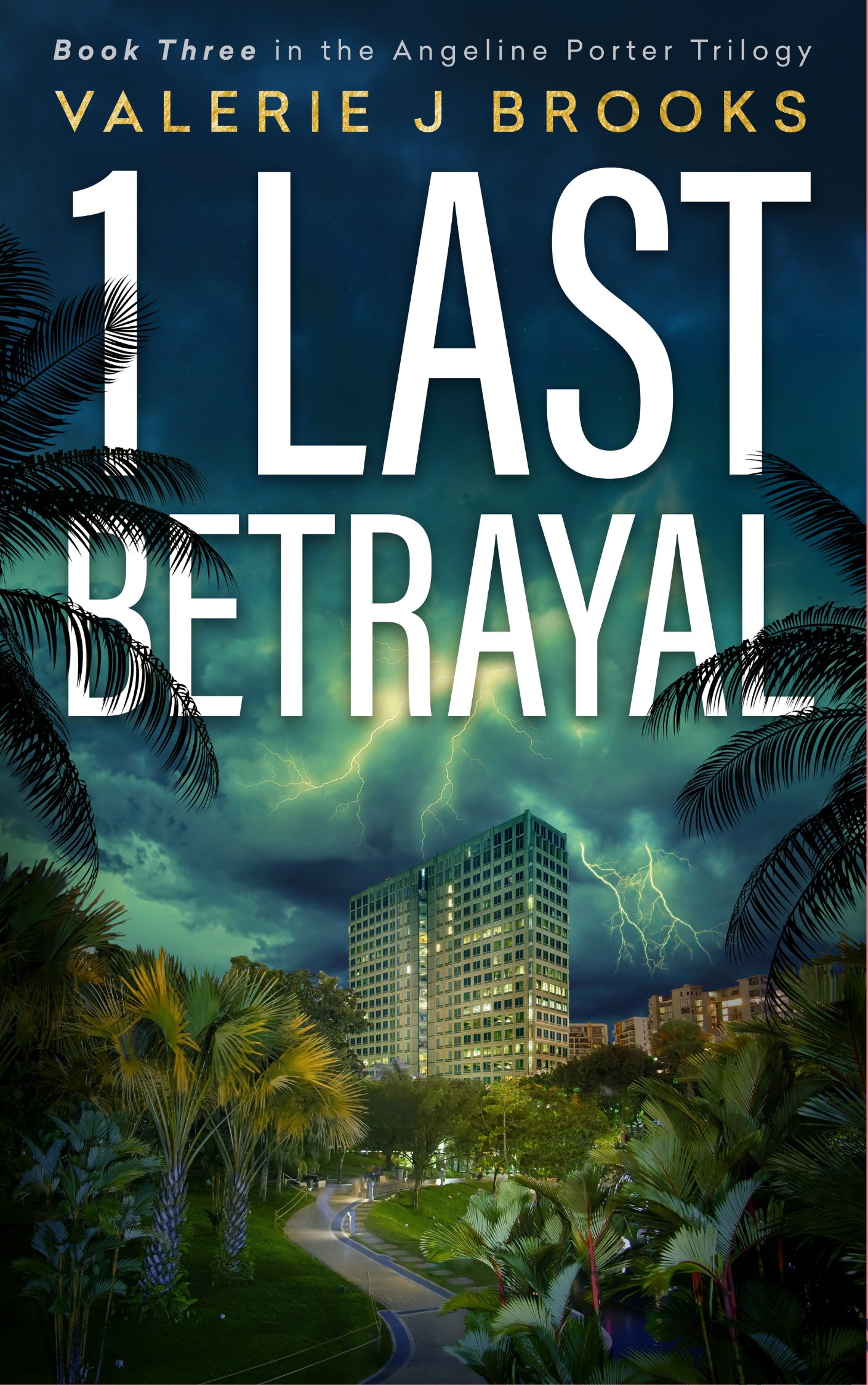
1 Last Betrayal by Valerie J Brooks Banner

1 Last Betrayal

by Valerie J Brooks

November 14 – December 9, 2022 Virtual Book Tour

Synopsis:

1 Last Betrayal by Valerie Brooks

A complicated history. A deadly future. Can one woman survive another deep dive into the rotten underbelly of crime?

Angeline Porter craves a return to normalcy. But when the former criminal defense attorney receives an alarming text, she races in desperation to Florida only to find a ransacked apartment, a poisoned dog, and a missing half-sister. Determined to rescue her sibling, she follows a trail of shockingly incriminating clues and plunges into a life-or-death fight with the Boston mob.

Taking advantage of old ties with a charming FBI agent and trying to outsmart a violent syndicate boss with powerful federal connections, Angeline and dubious allies begin tracking down the kidnappers… until she uncovers a supposed protector’s crafty deception. And while a nefarious rogue agent, a long-lost relative, and a possibly corrupt cop close in, the gutsy woman makes the risky decision to go it alone.

Is her headlong race to save her sister about to zip her into a body bag?

1 Last Betrayal is the suspense-laden third book in the Angeline Porter Trilogy of femmes-noir thrillers. If you like bold heroines, riveting twists, and balancing on the knife’s edge, then you’ll love Valerie J. Brooks’ gritty descent into the underworld.

Praise for 1 Last Betrayal:

“Steeped in suspense, chilling encounters, and shocking twists, Brooks drops us into the dark underbelly of organized crime, and we love her for it.”

Heather Gudenkauf, New York Times bestselling author of The Weight of Silence and The Over

“A twisty plot, great locations, and a gutsy protagonist you’ll root for all the way. A fabulous finale to a sophisticated series that can also be enjoyed as a stand-alone title.”

Kaira Rouda, USA Today and Amazon Charts bestselling author

“A seductive, intricately twisted suspense-thriller that’s nearly impossible to put down… get ready for a wild ride with plenty of suspense, action, and shocking surprises”

Kevin O’Brien, New York Times Bestselling Author of The Night She Disappeared

Don’t Miss the Book Trailer for 1 Last Betrayal:

Book Details:

Genre: Crime Thriller
Published by: Black Leather Jacket Press
Publication Date: September 2022
Number of Pages: 298
ISBN: 9781732373242
Series:The Angeline Porter Trilogy, Book 3
Book Links: Amazon | Barnes & Noble | Apple | BookShop | IndieBound | Goodreads

Read an excerpt:

Chapter 1

If I ever get out of this alive, I’m going to have a tattoo needled on my arm like others of my generation. Of what I don’t know. But if I’m alive, I’ll be able to make a decision then. I’m throwing off the conservative persona I once had as a criminal defense lawyer. My sister Sophie would be saying, “It’s about time.”

From Portland, Oregon, I’d hopped a red-eye and was on my way to Hollywood, Florida. I was back in the game and in the right headspace, ready to bring down the Boston mob once and for all while protecting Bibi, my sister Sophie’s twin. Bibi needed me. She was tough, but this mob had a new and younger crime boss. Talia “Shawn” Diamandis. She didn’t play by the old-fashioned rules of mobsters.

Like the rest of the world, there was no honor anymore among thieves, whether they be members of gangs, political parties, or religious sects. There was no “one for all and all for one.” That only happened in the movies. So, to energize my fighting spirit, I put on my headphones, pulled up “Rebel Yell,” one of Sophie’s old favorites, and put it on repeat. We used to jump up and down to that song in her living room—but that was before the mob.

Yes, I was back in the game, but I wasn’t happy that I had to leave my dog Tempest again. How I’d ever come to love a dog that much, I’ll never know. Maybe I relate to her being a rescue. More probable is how much we’ve been through together.

The plane dropped and bumped, almost spilling my coffee. The pilot announced that we were hitting some turbulence and to keep our seatbelts fastened. I shook my head. What did he know about turbulence?

Then the plane bucked and dropped hard, causing a few people to swear and the flight attendant to grab onto a seat. A child cried. I took a deep breath. The plane continued to buck and weave back and forth. Finally, it leveled out and a collective sigh went up from the passengers. My phone was clutched in my hand. It remained silent.

I closed my eyes and leaned my head back. Why hadn’t Bibi texted me? Maybe, hopefully, she’d fallen asleep. Bibi and I had been talking and texting for the past twenty-four hours about Shawn and what to do about her. But what did you do with a mob boss telling you that you were part of her “organization” whether you liked it or not? As my sweet, dead husband Hank would have said, Bibi was in “deep shit.” I knew what that deep shit was like. I’d been in it for a few years.

Shawn sure had cojones. She’d already broken into Bibi’s apartment—and in broad daylight. What I found frightening was how thoroughly Shawn had prepared. She knew about Otto, Bibi’s dog, a dog that should have scared the daylights out of her. But Shawn had fed him a treat while telling Bibi that there would be a meeting of the three partners, and Bibi was expected to join them. Join them, as in becoming one of the partners.

My main question was “Why?” Why would Shawn take such a risk as to get into Bibi’s apartment just to tell her that she was expected to make this meeting? She could have met her in the lobby. I had a hunch: Shawn needed to know the layout of the apartment and get friendly with the dog. She planned on breaking into the place again. Again, the question was Why?

Bibi reported the “break-in” to management, a report was filed, and the police notified. Security camera footage was watched. But nothing seemed amiss. Shawn never showed her face and seemed to enter the apartment no problem, so she could have had a duplicate keycard. Nothing suspicious. Bibi was pissed because the police said she must have given Shawn a card. As I said to Bibi, a large wad of cash would have bought a duplicate from someone in the hotel or was there some type of master keycard?

My phone dinged, and I jumped. It dinged with two more messages. It was Bibi.

I’m in danger. I’m not paranoid! Otto keeps growling. There are footsteps outside my door and muffled voices.

I didn’t tell you this before, but I found incriminating evidence against the mob in Betty’s stuff. I created a safe place for it. You’ll figure it out.

If something happens to me, promise you’ll take care of Otto. You know what he’s like. He’s sweet and needs his ugly striped afghan. He also knows a lot.

I reread the texts. Fuck! It was 4:02 a.m., and we wouldn’t land for another two hours. I texted back.

Don’t answer the door, Bibi. Don’t let anyone in. Call the police.

I tried to stay calm. Footsteps and voices didn’t necessarily mean anything. Maybe it was nothing more than late-night revelers or an assignation. Yet my heart raced. Shawn had been there once. Why not again? I texted another message and tried to convince myself that she would text back and say it was nothing. Had Otto barked at the noise? He wasn’t much of a barker, more of a growler. He was a big gentle brute the size of a Shetland pony, but there’s only so much a dog could do against greedy criminals who were willing to kill people, never mind dogs. But Shawn had already made friends with him. OK, what else? Bibi carried a gun. Good. But you had to be willing to shoot to kill. I knew very few good people capable of that, even in a life-or-death situation.

I sent another text.

Do you still have your gun? Load and keep it handy.

A text came in. I almost dropped my phone.

It was my lawyer. I ignored him.

I squirmed in my seat. Why hadn’t Bibi told me about the incriminating evidence before? What had she planned on doing with it? I chewed a cuticle. Maybe she didn’t really trust me.

Being trapped on a plane made it impossible to do anything. I had to keep my wits about me though. Did Shawn know about the incriminating evidence? I doubted it. My bet was on Shawn targeting Bibi’s inheritances—two huge estates and all the assets. What a rat’s nest of relationships! Bibi’s godmother, Betty Snayer, had been the crime boss of this mob until she died trying to kill me in Kauai. But before that, Betty had taken in a young, homeless, talented black girl, my half-sister Bibi, and given her a life in the arts. Then Betty had fallen for Shawn, at the time a streetwise, ragged, coke snorter who had addicted Betty to sex and white powder. That left Bibi adrift as to Betty’s affections. So, there I was with a new half-sister who didn’t know I’d killed her sainted godmother. What a mess.

The first-class flight attendant leaned over the empty seat next to me. “Anything I can get you, Ms. Porter?” She smiled with her bright red lips, her eyes sparkling behind her cat-eye glasses.

“Scotch, please. A double.”

I wiped my sweaty palms on my jeans. After sending another message to Bibi, I waited. Again, nothing. Finally, resigned, I set the cell on the empty seat next to me, and when my drink came, I tried not to knock it back, but that was impossible.

Maybe Bibi had called the cops, but I doubted it. I knew she didn’t trust the FBI. Being African American, she probably didn’t trust the cops either, especially after they did nothing to follow up on Shawn. I rubbed my chest, drew in some air, and let it go. Sophie often scolded me, saying I held my breath when stressed. Taking advice from my dead sister? Better late than never.

I pushed up the window cover. The bright light made me wince. Below, the ocean bordered the serpentine edge of land. Lakes littered the middle of the state. The pilot announced we were flying over Orlando and Disney World. People oohed and aahed.

On the seat next to me, I found my notebook and pen under the New York Times, and as I flipped open the notebook, my hand trembled. I’d always been pretty good at compartmentalizing, something I found necessary as a lawyer, but it was getting more difficult. I needed to keep my mind busy until I was off the plane and could make calls. I wondered where Gerard was. I figured from our conversations that he was back undercover with the mob. When I told him I was heading to Florida to help Bibi, he told me not to and was upset when I wouldn’t back down. When he realized I wouldn’t change my mind, he said he’d meet me there. Fine.

I made a fist, squeezed, then shook out my hand, needing to write something down, maybe work through what I knew and come up with a plan of sorts. Since my law school days, I’d written to-do lists, observations, even lists of conjectures and theories about people and cases. It kept me focused. It also helped me solve dilemmas, and even, at times, find something that wasn’t immediately apparent. Clients were told to keep a journal of every move they made, with dates and times, plus anything that could help their case. People were unaware of the evidentiary heft a written journal provided when entered into court records. I’d won several cases on the written word alone when the opposition had what I called a wormy case.

But what to write?

The scotch had warmed its way down to my body, and I could feel my nerves relaxing, my brain focusing. I tapped the pen against my lower teeth. Going back to the beginning with Shawn, I wondered why Betty had been interested in her? Bibi said it was cocaine-fueled sex. I believed that. Betty was older and not a looker, so it could have been the excitement and ego boost. I believed Bibi when she said Betty took Bibi in because she saw her talent and wanted to support her. Being a cynic at heart, I figured Betty had done that to make herself feel good. I’m sure it made her look good to her wealthy patron friends. Bibi was beautiful too—a dark version of Sophie—dizygotic twins from different fathers. So that would give Betty even more cred for being inclusive. A great way to get grants for her non-profit art ventures.

There I go again—the cynic.

The flight attendant swooped in and removed my cold coffee. I ordered another scotch, a single this time, thinking about Gerard, my FBI special agent pain-in-the-ass contact. In the beginning, he’d suspected Bibi was another one of Betty’s lovers. Men. They always think sex is involved. Sometimes it was. I could attest to that.

So how had Shawn become the crime boss of Betty’s mob? Maybe Betty had put her in charge when she went to Kauai. I know that Betty was using heavily by the time she came to the island. She was in Kauai, doing a godmotherly thing—setting up a hit on Bibi’s brother who hated Bibi. Bibi was adopted and the parents favored her over their flaky son. Her brother lived communally on Kauai and dressed as the grim reaper to get peoples’ attention about climate change. So, he didn’t fit his parents’ mold. Bibi, however, was the golden child, always thankful for everything they did for her. But they died before the will was changed, and the brother inherited the bulk. Hating Bibi, he gave her nothing. Betty figured she’d get rid of the brother so Bibi would inherit. At least Betty felt she was protecting Bibi. I wonder if Shawn had put that idea into Betty’s head, thinking Bibi would eventually bring in even more assets to the “organization.”

When I met Betty in Kauai, I didn’t know I had a sister named Bibi. I didn’t know a lot of things. I was hiding out from the mob. They wanted the millions my sister Sophie stole. But Betty knew who I was. I was the one who had killed one of her partners—in self-defense. But that didn’t matter to her. She must have been overjoyed to think she could take care of two marks on the same trip.

I had to assume that Shawn took over the crime boss position when Betty and her bodyguard never made it back to Boston. Gerard and I thought Shawn was a minor character, one of those people who target the wealthy to live luxuriously for a while, snort coke all day, then when things go dumpster, they disappear. She fooled us.

Plus, I had to remember she was a good actor. Shawn had gone from messed-up street urchin to high couture. What really bothered me was her telling Bibi that she laundered the money for the mob. True? Or was that a way to entrap Bibi? If Bibi knew that, she’d be vulnerable if she didn’t join the mob. Shawn was smart, no matter her motive.

I sipped my second scotch. If I kept in lawyer mode, I could keep my shit together. So, who was Shawn? Did she have a police record? What was her M.O.? I’d lost the connection with Snoop, my hacker, just as she was going to tell me what she found on Shawn. I haven’t heard from her since, and that’s not good.

Shawn might be a psychopath, but she had to be a strategist, someone with patience, someone who had planned her ascent with the crime group. This was conjecture, but her actions pointed to it.

This felt good, building a case, listing all the possibilities, hopefully tracing them to their logical conclusion either with evidence or what I’d discovered in the process.

I listed questions about “Shawn the Strategist”:

  • Getting Betty hooked on cocaine: loosens the tongue, makes her vulnerable
  • Reason for admitting money laundering: trap Bibi into the gang; something else?
  • Need background check on her: laundering takes guts, know-how, and connections
  • Has Shawn already taken Bibi somewhere? Under guise of meeting?
  • How much does Bibi know about Betty?
  • Maybe Shawn knows more about Bibi than I do

I suspected that Bibi couldn’t live in Betty’s house all that time and not notice any illegal activities. But Bibi seemed to have no idea, and as she said, she’d been fully engaged in school, her art, and her friends.

The plane’s engine noise changed. We were approaching Fort Lauderdale. I slipped on my shoes and buttoned my military-style jacket, readying myself for landing. I’d dressed with a casual elegance so people would take me seriously but not authoritatively as with a suit. Instead of perfume or aftershave, the cabin smelled like a locker room, and I hoped I didn’t smell that way. I thought of how Gerard would smell when I met him. As if reading my mind, Gerard sent me a message.

I’ll get to The Circ before you. Meet you in the residency lobby.

Between my teeth, I hissed, “Asshole.” He’d insisted on meeting me in Florida, but I told him to do nothing until I got there. That was like pissing in the wind with him.

I finished the scotch. I couldn’t get off the plane fast enough.

The pilot came on the intercom and gave the usual instructions, telling everyone to take their seats, buckle up, seats upright, tray in position. The flight attendant quickly gathered up all the bottles and glasses. I snapped my tray into place, gathered up everything on the empty seat, and threw them in my satchel, something I’d bought because it was more like a briefcase but not a briefcase. The flight attendant had just buckled herself in when the plane dropped like a trap door had opened. Someone squealed. A kid cried. Then the plane leveled off.

With my heart in my throat, I forced my mind back to Bibi and Betty. From everything I knew, Betty wanted Bibi to devote herself to being an artist. What if Betty had recognized Shawn’s killer instinct and started grooming her to take over the business?

I checked my cell one more time. Nothing from Bibi.

The plane headed toward the landing strip. I held the notebook against my chest. As a defense attorney, I’d met many criminals and could usually sniff out the liars. Bibi’s panicky text from Florida was not something easy to fake. But I had no body language to go with this to assure me she was being straight with me.

Far too many unknowns.

I sat back, closed my eyes, and prepared for landing.

***

Excerpt from 1 Last Betrayal by Valerie J Brooks. Copyright 2022 by Valerie J Brooks. Reproduced with permission from Valerie J Brooks. All rights reserved.


Author Bio:

Valerie J Brooks

Multi-award-winning author Valerie J. Brooks is the author of the Angeline Porter trilogy, femmes-noir thrillers starring a badass disbarred attorney.

NYTimes bestselling author Kevin O’Brien called her second novel TAINTED TIMES 2 “… a real nail-biter from first page to the last.” Heather Gudenkauf, NYT bestselling author of THE WEIGHT OF SILENCE and THE OVERNIGHT GUEST calls Brooks the Queen of the Femmes-noir Thriller and says her upcoming 3rd novel 1 LAST BETRAYAL is “explosive” and “Brooks drops us into the dark underbelly of organized crime, and we love her for it.”

Brooks is a member of Sisters in Crime. Her awards include an Elizabeth George Foundation grant and five writing residencies. She teaches workshops and classes on writing noir and creating plot twists. Brooks found her love of thrillers as a teen after turning in a hitman to the FBI.

She lives in Oregon with her husband, Dan Connors and their Havanese pooch Stevie Nicks.

Catch Up With Valerie J Brooks:
ValerieJBrooks.com
Goodreads
BookBub – @valeriejbrooks
Instagram – @valeriejbrooksauthor
Twitter – @ValinParis
Facebook – @FemmesNoirFiction
Pinterest – @ValinParis
TikTok – @ValerieBrooksAuthor


Tour Participants:

Visit these other great hosts on this tour for more great reviews, interviews, guest posts, and giveaway entries!
Click here to view 1 Last Betrayal by Valerie Brooks Tour Hosts


ENTER TO WIN:

This is a giveaway hosted by Partners in Crime Tours for Valerie J Brooks. See the widget for entry terms and conditions. Void where prohibited.
https://kingsumo.com/g/hpkjbg/1-last-betrayal-by-valerie-j-brooks


Get More Great Reads at Partners In Crime Tours