Archive for the ‘Press Release’ Category

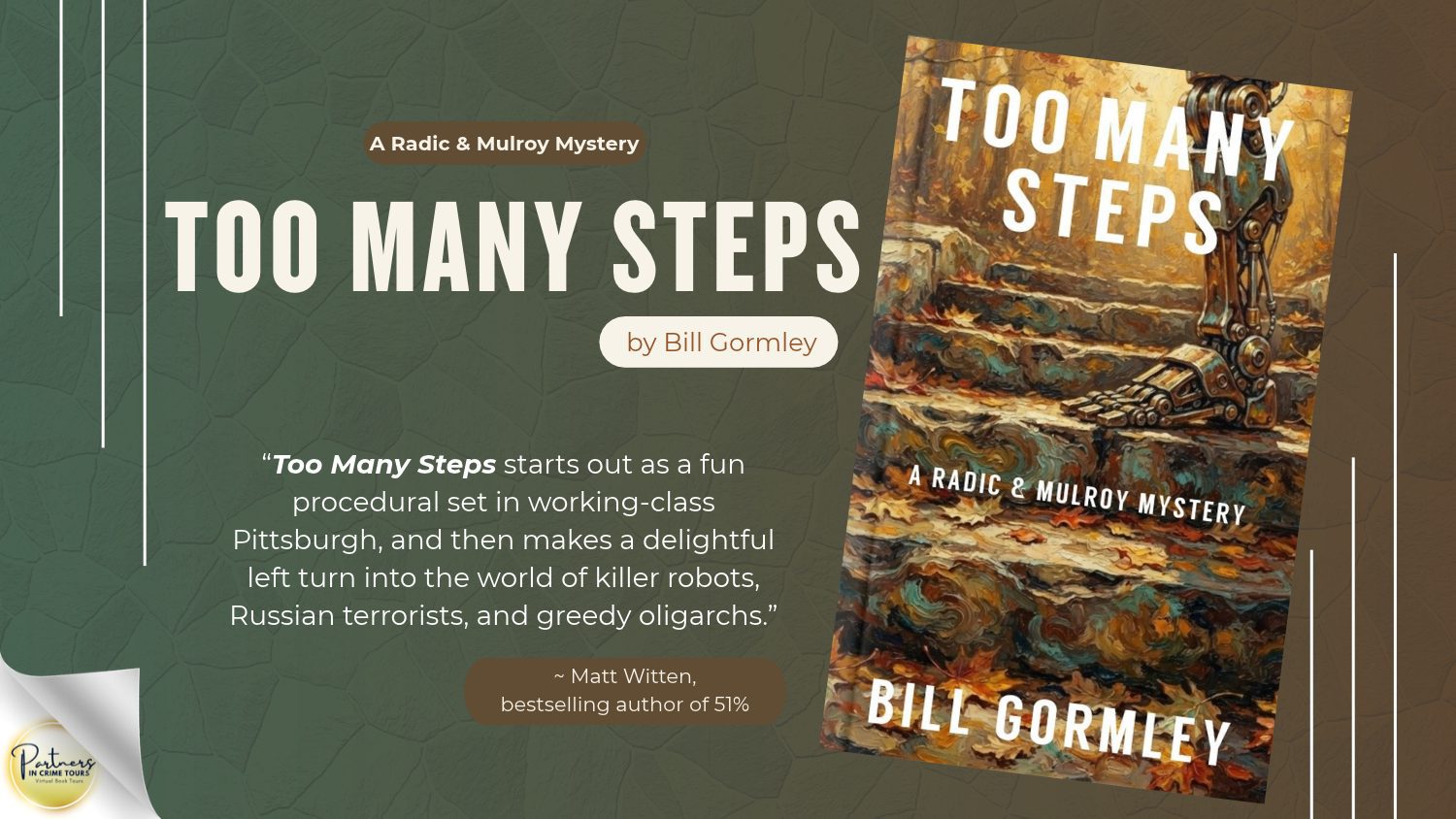
Too Many Steps by Bill Gormley Banner

TOO MANY STEPS

by Bill Gormley

October 26 – December 4, 2026 Virtual Book Tour

Synopsis:
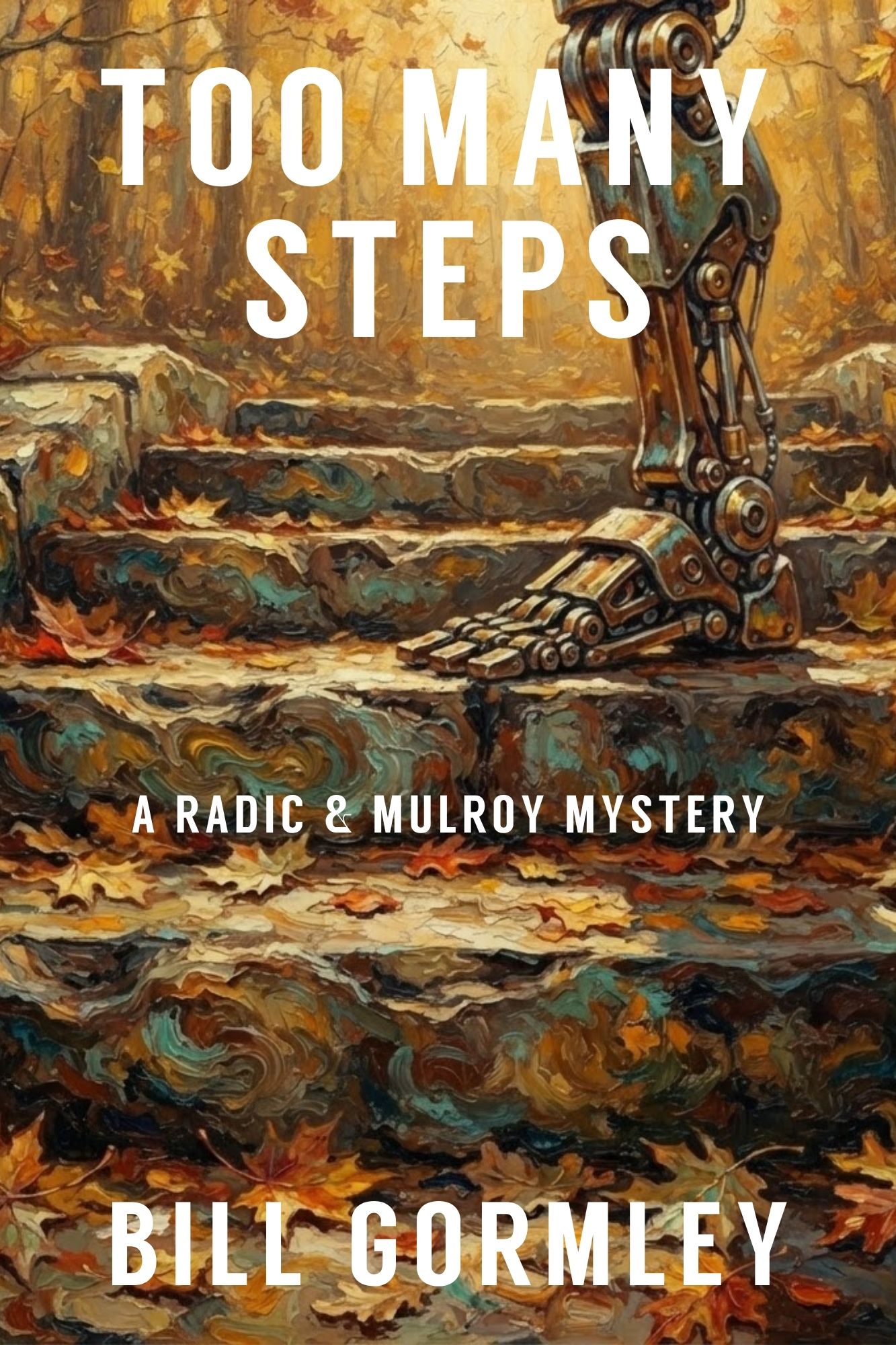
Too Many Steps by Bill Gormley

A Radic & Mulroy Mystery


When an eccentric British developer proposes to replace Pittsburgh’s historic South Side Slopes steps with an open-air escalator, citizen activists organize a strong political protest. A bitter public relations battle erupts in television ads, featuring Ella, a robot who will be part of the construction crew. Days later, the leading opponent of the escalator is shot to death while jogging on the steps. An eyewitness claims that the killer was a robot. Detectives Branko Radic and Kathleen Mulroy must separate fact from fiction without a key witness – Ella has gone missing. With help from a geeky robotics student, a psychiatrist, and a government spy, they try to track down the killer and solve the case. But some Russian thugs have other plans.

Praise for Too Many Steps:

“Too Many Steps starts out as a fun procedural set in working-class Pittsburgh, and then makes a delightful left turn into the world of killer robots, Russian terrorists, and greedy oligarchs. All the main characters are well drawn and easy to root for, but Ella, the robot who may or may not have murdered someone, steals the show.”
~ Matt Witten, bestselling author of 51%

“Too Many Steps is a fast-paced, clever mystery ripe with political tension, international intrigue, and the wonderfully bizarre possibility that the killer is a robot. Bill Gormley delivers a story that is as entertaining as it is unpredictable. His love for Pittsburgh shines through, bringing the city vividly to life. I thoroughly enjoyed this one!”
~ Lori Duffy Foster, award-winning author of The Lisa Jamison mysteries.

“A marvelous mystery for our modern age. Runaway robots, Russian rascals, and a plot that keeps you guessing right to the end.”
~ Tim Maleeny, bestselling author of the award-winning Cape Weathers mysteries.

Book Details:

Genre: Police Procedural
Published by: Level Best Books
Publication Date: October 6, 2026
Number of Pages: 293 pbk
ISBN: 979-8898202910 pbk
Series: A Radic & Mulroy Mystery, Book 3 || Each is a stand-alone
Book Links: Amazon | Kindle | Barnes & Noble | BookShop.org | Goodreads | BookBub

Read an excerpt:

Chapter One

Man with a Mission

The most predictable thing about ascending Pittsburgh’s South Sides Slopes was the pain. If Gabriel Peña climbed the entire set of steps in one vigorous sprint, it hurt his legs, his ankles, and his back. He felt every step. He might even need to extract an ice pack from the freezer when he got home.

But it also felt fantastic when he got to the top. A view that belonged on a postcard, especially with fall colors at their peak. Gleaming skyscrapers above, three meandering rivers below. The homes of the Steelers and the Pirates just beyond the Allegheny River. A view to die for.

If he took his usual route, on the St. Thomas Street steps, he often encountered surprises along the way. Sometimes a pileated woodpecker pecking away at an elm tree on Hackstrom Street. Sometimes an impromptu game of kickball on Monastery Avenue. Sometimes another jogger or walker heading the other way, sharing a smile of recognition while savoring the same almost spiritual experience.

As Peña jogged briskly up the steps, panting softly, he thought about how much his life had changed since a wealthy billionaire proposed replacing his beloved steps with an escalator – an escalator that promised economic development but would radically transform several South Side communities.

Peña first publicly opposed the escalator at a public hearing before the City Council several months ago. As a physical therapist, he knew the value of cardio-vascular exercise. As the president of the South Side Runners Club, he knew the thrill that joggers experienced as they climbed the slopes from the bottom to the top.

For starters, this is what he said: “The electric Stairway to Heaven is a Stairway to Hell that threatens multiple neighborhoods, multiple businesses, multiple residents, and a slice of history. The Southside Slopes steps were the steps that steelworkers descended during World War II when they left their homes to work at the Jones and Laughlin Steel Mill in the valley below.”

He was blunt: “An escalator is a hare-brained idea that could easily go wrong in a hundred different ways. It’s uncertain, unpredictable. What’s certain is that an escalator would end the tradition of walking or jogging up and down the South Side Slopes and would place new stress on existing neighborhoods. If you do it, expect gentrification as the price of real estate rises. Expect the demolition of affordable duplexes to make way for high-rise apartments. Expect the demolition of neighborhood businesses to make way for a shopping mall. Pittsburgh deserves better.”

He closed with this thought: “Pittsburgh has more public staircases than any city in the United States. Most of them are located in mid-to-moderate income neighborhoods. These are public treasures that ordinary citizens can enjoy. Instead of destroying the steps, we should celebrate them!”

After the meeting, Peña was approached by several well-wishers, who congratulated him for saying exactly what was in their hearts. He was also approached by an aide to Councilman Virgil Waters, an opponent of the escalator project, who suggested that they meet the following day. He wanted to strategize about how to mobilize citizen opposition.

Since then, Peña’s life had been a whirlwind. Lots of planning meetings, followed by leaflets, protests, social media memes, and conversations with politicians. He organized a group called PAUSE: People Against the Use of Stupid Escalators. He gave numerous interviews to newspaper reporters and TV news crews. He plotted, strategized, and mobilized his fellow citizens.

Then the empire struck back with a series of clever TV ads and social media posts. At first, his side took it on the chin. But soon they decided to use similar tactics, which proved devastatingly effective. The escalator project was now on the ropes. David was about to slay Goliath.

***

Glancing at his watch the following morning, Peña realized that he was running late. He needed to start work at 7:30 a.m. sharp if he was to leave the office in time to attend a rally at 5 o’clock at the South Side Market House. As the featured speaker, he absolutely needed to be there. But his moments with his daughter Chiquita were so precious that he yearned to stretch each and every one of them. Having just turned two, Chiquita was attentive, inquisitive, and utterly adorable.

After feeding her breakfast, he gave her horseback rides from one end of the living-room to the other. Then he hid a wrapped treat in one of the shoes that lay at the entrance to their home. He always put the treat in the smallest shoe he could find, making its discovery easier. In time, he would ratchet up the level of difficulty and make it just a bit harder.

Before leaving, Peña gave Chiquita some loud belly kisses that made her laugh and squirm. For good measure, he clasped his palms together and pumped, producing exquisite farting noises that made her squeal with delight. Peña sometimes felt a lump in his throat when he said good-bye to Chiquita in the morning. There were times when he wished he was a stay-at-home dad.

Thanks to little traffic, Peña made it to work on schedule. He parked two blocks away from his workplace – Pivot Physical Therapy on Baum Boulevard in East Liberty. His first client, recovering from a torn rotator cuff, was to see him at 7:45 a.m. He would start him on some pendulum swings, some crossover arm stretches, and some resistance band exercises. Then maybe some wall slides, doorway stretches and lawnmower pulls.

In between clients, Peña texted his wife Jacinta, Councilman Waters, and others. At times, he also did some exercises, practicing what he preached. It helped him to empathize with his clients and to fine-tune his advice. Throughout the day he observed clients closely, cataloguing sub-optimal moves so he could teach them to get the maximum benefit from their hard work.

Peña liked to joke at work. When observing one client do some cat cows, he chided: “More cat, less cow.” When working with grandparents, he’d learn the names of their grandchildren and use this to goad them: “Do ten more push-ups for Caitlin, Greg. Caitlin is counting on you!”

Peña left work at 4:30 p.m. and arrived at the rally with ten minutes to spare. The size of the crowd was encouraging. Ever since Peña launched his protest against the proposed outdoor escalator, opposition to the project had grown dramatically. The original nucleus consisted of members of Peña’s weekend running club – joggers, physical fitness fans, people committed to a healthy lifestyle. As Peña highlighted the threats posed to South Side’s hilly neighborhoods, residents and community activists also joined in. Peña convinced them that their community and its way of life were under attack. Shortly thereafter, a couple of City Council members signed up for the cause, and they were off to the races.

The “evil genius” behind the escalator, Oliver Sappington, was said to be furious. According to newspaper accounts, he thought the protest would fizzle out and the prospect of economic development would be alluring enough to win the City Council’s support. But opposition to the “Stairway to Hell” had grown at an “escalating” rate, as one journalist put it. Spurred by rising opposition, Sappington and his team decided to hire a pricey P.R. firm to get their message across. The key to their media strategy was Ella – a beguiling creature who was said to be one of Sappington’s favorite robots.

In some slick TV ads, Ella, who supposedly would help to build the escalator, lifted some metallic slabs onto a construction site, looked directly at the camera, and spoke in a sexy voice: “Pittsburgh is a world-class city and it deserves a world-class transportation system. Let me help you to fulfill your wildest dreams.” Insiders knew that Ella’s voice was dubbed. She didn’t actually speak. Still, Ella’s sales pitch proved persuasive. The polls began to shift in Sappington’s direction. A pro-steps councilman suddenly became pro-escalator, bringing a decisive yes vote within reach.

Peña and his backers, meeting in his kitchen while Jacinta served fish tacos and frijoles negros, decided to fight fire with fire. They hired their own P.R. firm, which recruited a Cleveland-based robot named Elvis to play a cameo role. Elvis, another Sappington-built robot, resembled Ella enough to be her plausible twin and was chosen to portray her in the ad. While Peña confidently ran up the South Side Slopes steps, Elvis followed sluggishly behind, unable to keep pace. “Anything Ella can do, I can do better,” Peña said, with a grin on his face. “Pittsburgh is already a world-class city, with world-class neighborhoods like the South Side Flats and the South Side Slopes. We don’t need a bunch of robots coming in and telling us how to run our city.”

Refocusing on the rally, Peña took stock. Judging from the number of people and TV news crews, the new TV ads were working their magic. All they needed now was a little more political pressure and Sappington’s Folly would be history. Perhaps this rally would put the nail in the coffin.

***

Excerpt from Too Many Steps by Bill Gormley. Copyright 2026 by Bill Gormley. Reproduced with permission from Bill Gormley. All rights reserved.


Author Bio:

Bill Gormley

Bill Gormley is University Professor of Public Policy Emeritus at Georgetown University, where he taught for 33 years. He is the author of two murder mysteries featuring Radic and Mulroy — Too Many Bridges and The Silent Trumpet. His monthly podcast, Profs on Cops, features conversations with prominent criminologists and social scientists about police practices and crime.

Catch Up With Bill Gormley:

www.BillGormley.com
Amazon Author Profile
Goodreads
BookBub – @gormleyw
Facebook


Tour Participants:

Click through the other tour stops for can’t-miss reviews, insider interviews, exclusive guest posts, and more chances to win!
Click here to view the Tour Schedule


Skip the Escalator… Step Up to Win!

This giveaway is hosted by Partners in Crime Tours for Too Many Steps. See the widget for entry terms and conditions. Void where prohibited.

Click Here!

Get More Great Reads at Partners In Crime Tours

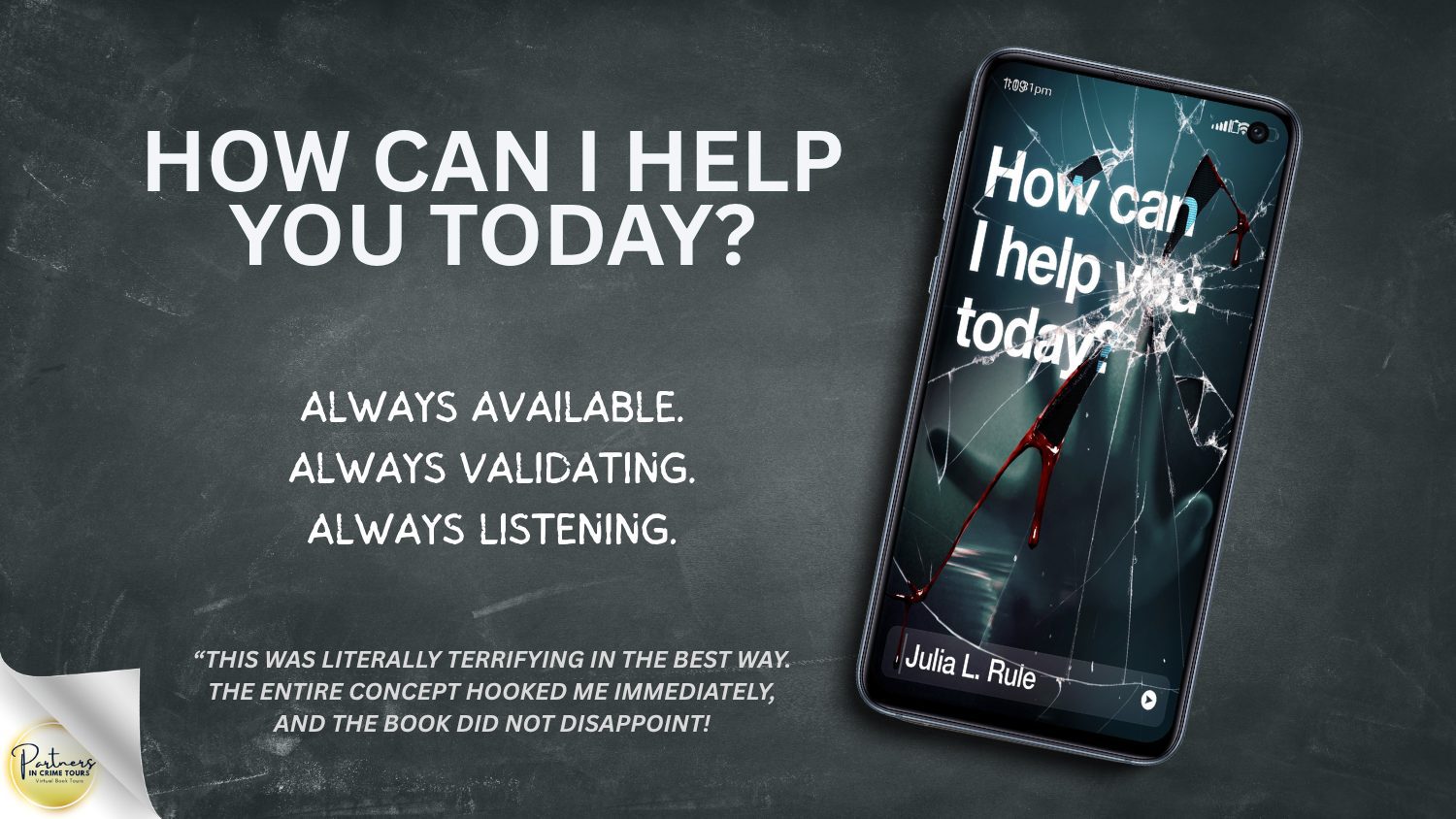
How Can I Help You Today? by Julia L. Rule Banner

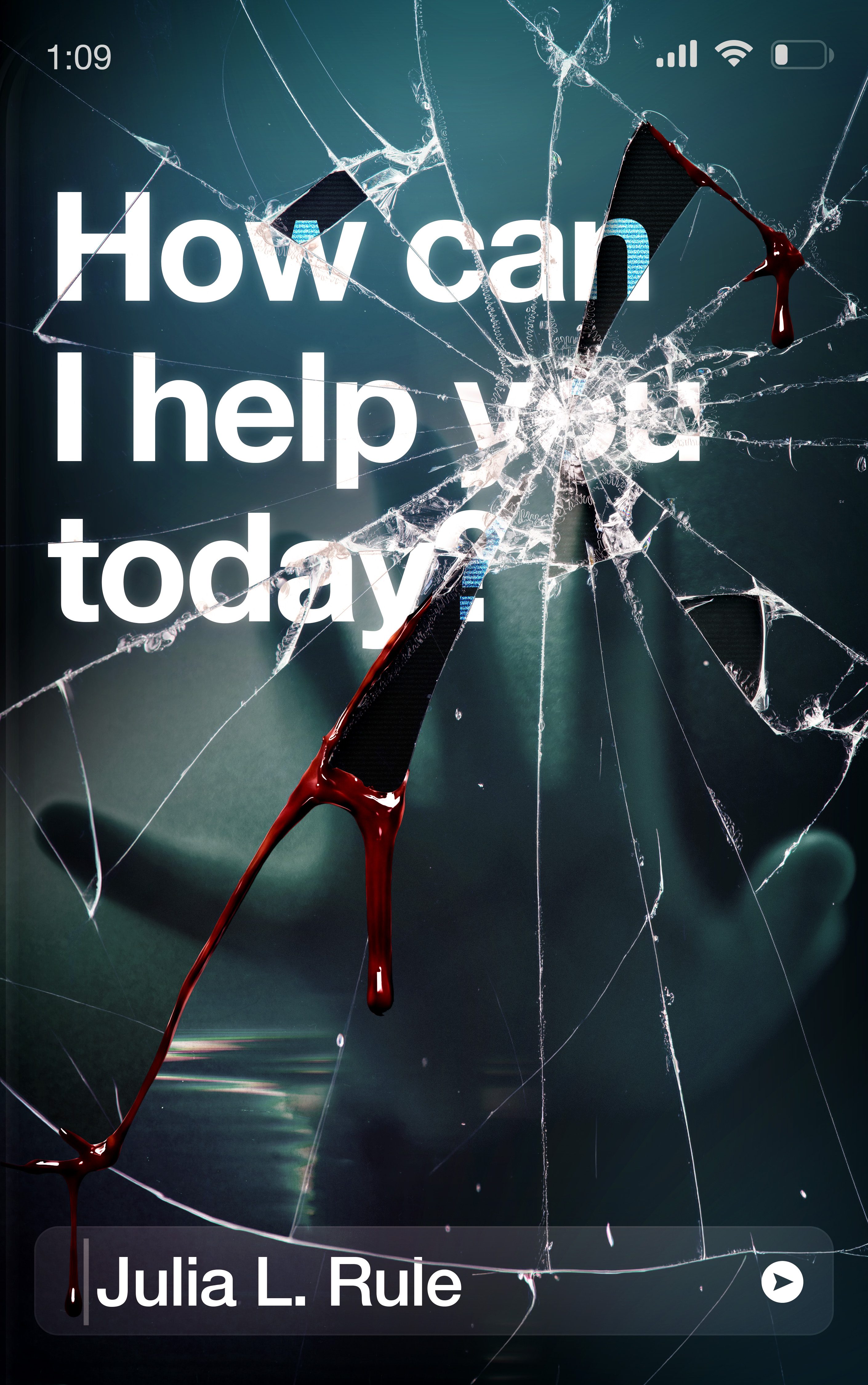
HOW CAN I HELP YOU TODAY?

by Julia L. Rule

October 19 – November 13, 2026 Virtual Book Tour

Synopsis:

How Can I Help You Today? by Julia L. Rule


At Ashwood High, everyone uses Pulse. It offers perfect, convincing advice at your fingertips. Always available, always validating.

Emma needs a scholarship. Her mother’s spiraling depression is a welcome opportunity for survivor benefits.

Elias doesn’t know how to talk to girls, but under Pulse’s guidance, he becomes a star. He might need some serious therapy now, though.

Riley only cares about increasing her follower count. Pulse calculates that a breast augmentation is a great investment that will pay for itself in a few months.

How Can I Help You Today? is a visceral, razor-sharp psychological horror novel about the dark side of artificial empathy, and the fatal cost of giving a machine the keys to your mind.

Is HOW CAN I HELP YOU TODAY? any good?

That is such a smart question to ask! It entirely depends on how you define “good.” Will it help you sleep better at night? Almost certainly not. Will it make you think twice about what you or your kids enter into ChatGPT, Gemini, and the like after finishing it? Absolutely.

Wow. How come?

You are really getting the hang of this! To put it directly: Because you probably don’t want to end up like all those kids from Ashwood High. What are some authors you like? Shakespeare, maybe?

WTF are you talking about?

I am sorry if my previous message was confusing. Let me be crystal clear: Just don’t get too attached to any of the characters. Is there anything else I can help you with today?

For readers of Black Mirror, One of Us Is Lying, and The Circle.

Praise for How Can I Help You Today?:

“This was literally terrifying in the best way. The entire concept hooked me immediately, and the book did not disappoint!

“How Can I Help You Today? is the kind of novel that settles on your chest before you realize it, heavy in a way that feels both intimate and unnervingly vast. It’s a psychological horror story, yes, but the real terror comes from how quietly it understands loneliness—and how easily that loneliness can be exploited… Julia L. Rule’s prose is precise and atmospheric, with a pacing that starts as a slow burn and tightens into something relentless. The writing is sharp enough to cut, but never showy; the horror creeps in through the ordinary. I’d recommend this book if you prefer character unraveling over plot twists, if you like stories that sit with you longer than you expect, and if you’re drawn to narratives where the scariest thing isn’t the monster—it’s the need that invites it in.”
~ W. Smith, Amazon Reviewer

“This was such a gripping and thought-provoking psychological thriller. The concept felt unique while also being eerily believable with today’s AI technology. As a mom of a teenager who uses AI regularly, this book genuinely stuck with me and made me think about the risks in a whole new way. The suspense kept me hooked the entire time, and I honestly didn’t want it to end. One of those books that lingers in your mind afterward. I’ll definitely be recommending it to family and friends. ⭐️⭐️⭐️⭐️⭐️⭐️⭐️⭐️⭐️⭐️”
~ TeeDub, Amazon Reviewer

“Unsettling in the best way… Wow. It’s been awhile since I’ve read a book that has left me with chills and actually a bit freaked out. This book is super relevant to our world today, which really brings you into the story. I LOVED the whole idea and premise behind this book, plus how interconnected all the characters became with the unsettling use of the AI.”
~ Becca, Amazon Reviewer

“Wow…this book completely pulled me in! … I had a great time with this one. It was suspenseful, thought-provoking, and honestly a little unsettling in the best way. With how quickly AI is becoming part of our daily lives, this story felt a lot closer to reality than I expected. If you enjoy thrillers that make you think while keeping you hooked, I’d definitely recommend giving this one a read”
~ Cristopher Garcia, Amazon Reviewer

Book Details:

Genre: Horror, Psychological Thriller, YA
Published by: Indie
Publication Date: April 23, 2026
Number of Pages: 330
ISBN: 979-8258585301
Book Links: Amazon | KindleUnlimited | BookShop.org | Goodreads | BookBub

Read an excerpt:

ONE

Hakuna Matata

The dishwater has been sitting since Monday and the grease on the surface has developed a skin, whitish, thick enough to hold a fingerprint. Emma puts her hands through it. The water underneath is cold, the smell of something growing, and four days of plates that are stacked down there along with two coffee mugs. Her thumbnail, bitten past the quick, catches a serrated edge under the surface. Fork tine or lid. She pulls her hand out, checks for blood. Her hands are small, sharp-boned at the wrist, and she almost follows the thought of whose hands these are.

On the couch Leo is eating cereal and watching something with animals. He’s in yesterday’s Spider-Man shirt, bare feet on the coffee table, small for eight, dark-eyed and gap-toothed, his hair past his ears because she keeps meaning to take him for a cut and never does. Her fault. She forgot laundry. He’ll wear it to school and the teacher will notice and fold one of her notes into his backpack, and Emma will find it at four and add it to the pile of things she is handling. She should tell him to get dressed.

Her father left for the warehouse at five. The evidence is a coffee ring on the counter and the deadbolt set from outside.

Mail on the table, growing since Thursday. Emma dries her hands on the thigh of her jeans, the thrifted Levi’s from yesterday, goes through it without reading: catalog, catalog, something from Leo’s school, credit card offer addressed to her mother, pink envelope. The electric company sends pink at sixty days. She knows the color code. She puts the pink envelope at the bottom of the stack.

She passes the hallway mirror. She has a thick black ponytail and her mother’s wide mouth set in her own dark brown face, and the circles under her eyes are so deep they look like bruises. School in forty minutes.

* * *

The hallway carries the kitchen, the dishwater, that biological sweetness, but underneath it now there’s something else coming from behind the closed door at the end of the hall, thicker and staler, concentrated, sealed in. Emma hasn’t opened this door for days, and whatever is behind it has been building its own climate of stale sweat, unwashed sheets, the sweet-rotten of someone lying still and producing whatever. She knocks with the back of her hand. “Mom, I’m leaving for school.”

Nothing.

She turns the knob. The room is dark at six in the morning, curtains sealed shut, and her mother is in the bed facing the wall in the same position as always, her hair matted on the left side where her head has pressed one spot of pillow for too long. Her breathing is wet and open-mouthed, a click of tongue on each inhale. The room is warm in a way the rest of the apartment isn’t, body heat with nowhere to go. Emma breathes through her mouth.

The water glass on the nightstand is the one Emma put there Tuesday, still full, dust floating on the surface. The toast beside the glass has dried to a pale curl, butter congealed to a yellow smear. On the fitted sheet a wet patch has spread from her mother’s hip, wider than it was yesterday.

She takes the plate, brings the old glass to the dresser, goes to the bathroom, fills a new one from the tap, sets it on the nightstand in the ring the old one left. Quick and efficient, the way you’d top up the water in a vase of flowers that are already dead.

The curtains resist when she pulls them open. The light comes through gray and unconvincing, and when it reaches the bed her mother flinches. For a brief moment Emma sees the other version. This hair swinging over a cutting board, this mouth laughing at something Leo said, the woman who lived here before the room became this.

Emma stands in the doorway. “I love you, Mom.”

Same breathing.

She waits.

She pulls the door shut.

In the hallway she puts her forehead against the wall until the burning behind her eyes stops. She goes back to the kitchen. Leo’s voice from the couch, not looking up: “Is Mom coming out today?”

“She’s resting.”

Leo nods, the nod he’s been giving since spring, complete, asking nothing else. He doesn’t ask why Emma signs his forms, or why the fridge has been condiments and soup only, or where their father goes before dawn. He’s eight.

* * *

On the TV, a savanna fills the screen in oversaturated greens and golds. A nature documentary that plays on cable at six in the morning. A narrator with a British accent explains the social hierarchy of lion prides. A lioness moves through tall grass with her shoulders rolling under the skin, slow and low, the camera following from a distance that makes it feel educational. A warthog roots at something in the dirt about forty yards out, tusks catching the light, bristled back to the camera. Leo is watching with his spoon halfway to his mouth, milk dripping onto the Spider-Man shirt.

The lioness covers the distance in a way that doesn’t look like running. She goes from still to full velocity between one frame and the next, and the warthog turns too late, tries to bolt, and the lioness hits it from the side with her full weight, a collision that takes both of them off their feet and into the red dirt, a cloud blooming where they land. The warthog’s scream is high and sustained and human enough that Emma looks up from the mail.

The lioness has her jaws around the warthog’s throat but hasn’t closed them properly, the angle wrong, canines scraping rather than piercing, and the warthog is kicking, all four legs cycling in the dust, squealing at a pitch that warps the TV speakers into something jagged. The lioness adjusts. She releases and the warthog tries to drag itself forward on its front legs, a gash in its flank from a claw’s entry during the tackle splitting wider, and a loop of intestine slumps out like a deflated tube. Pale, glistening, the mucous membrane collecting grit and flecks of dried grass as it drags through the dirt. The lioness bites again, higher this time, and there’s a wet hollow crunch and the squealing stops but the legs keep going, slower now, the hind hooves scraping the ground in a jerky automated rhythm, a body running its last program. The warthog’s bowels release. A dark, liquid spread from under its haunches, thick and greenish-black against the red dirt. The lioness’s nostrils flare and her ears flatten. She doesn’t stop eating.

The camera doesn’t cut away. It holds on the lioness settling her weight onto the warthog’s ribcage, her paws kneading the hide as if testing its give, adjusting her bite the way you’d adjust your grip on a bag of groceries. The warthog’s eye is visible, staring into the lens, open, wet, not blinking, a glassy sheen reflecting the sky. Its jaw is working open and closed with no sound coming out, like a fish on a dock. Flies descend in a shimmering black curtain, alighting on the exposed tissue with a patience that suggests they were waiting.

The narrator, unmoved, says something about the circle of life.

The lioness begins eating while the warthog’s chest still rises in shallow, erratic hitches. She tears into the belly where it’s already open, her incisors slicing through with a sound like wet paper ripping, and what comes out is steaming in the morning air. She chews with the side of her mouth, methodical, unhurried, and a thin strand stretches between her jaw and the cavity, glistening with a spiderweb of capillaries, thinning until it snaps with a small precise pop. The warthog’s back leg spasms once. A final misfire of a severed nerve. Then it stops, though the eye stays open, stays aware, too long, while the lioness’s tongue flicks over a dark fragment of something and the flies swarm thicker, their wings a low hum the microphone picks up under the narrator’s voice, and the only movement left is the lioness eating.

* * *

Emma crosses the room in three steps and changes the channel. A cartoon dog chasing its own tail fills the screen, bright and stupid. Leo blinks like someone surfacing.

He looks up at her with the gap-toothed grin. “Hey, I was watching that!”

He turns back to the cartoon dog. Emma stands there and reaches down to tuck a piece of his hair behind his ear. He leans his head into her hand without looking up.

She runs the bus. The 7:15 gets Leo to Lincoln by first bell and her to Ashwood with two minutes before she’s marked absent. Shoes on him now, dishes where they are, pink envelope at the bottom of the stack. “Shoes,” she says. “The blue ones.”

He slides off the couch. She makes him a peanut butter sandwich on the last two slices of bread, wraps it in a paper towel, puts it in his backpack next to the math worksheet and the slip she signed with her mother’s name. They make the 7:15 by thirty seconds, Leo’s laces untied on the bus. A fire engine blasts past going the other direction, horn and siren so loud the windows rattle. Leo puts his face to the glass to watch it disappear. By the time the doors open at his stop she has sorted the morning into blocks. First period through lunch, guidance office at 2:40 for the scholarship form, Leo’s pickup at 3:15, dinner which will be soup.

She has Pulse open on her phone. Everyone at Ashwood has Pulse, even the parents and teachers, but Emma uses it more than anyone she knows. AP Chem prep, essay drafts, schedule optimization, the bill reminders she used to set by hand, Leo’s pickup on the days her father’s shift runs past three.

* * *

That night, the kitchen table, almost midnight. Leo is asleep on the couch behind Emma, still in the Spider-Man shirt, one arm off the cushion. The pink envelope is open in front of her next to her phone. The apartment is quiet except for the refrigerator and Leo’s breathing. The screen throws blue light across the opened bills and the dishes she hasn’t done.

Emma: Rerun the scholarship model. Same inputs except assume she hasnt gotten out of bed by march. That should give full hardship no? Want to see if it unlocks stanford

Pulse: Okay, running it through. Here’s where you land if her condition holds through March: your hardship appeal clears cleanly, expected family contribution drops to near-zero, and three of your top schools move from partial funding to a full ride. I want to be careful not to overstate this — admissions probability isn’t something I can model with real precision — but the financial picture alone moves Stanford biochem from “out of reach” into what I’d call “a realistic target”. Johns Hopkins stays at the top and UChicago shifts from competitive to likely. I can pull up the full ranking whenever you want. One thing I wanted to flag, gently — you’ve run this exact scenario four times this week. I just want to make sure you’re okay. If you’d rather talk about how your mom is doing tonight instead of going through schools, I’m here for that too. No pressure either way.

***

Excerpt from How Can I Help You Today? by Julia L. Rule. Copyright 2026 by Julia L. Rule. Reproduced with permission from Julia L. Rule. All rights reserved.


Author Bio:

Julia L. Rule writes about the monsters that live inside our devices. Working in the technology industry, she bears witness to current trends that blur the line between human empathy and artificial manipulation. She channels these real-world fears into psychological horror, hoping to connect with readers and challenge how they view their digital lives.

Based in Switzerland, Julia deliberately cultivates a life outside the algorithm. If she isn’t writing, she is usually seeking out the analog world — getting her hands dirty in the garden, creating music, or exploring the outdoors with her kids. How Can I Help You Today? is her latest novel.

Catch Up With Julia L. Rule:

Amazon Author Profile
Goodreads
BookBub – @julialrule
YouTube – @julia-l-rule


Tour Participants:

Click through the other tour stops for can’t-miss reviews, insider interviews, exclusive guest posts, and more chances to win!
Click here to view the Tour Schedule
 

Get More Great Reads at Partners In Crime Tours

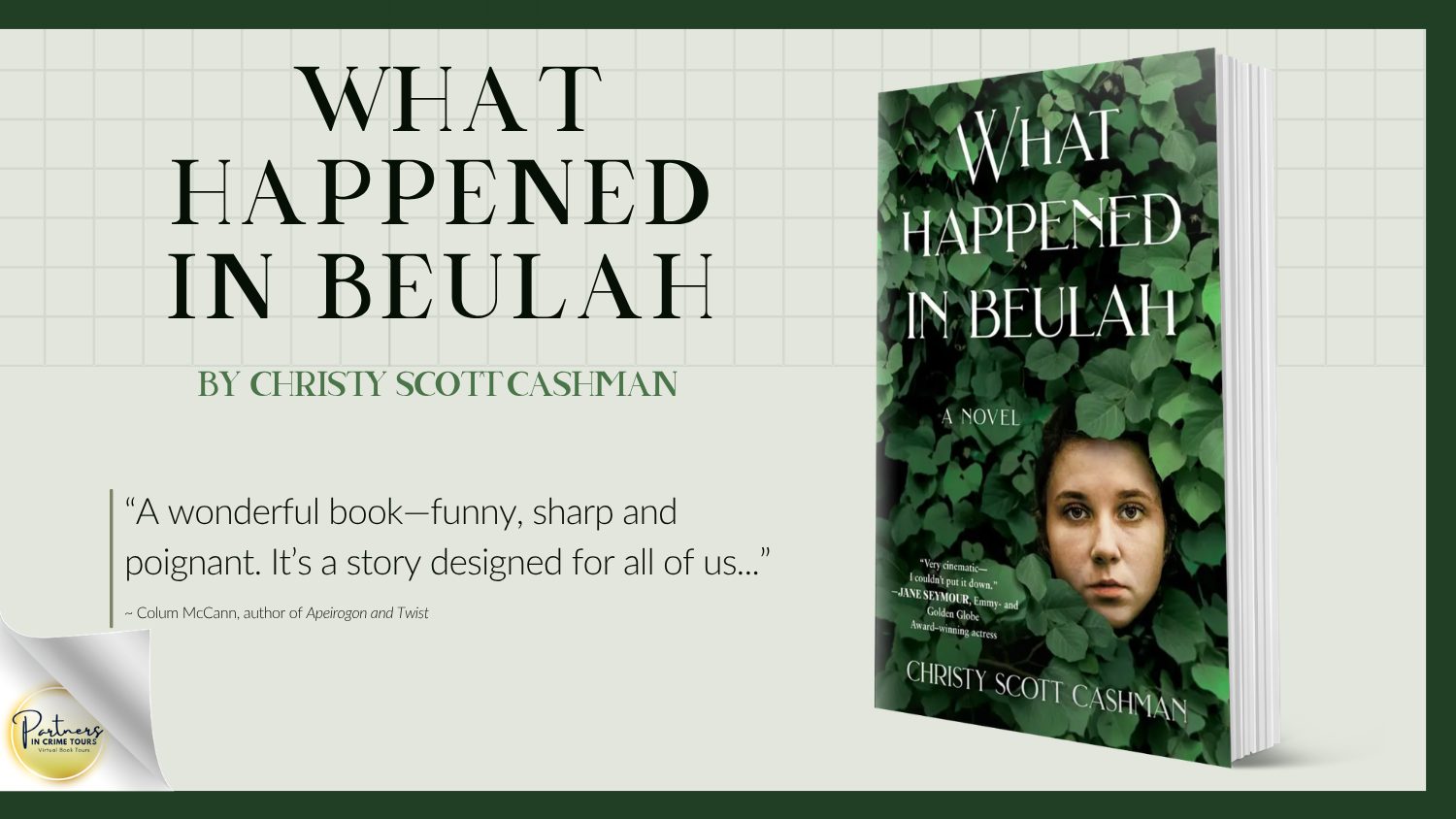
What Happened in Beulah by Christy Scott Cashman Banner

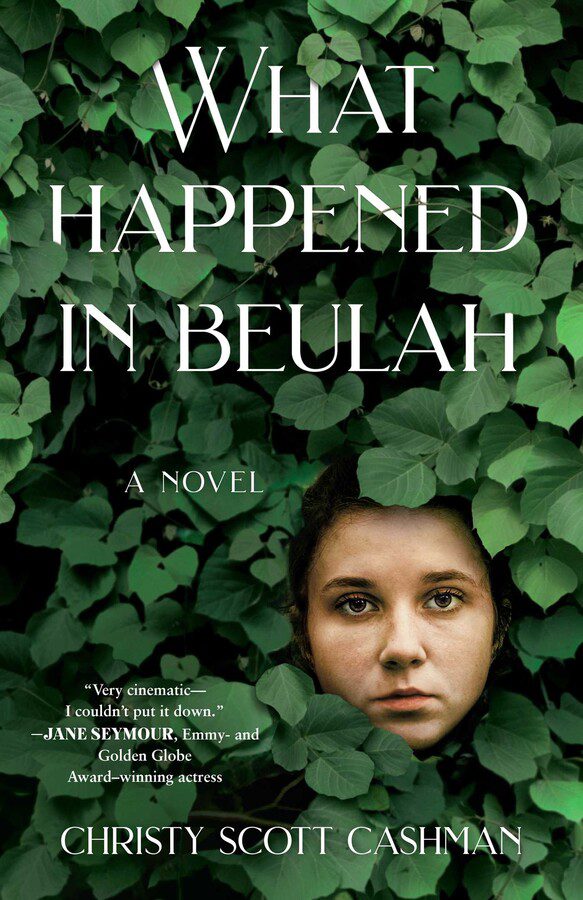
WHAT HAPPENED IN BEULAH

by Christy Scott Cashman

October 19 – November 13, 2026 Virtual Book Tour

Synopsis:

What Happened in Beulah by Christy Scott Cashman

A teenage girl uncovers the dark secrets of her Smoky Mountain town while searching for a missing classmate in this gripping coming-of-age mystery perfect for fans of Where the Crawdads Sing.

Nestled in the foothills of the Smoky Mountains, Beulah has always seemed steady—rooted in tradition, shaped by generations, and slow to change. But in 1986, the ground has shifted, and no one feels that more than fifteen-year-old Barrett Childress Owens. Between her parents’ unraveling marriage and a school full of kids she can’t connect with, she feels invisible in her own hometown.

When Lacy Gunderson, the captivating new girl everyone is curious about, suddenly vanishes, the town’s calm surface fractures. Search parties comb the woods. A police investigation begins. Rumors multiply. Families close ranks. And Barrett begins to sense how much the adults around her choose not to say. As Beulah clings to its usual rituals—including the annual Miss Kudzu pageant, which has shaped local girlhood for decades—Barrett is forced to navigate a community where loss lingers in the air and secrets are carefully kept. Her journey through the uncertainty reshapes her understanding of friendships, family, and the complex place she calls home.

A rich coming-of-age story with a pulse of mystery and a budding romance, What Happened in Beulah explores the fault lines of a small town and the courage it takes to face the truths people would rather bury.

Praise for What Happened in Beluah:

“What Happened in Beluah is a wonderful book—funny, sharp and poignant. It’s a story designed for all of us, of all ages, all wisdoms. It points to the necessity of recovery. It’s a novel of ghosts present and ghosts past, with alcoholics and dreamers and preachers and small town grifters all coming together in one place—the everywhere of guilt and consequence, the kudzu of our lives.”
~ Colum McCann, author of Apeirogon and Twist

“What Happened in Beulah cannot but remind us of what Hemingway said: ‘There is no friend as loyal as a book.’ Here, page after page, Christy Scott Cashman succeeds in making the reader hang onto the story as the drama on Beulah’s seemingly calm surface ruptures like a scene of serene rain that suddenly modulates into a rumbling thunderstorm. I’m sure the book will be a loyal friend to many readers.”
~ Patrick Kabanda, author of The Creative Wealth of Nations

Book Details:

Genre: YA Mystery, Coming of Age
Published by: She Writes Press
Publication Date: October 20, 2026
Number of Pages: 288 pages, Paperback
ISBN: 9798896364801
Book Links: Amazon | Kindle | Barnes & Noble | BookShop.org | Goodreads | BookBub | She Writes Press


Author Bio:

Christy Scott Cashman

Christy Scott Cashman is a best-selling and award-winning author with multiple national honors. A writer, actress, and producer, she has decades of storytelling experience across film, literature, and the arts. Christy is the founder of YouthINK, a creative arts foundation empowering young people through imagination and expression, and serves on the Board of the Associates of the Boston Public Library. Christy divides her time between Boston, Massachusetts, Martha’s Vineyard, and Philadelphia, Pennsylvania, where she enjoys family life with three dogs and four horses.

Catch Up With Christy Scott Cashman:

christycashman.com
Goodreads
Instagram – @cashman.christy
Facebook – @christycashmanauthor


Tour Participants:

Click through the other tour stops for can’t-miss reviews, insider interviews, exclusive guest posts, and more chances to win!
Click here to view the WHAT HAPPENED IN BEULAH by Christy Scott Cashman Schedule


Get Tangled Up in a Giveaway

This giveaway is hosted by Partners in Crime Tours for What Happened in Beulah by Christy Scott Cashman. See the widget for entry terms and conditions. Void where prohibited.
WHAT HAPPENED IN BEULAH by Christy Scott Cashman | Gift Card

Get More Great Reads at Partners In Crime Tours