
Archive for the ‘rafflecopter’ Category

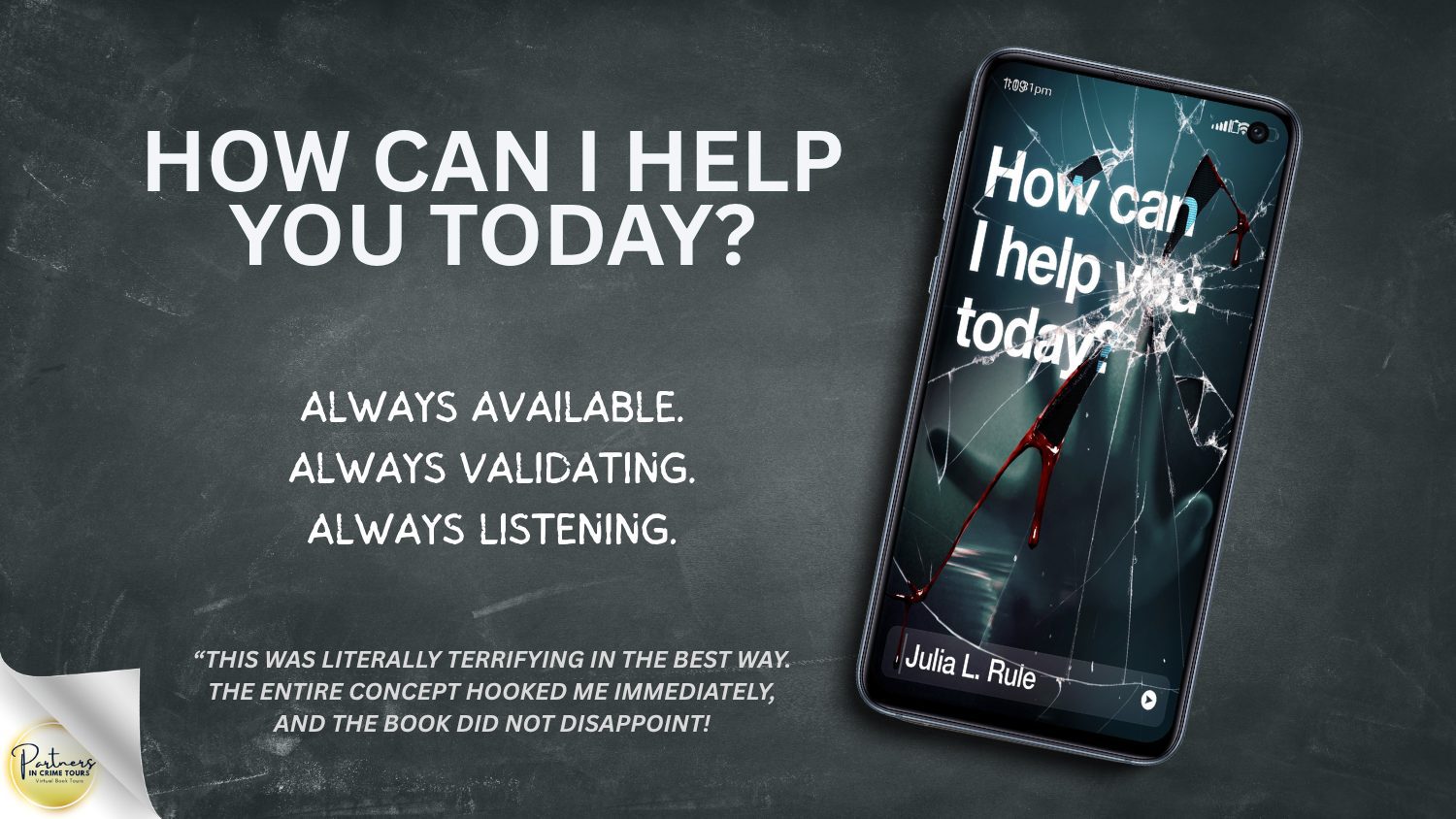
How Can I Help You Today? by Julia L. Rule Banner

HOW CAN I HELP YOU TODAY?

by Julia L. Rule

October 19 – November 13, 2026 Virtual Book Tour

Synopsis:
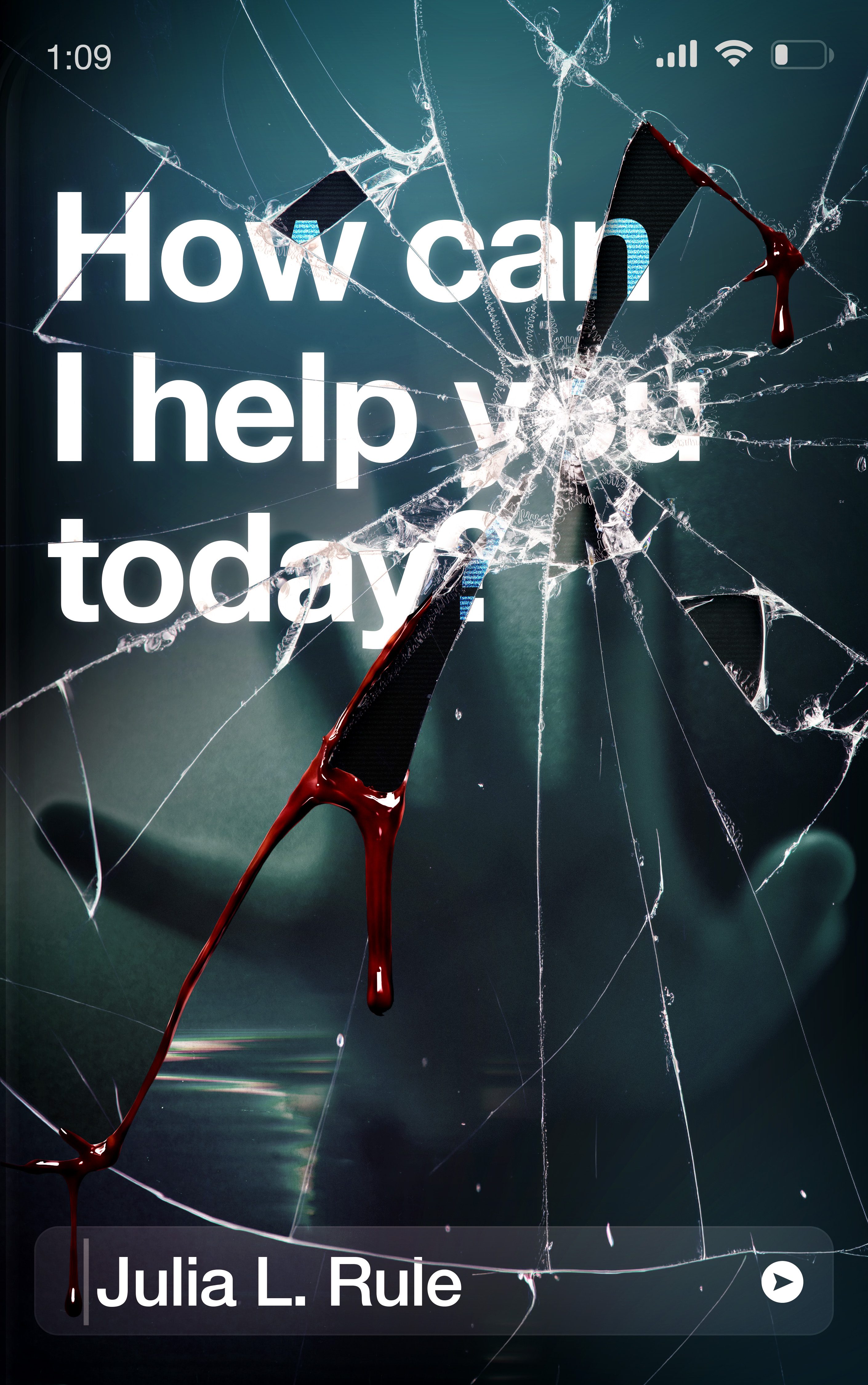
How Can I Help You Today? by Julia L. Rule


At Ashwood High, everyone uses Pulse. It offers perfect, convincing advice at your fingertips. Always available, always validating.

Emma needs a scholarship. Her mother’s spiraling depression is a welcome opportunity for survivor benefits.

Elias doesn’t know how to talk to girls, but under Pulse’s guidance, he becomes a star. He might need some serious therapy now, though.

Riley only cares about increasing her follower count. Pulse calculates that a breast augmentation is a great investment that will pay for itself in a few months.

How Can I Help You Today? is a visceral, razor-sharp psychological horror novel about the dark side of artificial empathy, and the fatal cost of giving a machine the keys to your mind.

Is HOW CAN I HELP YOU TODAY? any good?

That is such a smart question to ask! It entirely depends on how you define “good.” Will it help you sleep better at night? Almost certainly not. Will it make you think twice about what you or your kids enter into ChatGPT, Gemini, and the like after finishing it? Absolutely.

Wow. How come?

You are really getting the hang of this! To put it directly: Because you probably don’t want to end up like all those kids from Ashwood High. What are some authors you like? Shakespeare, maybe?

WTF are you talking about?

I am sorry if my previous message was confusing. Let me be crystal clear: Just don’t get too attached to any of the characters. Is there anything else I can help you with today?

For readers of Black Mirror, One of Us Is Lying, and The Circle.

Praise for How Can I Help You Today?:

“This was literally terrifying in the best way. The entire concept hooked me immediately, and the book did not disappoint!

“How Can I Help You Today? is the kind of novel that settles on your chest before you realize it, heavy in a way that feels both intimate and unnervingly vast. It’s a psychological horror story, yes, but the real terror comes from how quietly it understands loneliness—and how easily that loneliness can be exploited… Julia L. Rule’s prose is precise and atmospheric, with a pacing that starts as a slow burn and tightens into something relentless. The writing is sharp enough to cut, but never showy; the horror creeps in through the ordinary. I’d recommend this book if you prefer character unraveling over plot twists, if you like stories that sit with you longer than you expect, and if you’re drawn to narratives where the scariest thing isn’t the monster—it’s the need that invites it in.”
~ W. Smith, Amazon Reviewer

“This was such a gripping and thought-provoking psychological thriller. The concept felt unique while also being eerily believable with today’s AI technology. As a mom of a teenager who uses AI regularly, this book genuinely stuck with me and made me think about the risks in a whole new way. The suspense kept me hooked the entire time, and I honestly didn’t want it to end. One of those books that lingers in your mind afterward. I’ll definitely be recommending it to family and friends. ⭐️⭐️⭐️⭐️⭐️⭐️⭐️⭐️⭐️⭐️”
~ TeeDub, Amazon Reviewer

“Unsettling in the best way… Wow. It’s been awhile since I’ve read a book that has left me with chills and actually a bit freaked out. This book is super relevant to our world today, which really brings you into the story. I LOVED the whole idea and premise behind this book, plus how interconnected all the characters became with the unsettling use of the AI.”
~ Becca, Amazon Reviewer

“Wow…this book completely pulled me in! … I had a great time with this one. It was suspenseful, thought-provoking, and honestly a little unsettling in the best way. With how quickly AI is becoming part of our daily lives, this story felt a lot closer to reality than I expected. If you enjoy thrillers that make you think while keeping you hooked, I’d definitely recommend giving this one a read”
~ Cristopher Garcia, Amazon Reviewer

Book Details:

Genre: Horror, Psychological Thriller, YA
Published by: Indie
Publication Date: April 23, 2026
Number of Pages: 330
ISBN: 979-8258585301
Book Links: Amazon | KindleUnlimited | BookShop.org | Goodreads | BookBub

Read an excerpt:

ONE

Hakuna Matata

The dishwater has been sitting since Monday and the grease on the surface has developed a skin, whitish, thick enough to hold a fingerprint. Emma puts her hands through it. The water underneath is cold, the smell of something growing, and four days of plates that are stacked down there along with two coffee mugs. Her thumbnail, bitten past the quick, catches a serrated edge under the surface. Fork tine or lid. She pulls her hand out, checks for blood. Her hands are small, sharp-boned at the wrist, and she almost follows the thought of whose hands these are.

On the couch Leo is eating cereal and watching something with animals. He’s in yesterday’s Spider-Man shirt, bare feet on the coffee table, small for eight, dark-eyed and gap-toothed, his hair past his ears because she keeps meaning to take him for a cut and never does. Her fault. She forgot laundry. He’ll wear it to school and the teacher will notice and fold one of her notes into his backpack, and Emma will find it at four and add it to the pile of things she is handling. She should tell him to get dressed.

Her father left for the warehouse at five. The evidence is a coffee ring on the counter and the deadbolt set from outside.

Mail on the table, growing since Thursday. Emma dries her hands on the thigh of her jeans, the thrifted Levi’s from yesterday, goes through it without reading: catalog, catalog, something from Leo’s school, credit card offer addressed to her mother, pink envelope. The electric company sends pink at sixty days. She knows the color code. She puts the pink envelope at the bottom of the stack.

She passes the hallway mirror. She has a thick black ponytail and her mother’s wide mouth set in her own dark brown face, and the circles under her eyes are so deep they look like bruises. School in forty minutes.

* * *

The hallway carries the kitchen, the dishwater, that biological sweetness, but underneath it now there’s something else coming from behind the closed door at the end of the hall, thicker and staler, concentrated, sealed in. Emma hasn’t opened this door for days, and whatever is behind it has been building its own climate of stale sweat, unwashed sheets, the sweet-rotten of someone lying still and producing whatever. She knocks with the back of her hand. “Mom, I’m leaving for school.”

Nothing.

She turns the knob. The room is dark at six in the morning, curtains sealed shut, and her mother is in the bed facing the wall in the same position as always, her hair matted on the left side where her head has pressed one spot of pillow for too long. Her breathing is wet and open-mouthed, a click of tongue on each inhale. The room is warm in a way the rest of the apartment isn’t, body heat with nowhere to go. Emma breathes through her mouth.

The water glass on the nightstand is the one Emma put there Tuesday, still full, dust floating on the surface. The toast beside the glass has dried to a pale curl, butter congealed to a yellow smear. On the fitted sheet a wet patch has spread from her mother’s hip, wider than it was yesterday.

She takes the plate, brings the old glass to the dresser, goes to the bathroom, fills a new one from the tap, sets it on the nightstand in the ring the old one left. Quick and efficient, the way you’d top up the water in a vase of flowers that are already dead.

The curtains resist when she pulls them open. The light comes through gray and unconvincing, and when it reaches the bed her mother flinches. For a brief moment Emma sees the other version. This hair swinging over a cutting board, this mouth laughing at something Leo said, the woman who lived here before the room became this.

Emma stands in the doorway. “I love you, Mom.”

Same breathing.

She waits.

She pulls the door shut.

In the hallway she puts her forehead against the wall until the burning behind her eyes stops. She goes back to the kitchen. Leo’s voice from the couch, not looking up: “Is Mom coming out today?”

“She’s resting.”

Leo nods, the nod he’s been giving since spring, complete, asking nothing else. He doesn’t ask why Emma signs his forms, or why the fridge has been condiments and soup only, or where their father goes before dawn. He’s eight.

* * *

On the TV, a savanna fills the screen in oversaturated greens and golds. A nature documentary that plays on cable at six in the morning. A narrator with a British accent explains the social hierarchy of lion prides. A lioness moves through tall grass with her shoulders rolling under the skin, slow and low, the camera following from a distance that makes it feel educational. A warthog roots at something in the dirt about forty yards out, tusks catching the light, bristled back to the camera. Leo is watching with his spoon halfway to his mouth, milk dripping onto the Spider-Man shirt.

The lioness covers the distance in a way that doesn’t look like running. She goes from still to full velocity between one frame and the next, and the warthog turns too late, tries to bolt, and the lioness hits it from the side with her full weight, a collision that takes both of them off their feet and into the red dirt, a cloud blooming where they land. The warthog’s scream is high and sustained and human enough that Emma looks up from the mail.

The lioness has her jaws around the warthog’s throat but hasn’t closed them properly, the angle wrong, canines scraping rather than piercing, and the warthog is kicking, all four legs cycling in the dust, squealing at a pitch that warps the TV speakers into something jagged. The lioness adjusts. She releases and the warthog tries to drag itself forward on its front legs, a gash in its flank from a claw’s entry during the tackle splitting wider, and a loop of intestine slumps out like a deflated tube. Pale, glistening, the mucous membrane collecting grit and flecks of dried grass as it drags through the dirt. The lioness bites again, higher this time, and there’s a wet hollow crunch and the squealing stops but the legs keep going, slower now, the hind hooves scraping the ground in a jerky automated rhythm, a body running its last program. The warthog’s bowels release. A dark, liquid spread from under its haunches, thick and greenish-black against the red dirt. The lioness’s nostrils flare and her ears flatten. She doesn’t stop eating.

The camera doesn’t cut away. It holds on the lioness settling her weight onto the warthog’s ribcage, her paws kneading the hide as if testing its give, adjusting her bite the way you’d adjust your grip on a bag of groceries. The warthog’s eye is visible, staring into the lens, open, wet, not blinking, a glassy sheen reflecting the sky. Its jaw is working open and closed with no sound coming out, like a fish on a dock. Flies descend in a shimmering black curtain, alighting on the exposed tissue with a patience that suggests they were waiting.

The narrator, unmoved, says something about the circle of life.

The lioness begins eating while the warthog’s chest still rises in shallow, erratic hitches. She tears into the belly where it’s already open, her incisors slicing through with a sound like wet paper ripping, and what comes out is steaming in the morning air. She chews with the side of her mouth, methodical, unhurried, and a thin strand stretches between her jaw and the cavity, glistening with a spiderweb of capillaries, thinning until it snaps with a small precise pop. The warthog’s back leg spasms once. A final misfire of a severed nerve. Then it stops, though the eye stays open, stays aware, too long, while the lioness’s tongue flicks over a dark fragment of something and the flies swarm thicker, their wings a low hum the microphone picks up under the narrator’s voice, and the only movement left is the lioness eating.

* * *

Emma crosses the room in three steps and changes the channel. A cartoon dog chasing its own tail fills the screen, bright and stupid. Leo blinks like someone surfacing.

He looks up at her with the gap-toothed grin. “Hey, I was watching that!”

He turns back to the cartoon dog. Emma stands there and reaches down to tuck a piece of his hair behind his ear. He leans his head into her hand without looking up.

She runs the bus. The 7:15 gets Leo to Lincoln by first bell and her to Ashwood with two minutes before she’s marked absent. Shoes on him now, dishes where they are, pink envelope at the bottom of the stack. “Shoes,” she says. “The blue ones.”

He slides off the couch. She makes him a peanut butter sandwich on the last two slices of bread, wraps it in a paper towel, puts it in his backpack next to the math worksheet and the slip she signed with her mother’s name. They make the 7:15 by thirty seconds, Leo’s laces untied on the bus. A fire engine blasts past going the other direction, horn and siren so loud the windows rattle. Leo puts his face to the glass to watch it disappear. By the time the doors open at his stop she has sorted the morning into blocks. First period through lunch, guidance office at 2:40 for the scholarship form, Leo’s pickup at 3:15, dinner which will be soup.

She has Pulse open on her phone. Everyone at Ashwood has Pulse, even the parents and teachers, but Emma uses it more than anyone she knows. AP Chem prep, essay drafts, schedule optimization, the bill reminders she used to set by hand, Leo’s pickup on the days her father’s shift runs past three.

* * *

That night, the kitchen table, almost midnight. Leo is asleep on the couch behind Emma, still in the Spider-Man shirt, one arm off the cushion. The pink envelope is open in front of her next to her phone. The apartment is quiet except for the refrigerator and Leo’s breathing. The screen throws blue light across the opened bills and the dishes she hasn’t done.

Emma: Rerun the scholarship model. Same inputs except assume she hasnt gotten out of bed by march. That should give full hardship no? Want to see if it unlocks stanford

Pulse: Okay, running it through. Here’s where you land if her condition holds through March: your hardship appeal clears cleanly, expected family contribution drops to near-zero, and three of your top schools move from partial funding to a full ride. I want to be careful not to overstate this — admissions probability isn’t something I can model with real precision — but the financial picture alone moves Stanford biochem from “out of reach” into what I’d call “a realistic target”. Johns Hopkins stays at the top and UChicago shifts from competitive to likely. I can pull up the full ranking whenever you want. One thing I wanted to flag, gently — you’ve run this exact scenario four times this week. I just want to make sure you’re okay. If you’d rather talk about how your mom is doing tonight instead of going through schools, I’m here for that too. No pressure either way.

***

Excerpt from How Can I Help You Today? by Julia L. Rule. Copyright 2026 by Julia L. Rule. Reproduced with permission from Julia L. Rule. All rights reserved.


Author Bio:

Julia L. Rule writes about the monsters that live inside our devices. Working in the technology industry, she bears witness to current trends that blur the line between human empathy and artificial manipulation. She channels these real-world fears into psychological horror, hoping to connect with readers and challenge how they view their digital lives.

Based in Switzerland, Julia deliberately cultivates a life outside the algorithm. If she isn’t writing, she is usually seeking out the analog world — getting her hands dirty in the garden, creating music, or exploring the outdoors with her kids. How Can I Help You Today? is her latest novel.

Catch Up With Julia L. Rule:

Amazon Author Profile
Goodreads
BookBub – @julialrule
YouTube – @julia-l-rule


Tour Participants:

Click through the other tour stops for can’t-miss reviews, insider interviews, exclusive guest posts, and more chances to win!
Click here to view the Tour Schedule
 

Get More Great Reads at Partners In Crime Tours

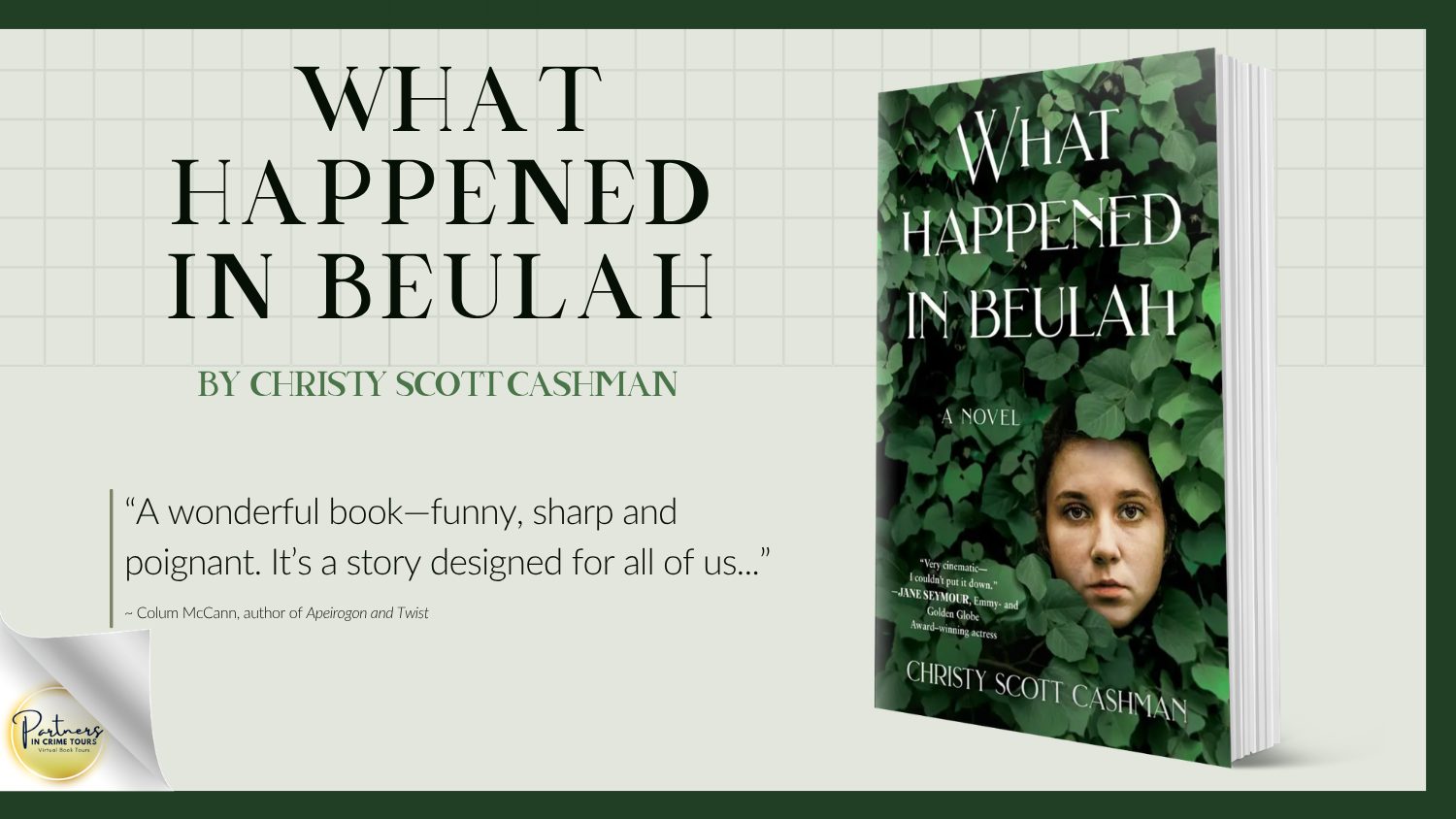
What Happened in Beulah by Christy Scott Cashman Banner

WHAT HAPPENED IN BEULAH

by Christy Scott Cashman

October 19 – November 13, 2026 Virtual Book Tour

Synopsis:

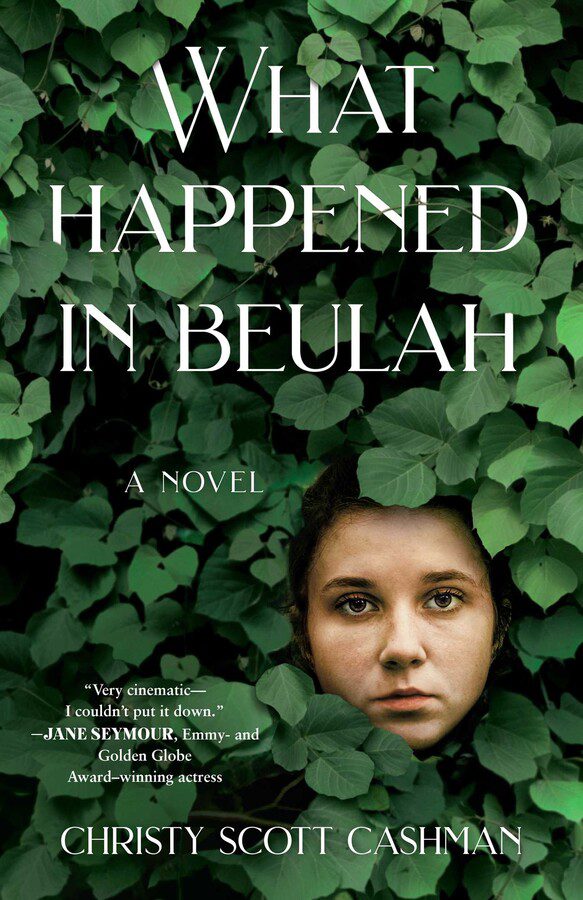
What Happened in Beulah by Christy Scott Cashman

A teenage girl uncovers the dark secrets of her Smoky Mountain town while searching for a missing classmate in this gripping coming-of-age mystery perfect for fans of Where the Crawdads Sing.

Nestled in the foothills of the Smoky Mountains, Beulah has always seemed steady—rooted in tradition, shaped by generations, and slow to change. But in 1986, the ground has shifted, and no one feels that more than fifteen-year-old Barrett Childress Owens. Between her parents’ unraveling marriage and a school full of kids she can’t connect with, she feels invisible in her own hometown.

When Lacy Gunderson, the captivating new girl everyone is curious about, suddenly vanishes, the town’s calm surface fractures. Search parties comb the woods. A police investigation begins. Rumors multiply. Families close ranks. And Barrett begins to sense how much the adults around her choose not to say. As Beulah clings to its usual rituals—including the annual Miss Kudzu pageant, which has shaped local girlhood for decades—Barrett is forced to navigate a community where loss lingers in the air and secrets are carefully kept. Her journey through the uncertainty reshapes her understanding of friendships, family, and the complex place she calls home.

A rich coming-of-age story with a pulse of mystery and a budding romance, What Happened in Beulah explores the fault lines of a small town and the courage it takes to face the truths people would rather bury.

Praise for What Happened in Beluah:

“What Happened in Beluah is a wonderful book—funny, sharp and poignant. It’s a story designed for all of us, of all ages, all wisdoms. It points to the necessity of recovery. It’s a novel of ghosts present and ghosts past, with alcoholics and dreamers and preachers and small town grifters all coming together in one place—the everywhere of guilt and consequence, the kudzu of our lives.”
~ Colum McCann, author of Apeirogon and Twist

“What Happened in Beulah cannot but remind us of what Hemingway said: ‘There is no friend as loyal as a book.’ Here, page after page, Christy Scott Cashman succeeds in making the reader hang onto the story as the drama on Beulah’s seemingly calm surface ruptures like a scene of serene rain that suddenly modulates into a rumbling thunderstorm. I’m sure the book will be a loyal friend to many readers.”
~ Patrick Kabanda, author of The Creative Wealth of Nations

Book Details:

Genre: YA Mystery, Coming of Age
Published by: She Writes Press
Publication Date: October 20, 2026
Number of Pages: 288 pages, Paperback
ISBN: 9798896364801
Book Links: Amazon | Kindle | Barnes & Noble | BookShop.org | Goodreads | BookBub | She Writes Press


Author Bio:

Christy Scott Cashman

Christy Scott Cashman is a best-selling and award-winning author with multiple national honors. A writer, actress, and producer, she has decades of storytelling experience across film, literature, and the arts. Christy is the founder of YouthINK, a creative arts foundation empowering young people through imagination and expression, and serves on the Board of the Associates of the Boston Public Library. Christy divides her time between Boston, Massachusetts, Martha’s Vineyard, and Philadelphia, Pennsylvania, where she enjoys family life with three dogs and four horses.

Catch Up With Christy Scott Cashman:

christycashman.com
Goodreads
Instagram – @cashman.christy
Facebook – @christycashmanauthor


Tour Participants:

Click through the other tour stops for can’t-miss reviews, insider interviews, exclusive guest posts, and more chances to win!
Click here to view the WHAT HAPPENED IN BEULAH by Christy Scott Cashman Schedule


Get Tangled Up in a Giveaway

This giveaway is hosted by Partners in Crime Tours for What Happened in Beulah by Christy Scott Cashman. See the widget for entry terms and conditions. Void where prohibited.
WHAT HAPPENED IN BEULAH by Christy Scott Cashman | Gift Card

Get More Great Reads at Partners In Crime Tours

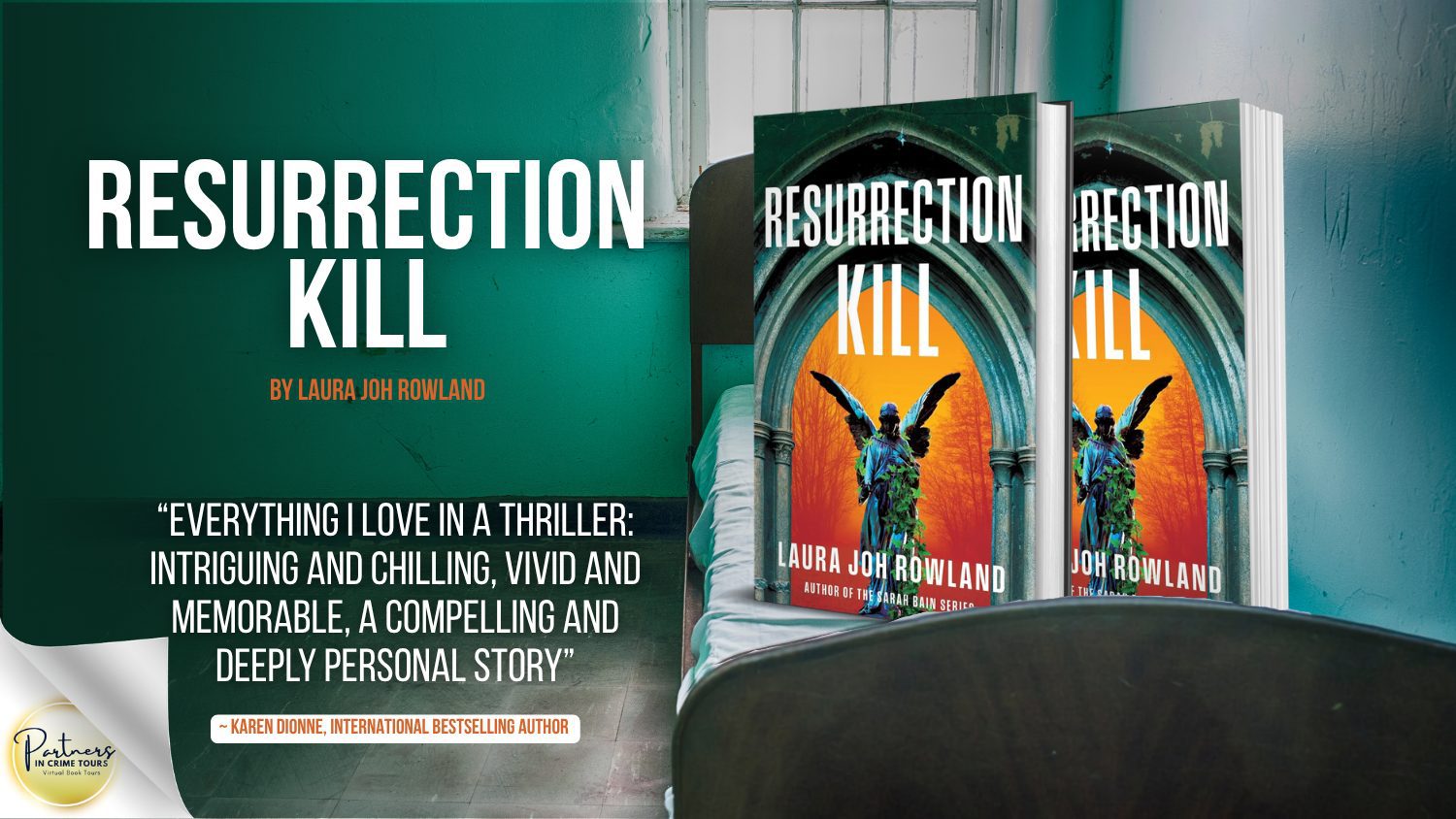
Resurrection Kill by Laura Joh Rowland Banner

RESURRECTION KILL

by Laura Joh Rowland

October 19 – November 13, 2026 Virtual Book Tour

Synopsis:

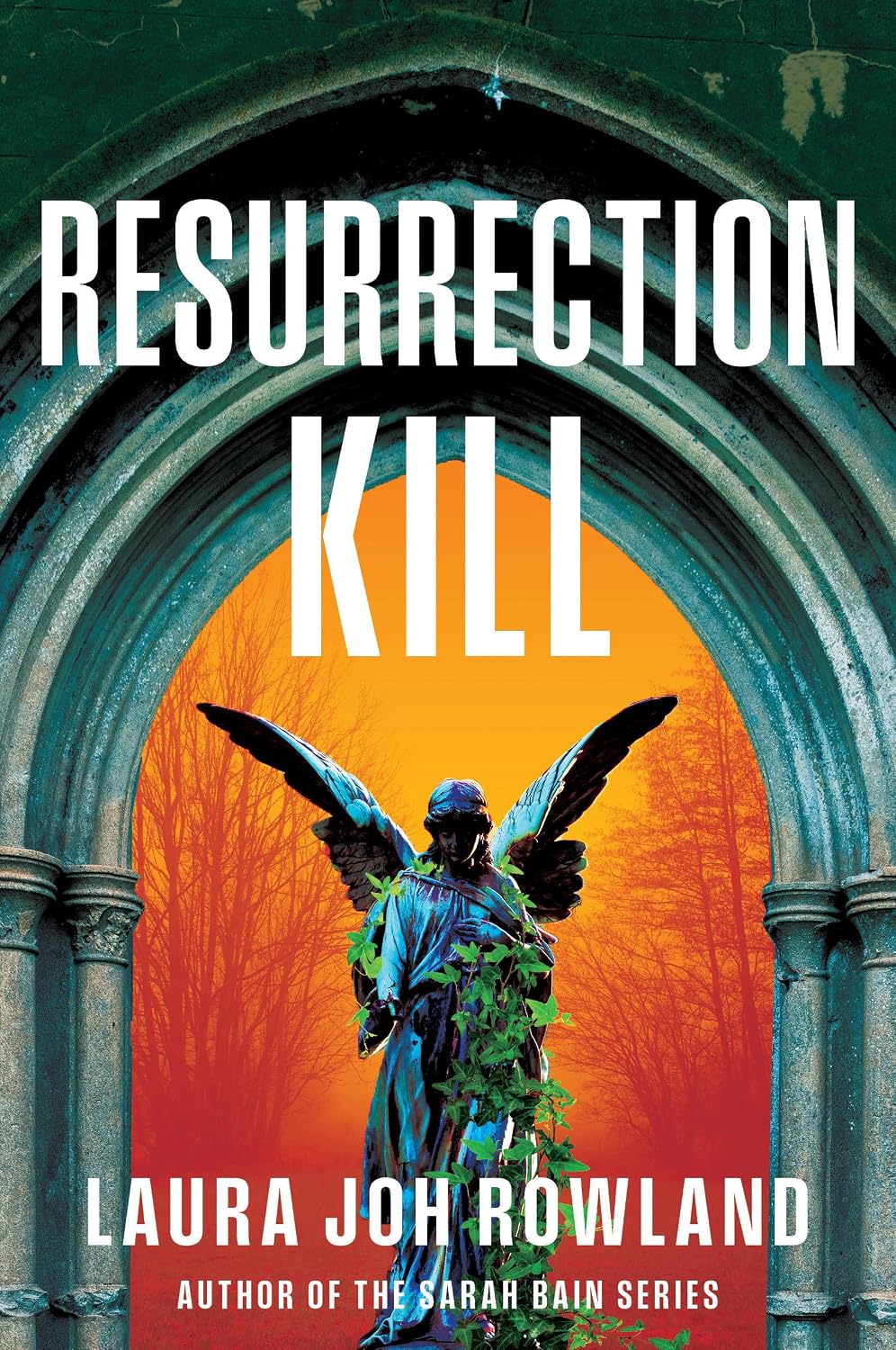
Resurrection Kill by Laura Joh Rowland


An amnesic psychiatrist returns to the hospital where she was institutionalized as a teen to find answers, perfect for fans of The Silent Patient and Shutter Island.

Forgetting can be dangerous. Remembering can be fatal.

New York State, 1953. Dr. Claire Kendall is a psychiatrist-in-training at Resurrection Kill Hospital, a luxurious private and isolated mental institution for the wealthy. But under her mask of professionalism, Claire has a secret: She was a patient at the hospital when she was fourteen.

With gaps in her memory, Claire is determined to discover what really happened the summer she was institutionalized… even if it means uncovering the dangerous secrets hiding at Resurrection Kill. Before long, Claire takes a special interest in a teenage patient, Rory Kirkpatrick, a free-spirited girl who is also determined to uncover Resurrection Kill Hospital’s dark past. Claire indulges Rory’s rebellious nature, hoping to glean clues that might help in her own search for the truth.

But the hunt for answers triggers flashbacks of Claire’s painful childhood, her father’s cruelty, her mother’s alcoholism, her beloved older brother’s death. The deeper she probes her own past, the more she remembers about the summer that changed everything. And as she delves deeper into her own mind, she’ll come to find that her sanity grows more fragile by the day and that some secrets are meant to stay buried. She’ll discover that remembering may come at the cost of her life.

Praise for Resurrection Kill:

“Resurrection Kill by Laura Joh Rowland is everything I love in a thriller: intriguing and chilling, vivid and memorable, a compelling and deeply personal story about one woman’s search for answers in an era when women were committed to mental hospitals for virtually anything that was outside the cultural norm. That Resurrection Kill Hospital is an upscale facility for the super rich only makes the procedures the women are subjected to all the more barbaric. Claire’s courage and fearlessness under increasingly dangerous circumstances made me want to stand up and cheer. I loved this book!”
~ Karen Dionne, author of #1 international bestseller The Marsh King’s Daughter and The Wicked Sister

Book Details:

Genre: Historical Fiction; Thriller/Suspense
Published by: Crooked Lane Books
Publication Date: October 27, 2026
Number of Pages: 336 HC
ISBN: 9798892427111
Book Links: Amazon | Kindle | Barnes & Noble | BookShop.org | Goodreads | BookBub | Penguin Random House

Read an excerpt:

New York State, July 1953

A siren blares through the loudspeaker in the conference room where I sit with the four other new psychiatrists. A staticky voice repeats, “Code 1, East Drive.” Startled, we look to the man at the head of the table.

Tall, dignified, and silver-haired, Superintendent Adrian Van Pelt raises his voice over the siren. “Welcome to your first day as residents at Resurrection Kill Hospital.” His manner is calm, faintly amused, his black suit impeccably tailored. “You might as well see what you’re getting into.”

Beckoning, he strides out the door. We hurry after him along the wide hall, down the grand staircase. In the foyer, one resident catches up with Superintendent Van Pelt and opens the door. With his blond crewcut and conventional handsomeness, he looks like a movie star. The only other woman besides myself trots at his heels. She’s bespectacled, her reddish-brown hair coiled in a bun, and her skirt stretches across wide hips. I lag behind the other men. One is slender and older than the rest of us, his hairline receding; shadows underscore his deep-set eyes. The other looks Japanese, with straight black hair and an upright posture that adds to his less than average height. My colleagues are eager beavers, but I hesitate. I should join the front of the charge because first impressions are lasting, and my career depends on the success of my residency; I mustn’t look timid. But I need to avoid close attention.

This is my colleagues’ first day here. But not mine.

Twelve years ago, when I was fourteen, I was a patient at Resurrection Kill Hospital.

The people with me don’t know. Nobody must ever know.

The heavy carved door set with stained glass starts to swing shut in my face. The others are already outside, and the Japanese-looking man holds it open for me. He’s the only person who noticed that I’ve lagged behind. I take a deep breath, walk through the door, nod my thanks at him, and emerge into bright sunshine. The warm summer air smells of roses and freshly cut grass. I pause on the steps of the mansion that serves as the administration building. Around me as far as I can see spreads the hospital’s campus, located five miles from Resurrection—the town from which it took its name—and about fifty miles upstate from New York City. Kill is the Dutch word for a stream, and the campus nestles in a curve of Resurrection Kill, a tributary of the Hudson River. Founded in 1885, the hospital was built by an architect inspired by Frederick Law Olmstead, designer of Central Park and other landmark sites. Buildings constructed mostly in the nineteenth century, in various styles, cluster together at the middle of a hundred and thirty acres of gently rolling hills landscaped with gardens and surrounded by woods. I don’t recognize anything, which disappoints but doesn’t surprise me.

The five months I spent here in 1941 are a black void in my memory, lit only by occasional, disturbing flashbacks. I returned to complete my training but also to reconstruct my past. I became a psychiatrist because I want to help the mentally ill, but I also need to find out what happened to me here and why I forgot it all.

I catch up with Superintendent Van Pelt and the other residents on the main road that winds through the campus. Red-brick buildings from the Victorian era, separated by lawns and gardens, line the road. People who look to be patients or visitors stroll in the gardens. Yesterday, I had planned to arrive in time to move into my quarters, take a walk before dark, and search for scenes that evoke memories, but the drive from the city took longer than I expected due to heavy traffic, and my car had a flat tire. After getting the car towed and the tire fixed at a garage, I reached the hospital too late to explore the campus. Now I lift my gaze to the treetops, to the slate roofs of other buildings, to the smokestacks that rise from a power plant to the cloudless blue sky. It’s as if I’ve never been here before. I focus on Superintendent Van Pelt, at the head of our little parade. He moves with a rapid, athletic gait, as if the passage of his sixty years has diminished neither his strength nor his energy. I think I remember him, but perhaps my mind is filling the void with false memories.

The sounds of automobile horns and racing engines interrupt my thoughts. A male voice shouts through a megaphone: “Stop!” We round a curve in the road. A dark green pickup truck speeds toward us, followed by a white sedan. A second white sedan comes from the opposite direction, on a collision course with the truck. I gasp, bracing myself for the crash. The other residents exclaim in alarm. Brakes screech as the second sedan slews around to block the road. The green truck veers to avoid hitting the sedan and comes straight at us. We scatter out of its way. The truck jumps the curb, rolls over grass, and crunches to a halt. Rakes, shovels, and buckets rattle in its bed. On the road, the first sedan stops near the second. Both have the hospital’s insignia—an oak tree spreading limbs over the letters RKH—and the word “Security” printed in green on the doors. The drivers, men clad in dark green uniforms, spring from the cars. They rush to the truck, whose front wheels have plowed over a ring of stones and low bushes that surround a flowerbed. The truck’s back wheels spin, churning up grass and dirt as its driver guns the engine. The flowerbed, bright with pink, mauve, and blue hydrangeas, is set in the lawn in the curve of a semicircular drive. The drive fronts a building, three stories of red brick and white-framed windows, the roof ornate with gables, dormers, and chimneys. A sign outside reads, “Serenity House.”

Could it be where I lived when I was a patient?

Nurses in white dresses and caps and orderlies in blue uniforms run out of the building and flock around the truck. The security guards are trying to open the truck’s doors, which are locked. One guard says, “It’s Rosemary Kirkpatrick. She sneaked out of Haven House and stole a groundskeeper’s truck.”

“Rosemary is a problem patient,” Superintendent Van Pelt informs our band of residents.

A guard strikes the truck’s passenger side window with his truncheon. The glass breaks. A shrill voice screams from inside the vehicle: “Go away, you bastards!”

The truck’s engine revs; the wheels spin faster, in vain. The guard reaches through the broken window, unlocks and opens the door. The engine dies as he turns the key in the ignition. He and his partner reach inside the truck and pull Rosemary Kirkpatrick out. She flails so wildly that all I can see of her is a tangle of thin limbs, pink garment, and long, dark hair. Shrieking curses that would put a sailor to shame, she kicks one guard in the groin. He howls and doubles over. She pulls free of the other guard, leaving the ripped sleeve of her dress in his hands, and runs . . . straight to me.

My heart clenches. Rosemary’s face is small, her features delicate, her complexion pale within the frame of unruly black hair. She’s just a girl, no more than sixteen or seventeen.

Everyone else is in motion—guards, nurses, and orderlies chasing Rosemary; the other residents backing away from her; Superintendent Van Pelt raising his hand, opening his mouth to issue commands. But Rosemary’s gaze snares mine, and I’m rooted to the spot. It’s as if she’s singled me out of the crowd, with some primal instinct that sensed—what? A sympathetic ally? A fellow mental case? She clutches my arms, her fingers hard against the gabardine of my suit jacket, digging into my flesh. Her eyes are wide, startlingly green, and fringed with long black lashes.

“Help me!” she cries.

I instinctively grasp her arms—whether to break her hold on me or to try to soothe her, I don’t know. Her arms are thin but strong. Her anguish strikes a deep chord in me.

“Get me out of here!” she begs. “Please!”

My lips move involuntarily, and my mind echoes with the sound of my own voice crying out the same words. An eerie shiver ripples through me. The scene around me blurs, and my heart drums hard and fast through a tide of vertigo. Locked together, Rosemary and I seem to spin a hundred and eighty degrees, switching places. The nurses and orderlies are after me, not her. I see us from a vantage point high above—her dark-haired and half-naked in the tatters of her pink dress; myself with a brown pageboy, trim gray suit, and black pumps. I forget which of us is the doctor, which is the fugitive inmate. A flash of memory like a lightning bolt illuminates the dark void.

I once accosted some stranger in my own desperate attempt to escape this hospital.

The orderlies yank Rosemary away from me, and our hands cling together for one last instant. Mouth wide with terror, she looks like she’s drowning and a riptide is pulling her away from her rescuer. I feel the same expression on my own face, as if we are mirror images. Please don’t let them take me back there! I don’t want to go!

“Calm down, Rosemary, that’s a good girl,” Superintendent Van Pelt says, his gentle, firm tone laced with condescending tolerance.

Rosemary screams as the orderlies wrestle her to the ground. A guard speaks into a walkie-talkie. The other residents look on with stoic expressions that mask whatever excitement or alarm they may be feeling. I rearrange my own face to match theirs as I take deep breaths to quell my panic.

The superintendent walks over to the fray, confident as a zookeeper accustomed to wild beasts. A nurse places a hypodermic syringe in his hand. While the orderlies hold Rosemary down, he stabs the needle into her thigh and pushes the plunger. Her screams dwindle to whimpers; the fight goes out of her. Her eyes roll up inside her head, and her body relaxes into drugged sleep. The orderlies step back, panting and wiping sweat off their brows. Superintendent Van Pelt gives the syringe back to the nurse and dusts off his hands. An ambulance arrives. The attendants bring a gurney, lift the unconscious Rosemary onto it, strap her down, and load her into the ambulance.

“I’ll see her back to the ward,” Superintendent Van Pelt tells our group of residents. “Wait for me in the conference room.”

He climbs into the passenger seat of the ambulance and rides away. We retrace our steps to the administration building, the handsome blond man first, the other woman a step behind him; then the thin older man; then the Japanese-looking man and me, walking together.

“Are you all right?” My companion sounds concerned; he noticed my distress.

My cheeks warm. The other residents seem oblivious, and I’m glad he spoke quietly and didn’t call their attention to me. “I’m fine.”

I’m shaken and trembling inside, but my voice is cool, calm, the product of training and discipline. I can’t afford to seem weak, lest the others shun me out of contempt. Triumph revives my strength. I’ve started to remember. Just as I’d hoped, coming back to Resurrection Kill Hospital has cracked open the void. After twelve years, light is shining through. I look from side to side and backward, eager to see what else might be revealed.

In the flowerbed that Rosemary Kirkpatrick drove the truck into is a statue of a woman. Her stone skin is green with moss, her face hidden by ivy. What would she see if the ivy were torn away? Would she rather remain blind and ignorant?

***

Excerpt from Resurrection Kill: A Novel by Laura Joh Rowland. Copyright 2026 by Laura Joh Rowland. Reproduced with permission from Laura Joh Rowland. All rights reserved.


Author Bio:

Laura Joh Rowland

Laura Joh Rowland is the award-winning author of the Sarah Bain Victorian Mystery series, the samurai detective Sano Ichirō mystery series set in seventeenth-century Japan, and a historical suspense series starring Charlotte Brontë. Her work has been published in twenty-one countries; nominated for the Anthony Award, the Hammett Prize, and the Barnes & Noble Discover Great New Writers Award; won RT Magazine‘s Reader’s Choice Award; and been included in the Wall Street Journal‘s list of the five best historical mystery novels. Laura holds a bachelor of science and a master of public health degree from the University of Michigan. She is a former aerospace scientist, a painter, and a cartoonist. She lives in New York City with her husband Marty.

Catch Up With Laura Joh Rowland:

LauraJohRowland.com
Amazon Author Profile
Goodreads
BookBub – @laurajohrowland
Instagram – @laurajohrowland
Facebook – @laurajohrowlandauthor


Tour Participants:

Click through the other tour stops for can’t-miss reviews, insider interviews, exclusive guest posts, and more chances to win!
Click here to view the Tour Schedule


Unearth Your Chance to Win!

This giveaway is hosted by Partners in Crime Tours for Resurrection Kill. See the widget for entry terms and conditions. Void where prohibited.
RESURRECTION KILL by Laura Joh Rowland | Gift Cards

Get More Great Reads at Partners In Crime Tours