



Author Archive

The Vanishing at Castle Moreau by Jaime Jo Wright Banner

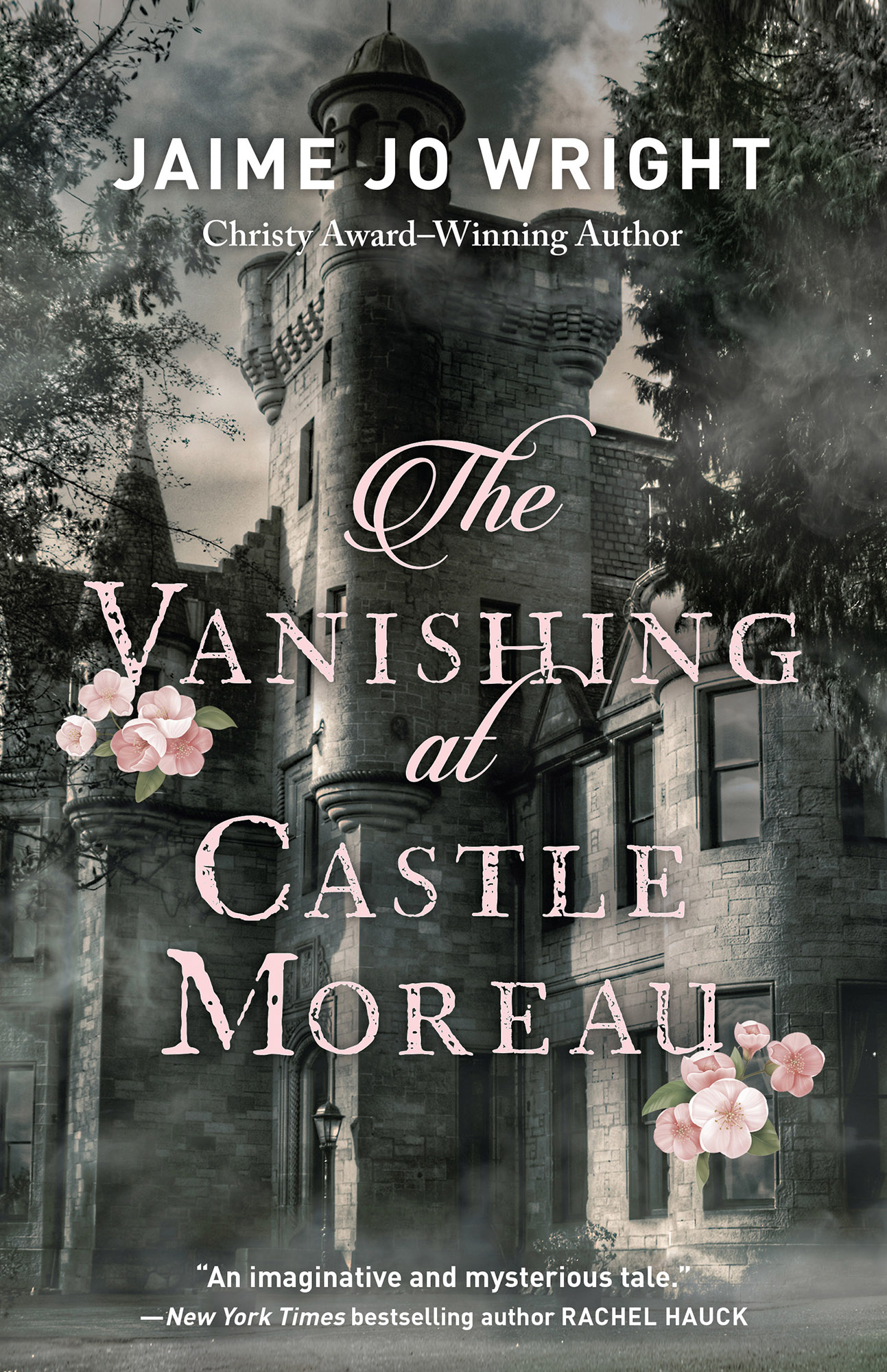
The Vanishing at Castle Moreau

by Jaime Jo Wright

April 3-28, 2023 Virtual Book Tour

Synopsis:
The Vanishing at Castle Moreau by Jaime Jo Wright

A haunting legend. An ominous curse. A search for a secret buried deep within the castle walls.

In 1870, orphaned Daisy François takes a position as housemaid at a Wisconsin castle to escape the horrors of her past life. There she finds a reclusive and eccentric Gothic authoress, who hides tales more harrowing than the ones in her novels. With women disappearing from the area and a legend that seems to parallel these eerie circumstances, Daisy is thrust into a web that threatens to steal her sanity, if not her life.

In the present day, Cleo Clemmons is hired by the grandson of an American aristocratic family to help his grandmother face her hoarding in the dilapidated Castle Moreau. But when Cleo uncovers more than just the woman’s stash of collectibles, a century-old mystery of disappearance, insanity, and the dust of the old castle’s curse threaten to rise again. This time to leave no one alive to tell the sordid tale.

Award-winning author Jaime Jo Wright seamlessly weaves a dual-time tale of two women who must do all they can to seek the light amidst the darkness shrouding Castle Moreau.

Praise for The Vanishing at Castle Moreau:

“An imaginative and mysterious tale.”

New York Times bestselling author RACHEL HAUCK

“With real, flawed characters, who grapple with real-life struggles, readers will be drawn into this gripping suspense from the very first page. Good luck putting it down. I couldn’t.”

LYNETTE EASON, bestselling, award-winning author of the Extreme Measures series

“Wright pens another delightfully creepy tale where nothing is quite as it seems and characters seek freedom from nightmares both real and imagined.”

Library Journal

“Wright captivates. A thrilling tale. . . . Readers won’t want to put this down.”

Publishers Weekly

The Vanishing at Castle Moreau Trailer:

Book Details:

Genre: Dual time Suspense/Thriller
Published by: Bethany House Publishers
Publication Date: April 2023
Number of Pages: 384
ISBN: 9780764238345
Book Links: Amazon | Barnes & Noble | BookShop.org | Goodreads | Baker Book House

Read an excerpt:

The one who rescues,
who loves,
and who stands in the gap.
God knew I needed you.

The Girl

MAY 8, 1801

When I was a little girl, my father would often come to my bedside after my screams wakened him in the night. He would smooth back my damp ringlets, the mere feel of his callused and strong hand inspiring an instantaneous calm.

“What is it, little one?” he would ask me.

Every night, the same question. Every night, I would give the same answer.

“It is her again, Papa.”

“Her?” He would tilt his head, giving credence to my words and refraining from scolding or mockery.

“Yes.” I would nod, my head brushing the clean cotton of my pillowcase. “The woman with the crooked hand.”

“Crooked hand, hmm?” His query only increased my adamant insistence.

“Yes. She has a nub with two fingers.” A tear would often trail down my six-­year-­old cheek.

My father would smile with a soothing calm. “You are dreaming again, mon chéri.”

“No. She was here.” He must believe me!

“Shhh.” Another gentle stroke of his hand across my forehead. “She is the voice of the mistress of your dreams. We all have one, you know. Only yours needs extra-special care because she isn’t beautiful like the rest. She is the one who brings the nightmares, but she doesn’t mean to harm you. She is only doing her best with what she has been given, and what she has been given are her own horrors.”

“Her hand?” I would reply, even though we repeated this explanation many nights in a row.

“Yes,” my father would nod. “Her hand is a reflection of the ugliness in her stories. Stories she tells to you at night when all is quiet and your eyes are closed.”

“But they were open,” I would insist.

“No. You only think they were open.”

“I am afraid of the ghost, Papa,” I urge.

His eyes smile. “Oui. And yet there are no spirits to haunt you. Only the dream mistress. Shoo her away and she will flee. She is a mist. She is not real. See?” And he would wave his hand in the air. “Shoo, mistress. Away and be gone!”

We would survey the dark bedroom then, and, seeing nothing, my father would lean over and press his lips to my cheek. “Now sleep. I will send your mother’s dream mistress to you. Her imaginings are pleasant ones.”

“Thank you,” I would whisper.

Another kiss. The bed would rise a bit as he lifted his weight from the mattress. His nightshirt would hang around his shins, and he would pause at the doorway of my room where I slept. An only child, in a home filled with the fineries of a Frenchman’s success of trade. “Sleep, mon chéri.”

“Yes, Papa.”

The door would close.

My eyes would stay open.

I would stare at the woman with the crooked hand, who hovered in the shadows where the door had just closed. I would stare at her and know what my father never would.

She existed.

She was not a dream.

one

Daisy François
APRIL 1870

The castle cast its hypnotic pull over any passerby who happened along to find it, tucked deep in the woods in a place where no one would build a castle, let alone live in one. It served no purpose there. No strategy of war, no boast of wealth, no respite for a tired soul. Instead, it simply existed. Tugging. Coercing. Entrapping. Its two turrets mimicked bookends, and if removed, one would fear the entire castle would collapse like a row of standing volumes. Windows covered the façade above a stone archway, which drew her eyes to the heavy wooden door with its iron hinges, the bushes along the foundation, and the stone steps leading to the mouth of the edifice. Beyond it was a small orchard of apple trees, their tiny pink blossoms serving as a delicate backdrop for the magnificent property.

Castle Moreau.

Home to an orphan. Or it would be.

Daisy clutched the handles of her carpetbag until her knuckles were sure to be white beneath her threadbare gloves. She stood in the castle’s shadow, staring at its immense size. Who had built such an imposing thing? Here, in the northern territory, where America boasted its own mansions but still rejected any mimicking of the old country. Castles were supposed to stare over their fiefdoms, house lords and ladies, gentry, noblemen, and summon the days of yore when knights rescued fair maidens. Castles were not supposed to center themselves inside a forest, on the shore of a lake, a mile from the nearest town.

This made Castle Moreau a mystery. No one knew why Tobias Moreau had built it decades before. Today the castle held but one occupant: Tobias’s daughter, Ora Moreau, who was eighty-­six years old. She was rarely ever seen, and even more rarely, ever heard from. Still, Ora’s words had graced most households in the region, printed between the covers of books with embossed golden titles. Her horror stories had thrilled many readers, and over the years, the books helped in making an enigma of the reclusive old woman.

When the newspaper had advertised a need for a housemaid—­preferably one without a home or ties to distract her from her duties—­it was sheer coincidence that Daisy had seen it, even more of a coincidence that she fit the requirements. And so it was a surprise she was hired after only a brief letter inquiring after the position.

Now she stood before the castle, her pulse thrumming with the question why? Why had she accepted the position? Why would she allow herself to be swallowed up by this castle? The stories were bold, active. Women disappeared here. It was said that Castle Moreau was a place that consumed the vulnerable. Welcoming them in but never giving them back.

Daisy stiffened her shoulders. Swallowed. Tilted her chin upward in determination. She had marched into hell before—­many times, in fact. Castle Moreau couldn’t possibly be much worse than that.

Cleo Clemmons
TWO YEARS BEFORE PRESENT DAY

They had buried most souvenirs of the dead with the traditions of old, and yet what a person didn’t understand before death, they would certainly comprehend after. The need for that ribbon-­tied lock of hair, the memento mori photograph of the deceased, a bone fragment, a capsule of the loved one’s ashes—­morbid to those who had not lost, but understandable to those who had.

Needing to touch the tangible was a fatal flaw in humanity. Faith comforted only so far until the gasping panic overcame the grieving like a tsunami, stealing oxygen, with the only cure being something tangible. Something to touch. To hold. To be held. It was in these times the symbolism attached to an item became pivotal to the grieving. A lifeline of sorts.

For Cleo, it was a thumbprint. Her grandfather’s thumbprint. Inked after death, digitized into a .png file, uploaded to a jewelry maker, and etched into sterling silver. It hung around her neck, settling between her breasts, just left of her heart. No one would know it was there, and if they did, they wouldn’t ask. A person didn’t ask about what was held closest to another’s heart. That was information that must be offered, and Cleo had no intention of doing so. To anyone. Her grandfather was her memory alone—­the good and the bad. What he’d left behind in the form of Cleo’s broken insides were Cleo’s to disguise. Faith held her hand, or rather, she clenched hands with faith, but in the darkness, when no one was watching, Cleo fit her thumb to her grandfather’s print and attempted to feel the actual warmth of his hand, to infuse all the cracks and offer momentary refuge from the ache.

Funny how this was what she thought of. Now. With what was left of her world crashing down around her like shrapnel pieces, blazing lava-­orange and deadly.

“Pick up, pick up, pick up,” Cleo muttered into her phone, pressing it harder against her ear than she needed to. She huddled in the driver’s seat of her small car, all of her worldly possessions packed into the trunk and the back seat. She could hear the ringing on the other end. She owed it to Riley. One call. One last goodbye.

“Hey.”

“Riley!” Cleo stiffened in anticipation.

“. . . you’ve reached Riley . . .” the voice message continued, and Cleo laid her head back against the seat. The recording finished, and Cleo squeezed her eyes shut against the world outside of her car, against the darkness, the fear, the grief. This was goodbye. It had to be.

The voicemail beep was Cleo’s cue. She swallowed, then spoke, her words shivering with compressed emotion. What did a person say in a last farewell?

“Riley, it’s me. Cleo. I—” she bit her lip, tasting blood—“I-­I won’t be calling again. This is it. You know. It’s what I hoped would never happen. I am so, so sorry this happened to you! Just know I tried to protect you. But now—” her breath caught as tears clogged her throat—“this is the only way I can. Whatever happens now, just know I love you. I will always love you.” Desperation warred with practicality.

Shut off the phone.

There was no explaining this.

There never would be.

“Goodbye, Ladybug.” Cleo thumbed the end button, then threw the phone against the car’s dashboard. A guttural scream curled up her throat and split her ears as the inside of the vehicle absorbed the sound.

Then it was silent.

That dreadful, agonizing silence that came with the burgeoning, unknown abyss of a new start. Cleo stared at her phone lying on the passenger-­side floor. She lunged for it, fumbling with a tiny tool until she popped open the slot on its side. Pulling out the SIM card, Cleo bent it back and forth until it snapped. Determined, she pushed open the car door and stepped out.

The road was heavily wooded on both sides. Nature was her only observer.

She flung the broken SIM card into the ditch, marched to the front of the car, and wedged the phone under the front tire. She’d roll over it when she left, crush it, and leave nothing to be traced.

Cleo took a moment to look around her. Oak forest, heavy undergrowth of brush, wild rosebushes whose thorns would take your skin off, and a heap of dead trees and branches from the tornado that had ravaged these woods decades prior. The rotting wood was all that remained to tell the tale now, but it was so like her life. Rotting pieces that never went away. Ever.

She climbed back into the car and twisted the key, revving the engine to life. Cleo felt her grandfather’s thumbprint until it turned her skin hot with the memories. Memories of what had set into motion a series of frightful events. Events that were her responsibility to protect her sister from.

Goodbye, Ladybug.

There was no explaining in a voicemail to a twelve-­year-­old girl that her older sister was abandoning her in order to save her. Cleo knew from this moment on, Riley would play that message, and slowly resentment would seep in as she grew older. Resentment that Cleo had left and would never come back.

But she couldn’t go back. Not if she loved Riley. Sometimes love required the ultimate sacrifice. Sometimes love required death. Death to all they knew, all they had known. If Cleo disappeared, then Riley would be left alone. Riley would be safe. She could grow up as innocent as possible.

So long as Cleo Clemmons no longer existed.

***

Excerpt from The Vanishing at Castle Moreau by JAIME JO WRIGHT. Copyright 2023 by Jaime Sundsmo. Reproduced with permission from Bethany House Publishers. All rights reserved. No part of this publication may be reproduced, stored in a retrieval system, or transmitted in any form or by any means—­for example, electronic, photocopy, recording—­without the prior written permission of the publisher. The only exception is brief quotations in printed reviews.


Author Bio:

Jaime Jo Wright

Jaime Jo Wright is the author of six novels, including Christy Award winner The House on Foster Hill and Carol Award winner The Reckoning at Gossamer Pond. She’s also the Publishers Weekly and ECPA bestselling author of two novellas. Jaime lives in Wisconsin with her cat named Foo; her husband, Cap’n Hook; and their littles, Peter Pan and CoCo.

To learn more, visit Jamie at:
www.jaimewrightbooks.com (& check out her Podcast – MadLit Musings!)
Goodreads
BookBub – @JaimeJoWright
Instagram – @JaimeJoWright
Twitter – @JaimeJoWright
Facebook – @JaimeJoWright


Tour Participants:

Visit these other great hosts on this tour for more great reviews, interviews, guest posts, and giveaway entries!
Click here to view The Vanishing at Castle Moreau by Jaime Jo Wright Tour Hosts


JOIN IN ON THE GIVEAWAY:

This is a giveaway hosted by Partners in Crime Tours for Jaime Jo Wright and Bethany House Publishers. See the widget for entry terms and conditions. Void where prohibited.
https://kingsumo.com/g/m4cgug/the-vanishing-at-castle-moreau-by-jaime-jo-wright




Get More Great Reads at Partners In Crime Tours


Book Details:

Book Title:  The Connection Game: A Novel by S.S Turner
Category:  Adult Fiction (18+) ,  272 pages
GenreLiterary Fiction
PublisherThe Story Plant
Release date:   Feb 2023
Content RatingPG: There’s some violence and a small bit of profanity.

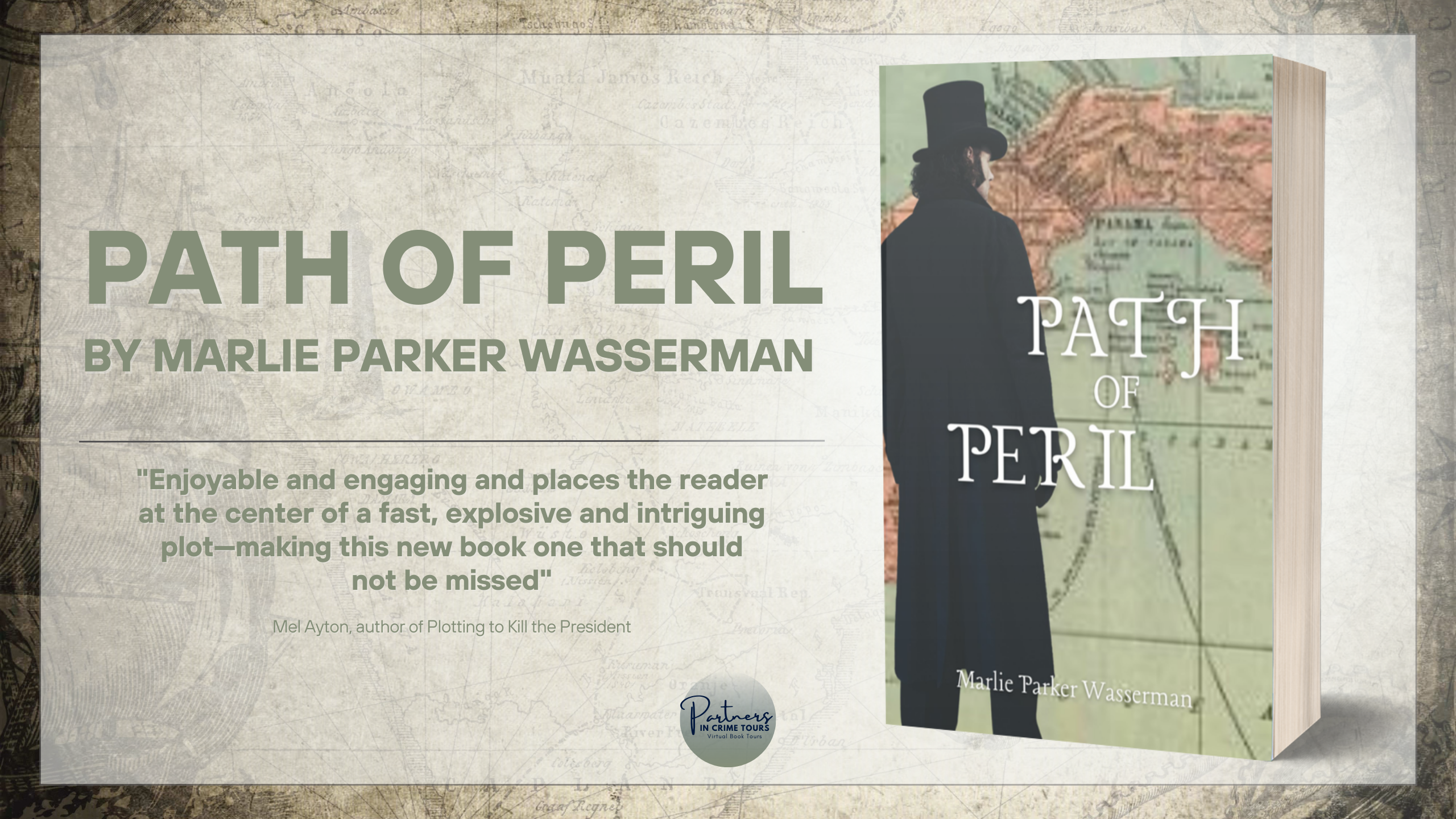
Path of Peril by Marlie Parker Wasserman Banner

Path of Peril

by Marlie Parker Wasserman

February 27 – March 24, 2023 Virtual Book Tour

Synopsis:

Path of Peril by Marlie Parker Wasserman

Would the assassins plotting to kill Theodore Roosevelt on his visit to the Panama Canal succeed?

Until this trip, no president while in office had ever traveled abroad. White House secretary Maurice Latta, thrilled to accompany the President, could not anticipate the adventures and dangers ahead. Latta befriends watchful secret service agents, ambitious journalists, and anxious First Lady Edith Roosevelt on their hot and humid trip, where he observes a country teeming with inequalities and abounding in opportunities. Along the way he learns about his own strengths—what he never imagined he could do, and what he discovers he can’t do.

Theodore Roosevelt did visit Panama in 1906, accompanied by White House staffer Maurice Latta. Interweaving the stories of real-life characters with fictional ones, Path of Peril imagines what the newspapers feared to report and what historians never discovered about Roosevelt’s risky trip.

Praise for Path of Peril:

“Nothing better than settling down with a good, crisp, detail-rich assassination thriller. Someone is after Theodore Roosevelt, and author Marlie Wasserman tightens the screws, ratchets the tension, and twists the plot again and again. Read it.”

William Martin, New York Times Bestselling Author of The Lincoln Letter and December ’41

“A feast of characters, scenery and history, Wasserman sets the table for a tremendous read. Path of Peril is a privileged walk with TR, his wife, his staff and dozens of characters struggling to create one of the “greatest engineering feats of the century.”

Chris Keefer, author of No Comfort for the Undertaker, a Carrie Lisbon Mystery

Path of Peril is enjoyable and engaging and places the reader at the center of a fast, explosive and intriguing plot—making this new book one that should not be missed.”

Mel Ayton, author of Plotting to Kill the President

“Wasserman’s Path of Peril gives readers an exciting leap back in time… Buy this book—you’ll love it!”

Michael Conniff, historian of Panama

Book Details:

Genre: Historical Crime Fiction
Published by: Level Best Books
Publication Date: January 2023
Number of Pages: 320
Series: This is a Stand Alone Novel
Book Links: Amazon

Read an excerpt:

Maurice Latta

Sunday, January 19, 1947

For forty-one years I honored my oath to President Theodore Roosevelt and his bodyguard to conceal the events of November 15th and November 17th, 1906. On each of those days I agreed to a conspiracy of silence. Last year, that bodyguard died, and TR is long dead. Before I follow them to the grave, I will disclose the perils we faced during the President’s historic trip to Panama, to clarify the record and to unburden myself.

My tale begins in the White House clerk’s office, where I served as a stenographer during the McKinley administration and where I serve now, with a higher title, fifty years later. At first, I felt no connection with the other fifteen fellows in the clerk’s office. I suppose I looked the part, with my regular features and unremarkable bearing. If my appearance fit in, my background did not. Most men working for the President, even at the turn of the century, were college boys. Some had taken the grand tour of Europe. A few had gone to universities in New England. Three, fancying themselves adventurers, had traveled to the West with President Roosevelt, that is, President Theodore Roosevelt. Two of the older gentlemen had been heroes in battles in the South during the Civil War. Most of the White House office workers had nothing to prove, to the President or to themselves.

I followed a different path to Washington. After an unmemorable youth on a Pennsylvania farm, I moved to Oklahoma, where I took my first job as a junior clerk. I filled in paperwork for the more memorable 1893 land rush. Over time my responsibilities and the commands of the head clerk grew distasteful. A friend back in Pennsylvania recommended me for a position as a clerk for a state senator in Harrisburg. I worked for that state senator for one year and two months. Forgive the precision—I like to be accurate with details. Then the legislator was elected to Congress and took me to Washington. Three years later, almost to the day, word spread across town that President William McKinley’s office needed a stenographer. By that time I had married Clara Hays Bullen and had two sons. I aimed to improve my lowly position and my meager salary.

I moved down Pennsylvania Avenue from the Capitol to the White House. My official duties, those that were known, started on August 8, 1898. Three years and one month after I started, all hell broke loose in the office. Of course I wouldn’t have used such language then. Leon Czolgosz, an anarchist, assassinated President McKinley. Like other Americans, I felt sorrowful. I had seen McKinley pass down the hall daily, but I had never been introduced to him and he never spoke to me.

My clerk’s job continued. Theodore Roosevelt became President. Little changed in the routines of our office, except now the President knew me by my first and last name. Maurice Latta. To be precise, Maurice Cooper Latta.

When the President’s Secretary, William Loeb, promoted me from Stenographic Clerk to Assistant Secretary on June 4, 1906, I hoped I might have the opportunity to travel, at least up and down the East Coast. Two months later, I heard rumors that TR wanted to assess progress on his canal. Oh, let me interrupt myself for a moment. While conducting my official capacities, I called the President President Roosevelt. Informally I called him TR. By the way, he was the first president to be known by his initials. And some called him Teddy, though I never did so. I am told his relatives called him Teedie. You will hear all these names in my tale.

This trip would be the first time a president, while in office, had ever left the United States. Many Americans thought a president should not travel to foreign soil. That seems odd to us now, after Versailles and Yalta. But in 1906 most Americans didn’t give much thought to the rest of the world, not until TR changed that.

I assumed Secretary Loeb, always interested in the press, would accompany the President to the canal. Mr. Loeb would want to shape the stories in the dailies and weeklies. Reporters called him Stonewall Loeb because of the way he controlled their access to the President. To my shock, Mr. Loeb asked me to go in his place.

Today, even after working in the executive offices of nine administrations, now for President Truman (no, I never call him Give ‘Em Hell Harry), and managing a staff of 204 clerks, my title, a rather misleading title, is only Executive Clerk. I am proud, though, that the New York Times has acknowledged my worth. Four years ago, in a Christmas day article my family framed, the reporter wrote, “The actual ‘assistant president’. . . is an official who has been in the White House since 1898 and knows more about its procedure than anyone else. He is Maurice C. Latta, now seventy-four and known as ‘Judge’ Latta to the White House staff.” In truth I know more about what is happening, and what did happen, than most of the presidents I served. That statement is for this memoir only.

I won’t dwell on my years in the White House after Panama, but rather on four days in 1906, in and around the Canal Zone. For the public, I want to add to the historical record, which is silent on certain momentous events. For me and my family, I want to remember the turning point, when I came to realize both my limitations and my strengths. I am writing the tale of what I know, what I saw myself. If you wish, you can fill in gaps with stories you gather from the others present that November, the stories I couldn’t see.

William Loeb

Monday, October 15, 1906

“I’m tired, Maurice. I followed that wild man to Yellowstone and Yosemite three years ago. Still haven’t recovered. None of us could keep up with him.” Mr. Loeb, Secretary to the President, was talking to me about Theodore Roosevelt’s two-month long trip to the West. “Now he’s sailing to Panama. He’ll itch for another frenzied schedule. I can’t do it this time. Here’s the question. Are ready for that kind of a trip? Interested in going in my place? I’m forty, you’re thirty-six. Those four extra years make a difference, right?

William Loeb sat three feet away from my face, at his desk in the White House. When he questioned me he leaned forward, putting his square jaw one foot from my weaker jaw. What answer did he expect? Modesty? Confidence?

“You surprise me, sir. I have never traveled beyond Oklahoma. I have never sailed, and I’ve never been responsible for a presidential trip. But I have watched you. I assisted you from afar when you traveled with the President. I will be honest, it would be a big step for me. I wouldn’t want to disappoint.”

Mr. Loeb sat back, slouched. I had disappointed him already.

“Sir, if you will walk me through the responsibilities, I would be honored to accompany the President.”

I will never know if Mr. Loeb truly believed I could handle the job, or if he had no one else in reserve. He shook my hand, sealing the arrangement. A day later he called me back to his office for instructions.

“Above all, Maurice, keep to the schedule. I’ll help you prepare it. We start with essential meetings. Officials of Panama and representatives from other countries. Then we fill in as needed.” Mr. Loeb was in his element, flaunting his expertise. “Second, control the access of journalists. Give priority to Frederick Palmer, he’s a favorite of Teddy’s. And I’ve been asked to add in a local journalist named Herbert de Lisser. Limit access to those two. Manage the press like I do. Third, names. Keep on you, in your pocket, the identities of the people Teddy is to meet. Whisper him reminders. He’s smart, but that makes him seem even smarter. Fourth, keep notes. You’ll need them later for Teddy’s reports. Last, prioritize telegrams. The pundits are worried that the President, abroad for the first time, won’t be in charge of the business of the country. I’ve reminded them that telegrams will reach his ship and will reach Panama. Sort through dispatches when they arrive and make sure he deals with them.”

I feared Mr. Loeb would notice my twitching right leg. Instead, he looked down and hesitated. For more than a second.

“I need to be frank with you about another matter. There could be danger. Jimmy Sloan, the Secret Service agent who heads Teddy’s protection detail, he tells me he hears rumors of anarchist plots against the President. He has people checking ships arriving in Panama, looking for suspicious travelers. May not matter. Hunting for an assassin is like finding a needle in a haystack. And there’s more. Mrs. R. is frantic. Jimmy—fine to call him Jimmy—won’t talk to her. Teddy tells him not to. She tries to get information from me and I won’t talk to her either. She’ll see you as easy prey and try you too. A word to the wise—be wary of that elegant lady. She’s lived through three assassinations and she’s no fool.”

I could think of nothing to say. I was so anxious about my coming secretarial duties that I had forgotten about the President’s safety.

“Enough of the serious stuff,” Mr. Loeb said. Get yourself new clothing for the trip. Two suits and evening wear. Can’t have you looking like a farmer.” He must have seen me widen my eyes in a question.

“No extra allowance for that. Hope your Assistant Secretary’s salary will stretch.

Edith Roosevelt

November 1906

Edith Kermit Carow Roosevelt married late, at age twenty-five, pleased to be Theodore’s second wife. His first, empty-headed Alice Lee, had been prettier, but only her memory was competition. Society column reporters called Edith an elegant, good-looking woman. Even the carpers acknowledged that her sharp nose and chin didn’t mar the impression. Those reporters never called her intelligent, but she knew she was that, and Theodore knew too. At age forty-five, after five children and two miscarriages, the last just three years earlier, she remained slender and attractive.

In the White House Edith stayed busy, watching over sons Ted, Kermit, Archibald, and Quentin, her daughter Ethel, and her rambunctious stepdaughter Alice. Thank goodness Alice had just married, even if it was to Nicholas Longworth III, a bald politician, much older than Alice, with a reputation as a playboy. The wedding nine months earlier had been the social event of the season in Washington. With that extravaganza over, Edith’s burdens did not disappear, but she could begin to reorder them. The stepdaughter now moved from second place to third. Worries about Quentin, her youngest, and his mischievous antics rose to second.

Fear for Theodore remained first in Edith’s list of worries. The year before, she convinced her husband to buy a rustic house, known as Pine Knot, in the Blue Ridge Mountains of Virginia. A private retreat. Almost private. Always watchful, she arranged for two Secret Service agents to protect the house every evening, without the President’s knowledge.

Sounds. They drove her crazy. The pulsating wind and the rattle of cedar shingles at Pine Knot. The scraping sounds of old window frames and squeaky plumbing at the White House. With each sound Edith heard an alarm. She had trusted Theodore’s first bodyguard, “Big Bill” Craig. In a carriage accident four years earlier Bill died and Theodore was injured. Now Jimmy Sloan oversaw protection. Jimmy was a good agent. Could even a good agent handle the task ahead? The trip to Panama would attract an international cast of cranks. Edith hoped they were cranks, not trained assassins. After each attempt on Theodore’s life, a reporter invariably mentioned the statistics. Three of the last ten presidents had been assassinated, three in about forty years, all in her lifetime. She imagined these numbers branded on her forehead.

Edith needed to identify a member of the trip’s entourage who might keep her informed about threats. Jimmy Sloan and his agents had pledged secrecy. Or they dismissed a woman’s worries. Thought her hysterical. They would be no help. And Theodore refused to acknowledge her fears, refused to listen. Thought she didn’t notice he carried a pistol in his pocket when he mingled with crowds. She would think creatively. She would curry favor with someone else on the trip, someone with knowledge. Maybe that Assistant Secretary who was taking the place of Secretary Loeb. Maurice Latta. He might know and he might share. She would keep an eye out for him aboard ship.

***

Excerpt from Path of Peril by Marlie Parker Wasserman. Copyright 2023 by Marlie Parker Wasserman. Reproduced with permission from Marlie Parker Wasserman. All rights reserved.


Author Bio:

Marlie Parker Wasserman

Marlie Parker Wasserman continues to write historical crime fiction. Her first book, The Murderess Must Die, was published in 2021. After spending many years in New Jersey, she now lives in Chapel Hill, North Carolina. She is a member of Sisters in Crime and the Historical Novel Society.

Catch Up With Marlie Parker Wasserman:
www.MarlieWasserman.com
Goodreads
Instagram – @marliepwasserman
Twitter – @MarlieWasserman
Facebook


Tour Participants:

Visit these other great hosts on this tour for more great reviews, interviews, guest posts, and giveaway entries!
Click here to view Path of Peril by Marlie Parker Wasserman Tour Hosts


Join In:

This is a giveaway hosted by Partners in Crime Tours for Marlie Parker Wasserman. See the widget for entry terms and conditions. Void where prohibited.
https://kingsumo.com/g/tpg9tx/path-of-peril-by-marlie-parker-wasserman


Get More Great Reads at Partners In Crime Tours