



Posts Tagged ‘Amazon’

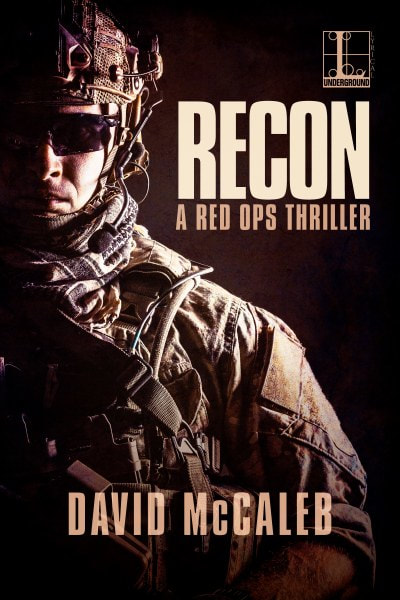
Recon
Red Ops #3
by David McCaleb
Genre: Thriller
Pub Date: 8/28/18

The assault on America begins with an attack on Red Harmon’s family . . .
Trained to endure extreme danger and survive impossible odds, elite military
operator Red Harmon has battled our nation’s enemies for years.
While in the Rocky Mountains for R&R, his family is violently
attacked by an international squad of assassins. No ordinary
wet-team, this group is only the vanguard of a power play threatening
national security.
Danger is everywhere . . .
Red and his young daughter escape a brutal firefight, but are separated
from his wife. Evading though the woodlands, stripped of his unit’s
support, Red puts his survival skills to the test all the way from
Pikes Peak National Forest to Israel’s West Bank. He must defend
his country, protect his family, and identify the unthinkable forces
that are willing to slaughter anyone in their path.
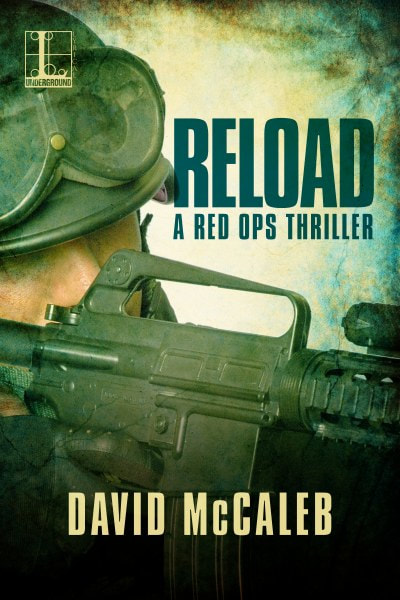
 

Reload
Red Ops #2
David McCaleb has a real winner here. Red Harmon is a guy I’d want on my
side.”
Marc Cameron, New York Times bestselling author of Brute Force
To save his family—and the free world—
Red Harmon is back in the line of fire . . .
A sinister enemy is stalking elite military operator Red Harmon and his
loved ones. Turning the hunter into his prey, Red uncovers a plot
that spans nations and draws him into the remote snow-covered ravines
of North Korea. His objective: penetrate the darkest prisons of
this mysterious nation to restore national security—and save all he
holds dear.
Caught in the danger . . .
Red’s not the only one who’s been living with secrets. His wife Lori is a
lot more than the typical suburban soccer mom she appears to be, and
she’s stumbled onto something massive. The future of world peace
depends on them—and on an enemy soldier with a powerful personal
agenda. If Red’s mission fails, the balance of superpowers may
never recover . . .
With effusive writing and strong characters, McCaleb delivers a
decades-spanning tale brimming with excitement,
intrigue, and deception. Red Harmon is a keeper!”
Alan Jacobson, USA Today bestselling author of The Lost Codex
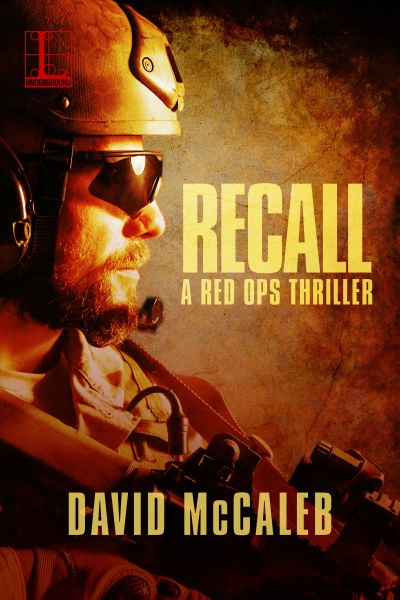
Recall
Red Ops #1
Amazon Bestseller!
Meet Red Harmon, a special ops veteran who learns he never left the call
of duty . . .
To a trio of muggers, Red looks like just another suburban dad. But when
they demand his wallet at knifepoint, something snaps. In the blink
of an eye, two muggers are dead, the third severely injured, and Red
doesn’t remember a thing. Once an elite member of the Det, a secret
forces outfit whose existence is beyond classified, Red thought his
active service was over.
But his memory is coming back–and a lethal killing machine
is returning to duty . . .
Facing an unthinkable nuclear threat, a volatile international power play,
and a personal attack against his family, Red has no choice. He must
rejoin his old team, infiltrate the enemy camp, and complete the
biggest mission of his life . . .
“David McCaleb has a real winner here. Recall is a smart and well-plotted
thriller, a fantastic read that I could not put down. Red Harmon is a
guy I’d want on my side.”
– Marc Cameron, New York Times bestselling author of BRUTE FORCE
“If you’re looking for suspense, nonstop action, and a hero you can root
for, The Red Ops series will clean your X ring.”
– David Poyer, USA Today bestselling author of TIPPING POINT and
ONSLAUGHT
“Strap in tight and leave your disbelief behind. Just my type of
action thriller. I read it in a blur.”
– George Easter, Editor of Deadly Pleasures magazine.

David McCaleb was raised on a farm on the rural Eastern Shore of
Virginia. He attended Valley Forge Military College, graduated from
the United States Air Force Academy, and served his country as a
finance officer. He also founded a bullet manufacturing operation,
patented his own invention, and established several businesses. He
returned to the Eastern Shore, where he resides with his wife and two
children. Though he enjoys drawing, painting, and any project
involving the work of hands, his chosen tool is the pen.
Recon is the third novel in the Red Ops series that began with the
acclaimed thriller
Recall, which was nominated for the International Thriller Writers
Best First Novel Award, and continued in Reload.

Follow the tour HERE
for exclusive excerpts, guest posts and a giveaway!

The Super Ladies

by Susan Petrone

August 13 – October 13, 2018 Tour


The Super Ladies by Susan Petrone

Synopsis:

For three middle-aged women in the suburbs of Cleveland, the issues seemed compelling but relatively conventional: sending a child off to college, dealing with a marriage gone stale, feeling “invisible.” But changes were coming . . . and not the predictable ones. Because Margie, Katherine, and Abra are feeling a new kind of power inside of them – literally. Of all the things they thought they might have to contend with as they got older, not one of them considered they’d be exploding a few gender roles by becoming superheroes.

At once a delightful and surprising adventure and a thoughtful examination of a woman’s changing role through life’s passages, THE SUPER LADIES is larger-than-life fiction at its very best.

PRAISE FOR SUSAN PETRONE’S THROW LIKE A WOMAN:

“While, on the surface, this is a novel about a woman battling to make her way in the man’s world of professional baseball, debut author Petrone presents a stirring and humorous story of a woman doing considerably more than that–trying to rediscover herself, provide for her family, and perhaps find a little love along the way.” – Booklist

“Throw Like a Woman is that rare baseball novel, both a paean to the game and a deeper exploration of character. Susan Petrone has a fan’s heart and a scout’s eye. Read it now. Don’t wait for the movie.” – Stewart O’Nan, co-author of Faithful and A Face in the Crowd

“For baseball fans who yearn for a female Jackie Robinson, reading Susan Petrone’s fun and absorbing novel Throw Like a Woman becomes a kind of prayer. ‘Please, Lord! Give talent a chance. Let this dream come true!'” – Mary Doria Russell, author of The Sparrow

“Someday there will be a woman who plays Major League Baseball. And when it happens, I suspect it will be an awful lot like Susan Petrone’s fun Throw Like a Woman. Susan knows baseball and so the novel – and her hero Brenda Haversham – crackles with authenticity. You can hear the pop of the ball hitting the catcher’s mitt.” – Joe Posnanski, author of The Soul of Baseball, NBC Sports National Columnist

“Petrone’s storytelling is first-rate, and she weaves a credible baseball tale with well-defined characters throughout.” – The Wave


Book Details

Genre: Women’s Fiction

Published by: The Story Plant

Publication Date: August 14th 2018 by Story Plant

Number of Pages: 320

ISBN: 1611882583 (ISBN13: 9781611882582)

Purchase Links: The Super Ladies on Amazon The Super Ladies on Barnes & Noble The Super Ladies on Goodreads


Read an excerpt:

On the way home, Katherine called shotgun, so Abra had to sit in the back of Margie’s minivan amid soccer shin guards, baseballs, stray sneakers, swim goggles, granola bar wrappers, a rubber-banded stack of Pokemon cards, and a book on playing Minecraft. “How was this shoe not on the seat when we left?” Abra asked.

“I really couldn’t tell you,” Margie replied over her shoulder. “Things back there just seem to migrate around on their own. Hold it up.” Abra did so, and Margie took a quick look at it in the rearview mirror as they pulled out of the parking lot and onto Superior Avenue. “I don’t even think that belongs to one of mine.”

“Now you know why I called shotgun. The backseat scares me,” Katherine said. “I sometimes get overwhelmed with one kid. How do you manage three?”

“I have no life. Duh,” Margie replied.

Margie cut south onto East 12th Street and then turned east onto Chester Avenue, which would take them through Midtown, up Cedar Hill, and back home. As they drove by Cleveland State University, she asked Katherine, “Do we still have to flip the bird to CSU for denying Hal tenure?”

“Nah, the statute of limitations has expired on that one, I think.”

“I like the new housing they’re building down here,” Abra said. “If I ever move downtown, would you two come and visit me?”

“Hell yes,” said Katherine.

“Sure,” Margie added. “Are you seriously thinking of moving or just toying with it?”

“Toying. If I can unload the house to the bank, I’ll have to rent somewhere. And I’d be closer to work.”

“If you move, who will I run with every morning?” “I don’t know. Get another dog?”

Chester was a wide, three-lanes-in-each-direction boulevard that took them past the university neighborhood and through the dead zone in between downtown, where most of the office buildings and entertainment areas were, and University Circle, where most of the city’s museums and cultural gems were ensconced. Economic development hadn’t hit this middle area, and much of it was taken up by vacant buildings, empty lots, and boarded-up houses.

Nine fifteen on a Thursday night in mid-May isn’t late and isn’t scary. Still, Margie got a bad feeling when she saw a young woman on the sidewalk walking fast, hands folded across her chest, not looking at the man who walked next to her. The girl was a stranger—not her age, not her race, not her neighborhood, but still, the girl was someone, some mother’s daughter.

Margie pulled over to the curb, leaving the engine running.

“Why are you stopping?” Katherine asked.

The few other cars on the wide road passed by without slowing. No cars were parked on the street; Margie’s van was the only stopped vehicle for blocks. Katherine and Abra followed Margie’s gaze to the scene unfolding on the sidewalk. The man was yelling at the woman now. They couldn’t make out exactly what he was yelling but heard the words “bitch” and “money” a few times. And they could see his flailing arms, his face leering up against hers. She stopped walking and said something to him, and he hit her. She lost her balance and fell against the chain-link fence that ran along the sidewalk. They were in front of an empty lot, where once there might have been a house but now was only a square of crabgrass and crumbling concrete and stray garbage. For a moment, there were no other cars on the road. There was no one else on the street, no inhabited buildings for a couple blocks either way. If not for them, the woman was on her own.

“Call nine-one-one,” Abra said as the man hit the woman again. The woman tried to get away, but he grabbed her shoulders and shoved her hard against the fence.

“There’s no time,” Katherine said. In a heartbeat, she was out of the car.

“Darn it, come on…” Abra muttered as she fumbled with the sliding side door and jumped out. “Keep the engine running,” she said as she followed Katherine.

“I’ll go with you…” Margie started to say. No, Abra was right. Someone had to stay with the van, keep the engine running, stay behind the wheel in case they needed to make a quick getaway. Glancing behind her, she backed up alongside the people on the sidewalk. It felt proactive. She could hear Katherine’s strong teacher voice saying loudly but calmly, “Leave her alone” and the woman yelling, “Call the police!” It suddenly occurred to Margie that she had a phone. She could call the police. Hands trembling and heart racing, Margie frantically fumbled through her bag for her phone.

She told the 911 dispatcher where she was and what was happening, the whole time watching Katherine and Abra and the couple on the sidewalk. Suddenly, there was a glint of something shiny in the streetlight as the man rushed toward Katherine. She heard a scream, and then she couldn’t see Abra anymore.

Katherine got out of the car purely through instinct. There was someone in trouble—helping is what you were supposed to do, right? It wasn’t until she was on the sidewalk, walking toward the man and woman, saying loudly, “Leave her alone” and watching the man turn to face her that she realized she had absolutely no idea what to do next. None. It was then that her heart started pounding and a hot wave of fear tingled through her arms and legs.

Up close, she could see the guy was taller and more muscular than he appeared from the safety of the van. He was maybe white, maybe light-skinned African American with a shaved head. An indecipherable neck tattoo peeked out from under his close-fitting, long-sleeved black T-shirt. She tried to burn a police description into her brain. The woman yelled, “Call the police!” at the same time the guy said, “This is none of your damn business, lady” to Katherine. The utter disdain in his voice cleared everything out of her brain except one thought: This was such a mistake. This was such a stupid mistake. There was no way this could end well. For a split second, she imagined Hal and Anna without her, wondered if they would think her foolish for getting herself killed in this way. She heard Abra say softly, “Just let her go, man.”

Katherine could just see Abra off to her right. Margie had backed up, and the open doors of the van were only a few yards away. She could faintly hear Margie’s voice, talking to 911 maybe? Knowing they were both nearby gave her a tiny bit more courage. Katherine took a tentative step toward the woman, who was kneeling by the fence. Her face was bloodied, the sleeve of her shirt ripped. “Miss?” she asked. She looked about nineteen or twenty. Not a woman. A girl. “Why don’t you come with us? We’ll give you a ride.”

“She don’t need a ride,” the man said.

The rest of the street seemed eerily quiet. Couldn’t someone else stop and help? Someone big? Someone male maybe? Katherine wasn’t that big, but she was big enough, strong enough. She could help. Slowly she extended her left arm. If the woman wanted to take her hand, she could. Katherine held the woman’s gaze, hoping she could silently convince her that leaving with some strangers was preferable to getting beaten up by her boyfriend. Katherine was so focused that she didn’t see the knife until it was against her arm, in her arm. The man cut so fast that she hardly saw the blade, only the flash of metal against her pale white skin. It occurred to her that she needed to get out in the sun. Why am I worried about how pale I am? I just got cut. She felt the sensation of the blade slicing through flesh, felt a momentary spark of pain, and then the pain was gone. It happened faster than a flu shot—a quick prick, then nothing.

The man only made one swipe, then stopped, triumphant, staring at her arm, expecting blood, expecting her to scream, to fall. There wasn’t any blood on her arm or the knife. No blood, just Katherine staring at him wide-eyed and unharmed.

Then the man was on the ground, hit from the side by…something, something Katherine couldn’t see. The knife dropped from his hands and landed near her foot. She kicked it away at the same time she heard Abra’s voice yell, “Run!” But where the hell was Abra? She must be in the van. Katherine couldn’t see her.

Katherine said, “Come on” to the woman, who was now up and moving toward her. The woman needed no more convincing and was in the car before Katherine, even before Abra. Where had Abra been? How could she be the last one to pile into the minivan, yelling, “Go! Go!” to Margie, who was slamming on the gas before the door was even closed.

Nobody said anything for a moment. The only sound in the car was that of four women catching their breath, being glad they had breath left in their bodies. Then all of them simultaneously erupted into words of relief and fear, asking each other “Are you all right? Are you all right?”

“Oh sweet mother, I can’t believe you all just did that,” Margie said. “I thought—Katherine, I honestly thought he was going to kill you.”

“So did I,” Abra said. “How the hell did he not cut you? How did he miss you?”

“He didn’t miss me,” Katherine replied quietly. Feeling fine seemed intrinsically wrong, but there it was. Unreal sense of calm? Yes. Pain and blood? No.

Before Margie or Abra could respond, the woman exclaimed, “Oh my God, thank you! Sean would’ve done me in this time, I know it. Y’all were like superheroes or something. You saved my life.”

The three women were quiet for a heartbeat. For the moment, the hyperbole of the phrase “You saved my life” was gone. It was arguably true. This was a new sensation. Frightening and humbling. Then Margie said, “Shoot, I dropped the phone.” With one hand on the wheel, she felt around in the great vortex of tissues, empty cups, and scraps of paper in the molded plastic section in between the two front seats.

“I got it,” Katherine said, coming up with the phone. The 911 dispatcher was still on the line, wondering what was going on. “Hello?” Katherine said. “We’re okay. We got away, the woman is safe. We’re going—where are we going?”

“Anywhere away from Sean,” the woman in the back said.

“There’s a police station right down the street at one hundred and fifth,” Abra said.

“Right, I know where that is,” Margie said.

A police car with the siren off but lights flashing came roaring down Chester Avenue in the opposite direction.

“Was that for us?” Margie asked.

“I think so,” Abra said.

Katherine hardly had time to explain what had happened to the dispatcher before they were at the station. There was a long hour-plus of giving witness statements to a jaded-looking police officer who told them several times how lucky they were to have gotten out of the situation with no harm done. “What you three ladies did was very brave and very stupid,” he said in closing.

“We know,” Abra replied.

They were told they might be called as witnesses if the woman, Janelle, decided to press charges against her boyfriend. Then they were free to go. The three of them walked out of the police station and to the waiting minivan. It was nearing midnight, and the spring evening had moved from cool to downright chilly. Even so, none of them moved to get into the van. Margie unlocked it and opened the driver’s door, then just stood looking at the ground, one hand on the door, the other on the side of the van, breathing slowly. Abra paced in a slow oval near the back of the van, while Katherine leaned against it and gazed up at the few faint stars that could be seen against the city lights. She suddenly wanted to be somewhere quiet, away from the city, away from people. Margie’s voice brought her back: “I’m sorry I didn’t do anything to help.”

What are you talking about?” Katherine said. “If it weren’t for you, we never would have gotten out of there.”

Abra walked around the van to Margie. “You were the only smart one. I’m sorry I got out of the car. That was stupid.” As Abra said this, she shivered, her lips trembled, and she started to shake. “That was so stupid.” “I got out first,” Katherine said. “I’m the stupid one.” Katherine almost never saw Margie cry. Even when her eldest child was going through hell, Katherine had been amazed and admiring of her friend’s resilience. But now Margie seemed overwhelmed by heaving sobs. “I’m just so glad the two of you are okay,” Margie stammered. Crying people generally made her nervous, but Katherine joined Margie and Abra on the other side of the van.

When your friends need you, they need you.

***

Excerpt from The Super Ladies by Susan Petrone. Copyright © 2017 by Susan Petrone. Reproduced with permission from Susan Petrone. All rights reserved.


Author Bio:

Susan Petrone

Susan Petrone lives with one husband, one child, and two dogs in Cleveland, Ohio. Her superpower has yet to be uncovered.

Catch Up with Susan Petrone Online:


Giveaway:

This is a rafflecopter giveaway hosted by Providence Book Promotions for The Story Plant. There will be 5 winners of one (1) PB copy of THROW LIKE A WOMAN by Susan Petrone. The giveaway begins on August 13, 2018 and runs through October 13, 2018. Open to U.S. addresses only. Void where prohibited.

CLICK HERE for the Rafflecopter giveaway


Find Your Next Great Read at Providence Book Promotions!

“Heartbreaking, hilarious, emotionally raw, and still packed with suspense on every page… a laughthrough-
your-tears kind of novel.”
— Katherine Taylor, author of Valley Fever and Rules for Saying Goodbye

“Smart, funny, and deeply moving, Half the Child offers a fresh and refreshing take on the perils of
parenthood and the healing of damaged families.”
— Judith Stone, author of When She Was White: The True Story of a Family Divided By Race

A Novel

William J. McGee

* Semi-finalist, James Jones First Novel Competition

* Semi-finalist, William Faulkner Creative Writing Competition

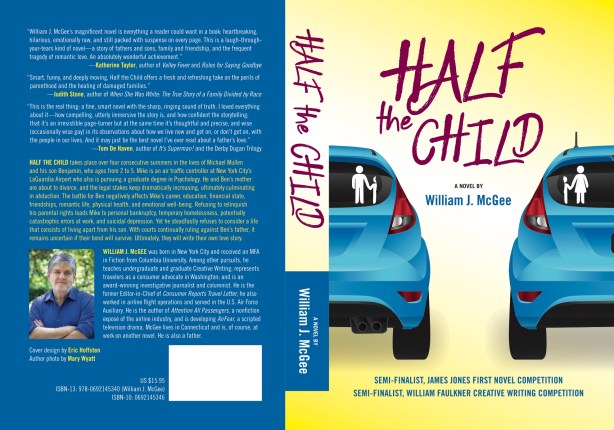
HALF THE CHILD takes place over four consecutive summers in the lives of Michael Mullen and his son Benjamin, who ages from 2 to 5. Mike is an air traffic controller at New York City’s LaGuardia Airport who also is pursuing a graduate degree in Psychology. He and Ben’s mother are about to divorce, and the legal stakes keep dramatically increasing, ultimately culminating in abduction. The battle for Ben negatively affects Mike’s career, education, financial state, friendships, romantic life, physical health, and emotional well-being. Refusing to relinquish his parental rights leads Mike to personal bankruptcy, temporary homelessness, potentially catastrophic errors at work, and suicidal depression. Yet he steadfastly refuses to consider a life that consists of living apart from his son. With courts continually ruling against Ben’s father, it remains uncertain if their bond will survive. Ultimately, they will write their own love story.


Acclaimed debut novel explores custody, child abduction, and parental alienation — from a devoted dad’s perspective

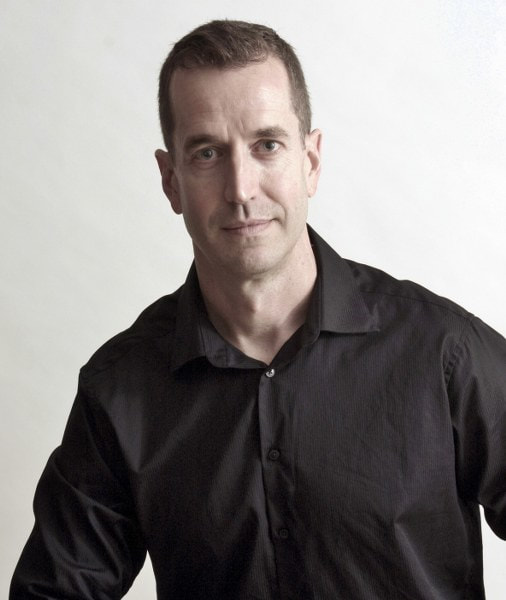
William J. McGee, author of HALF THE CHILD, received an MFA in Fiction from
Columbia University and has taught undergraduate and graduate Creative Writing at
Hofstra University. An award-winning nonfiction writer as well, McGee is the author of
Attention All Passengers (HarperCollins, 2012), an exposé of the airline industry. He’s
following that up with AirFear, a scripted television drama now in development. McGee
has worked in airline flight operations management at LaGuardia Airport and served in
the U.S. Air Force Auxiliary. He is a native of Queens, where most of the novel is set.
McGee now lives in Connecticut, where he is working on another novel. He is also a
devoted father.

Follow or contact him on Facebook, Twitter, or his website.

“An irresistible page-turner but at the same time thoughtful, precise, and wise in its observations…It may
be the best novel I’ve ever read about a father’s love.”
— Tom De Haven, author of It’s Superman! and the Derby Dugan Trilogy

Contact:
Les Luchter
LL Communications
les@llcom.biz
646-591-5722

Published by: CreateSpace
ISBN-13: 978-0692145340 (William J. McGee)
ISBN-10: 0692145346
Available on Amazon: July, 2018
$15.95 trade paperback
$2.99 Kindle


Guest Post

DEMOGRAPHIC OF ONE

Are book publishing experts wrong?

William J. McGee

My new novel HALF THE CHILD is all about love and devotion and family and relationships. But you are going to hate it.

I have been told—repeatedly, vociferously, unequivocally—that men neither buy nor read books. As for women, they neither buy nor read books that feature a male narrator, even one like mine who is a loving, caring father making extreme sacrifices for the child he adores. And young adults, well, they have their own marketing silo. So when you take away men, women, and young adults, you’ve sort of knocked the hell out of a potential audience for an adult literary novel.

HALF THE CHILD is a tale of custody and abduction, and details a young father’s desperate fight to prevent soulless courts from driving him out of his beloved son’s life, while he also struggles to keep his high-stress job as an air traffic controller at New York’s LaGuardia Airport. You may like it. You may not. But those who are expressing admiration for the book so far represent every possible demographic.

At one point in the novel our narrator Michael is accused—falsely, it should be stressed—of having a temper issue and is forced to attend an anger management session with truly angry men, where it is woefully and comically apparent he doesn’t belong. And he sums it up thusly: “One more venue in which I don’t quite fit. I’ve never felt so alone. It’s as though I’m a demographic of one.”

I feel strongly that we need more diversity in book publishing, so we can hear more voices, representing more points of view, telling stories that haven’t been told. New voices are now being heard, in print and elsewhere, and I loudly celebrate it. And just as television, radio, and film are being remade by new channels and new independent artists, so too is this necessary in book publishing. None of us can be categorized in the way some literary agents and book editors think we can be.

So please don’t tell me what books I am likely to read, and please don’t tell me who exactly will or will not read my book. I’m not the summation of what I buy, where I travel, or how I vote. As Walt Whitman asserted:

Do I contradict myself?

Very well then I contradict myself,

(I am large, I contain multitudes.)

I suspect you contradict yourself too. In fact, each of us is our own demographic of one. And like Whitman, each of us sings a Song of Myself. Let our voices be heard.

—William J. McGee is the author of HALF THE CHILD, available in print and Kindle on Amazon.