Posts Tagged ‘action’

Ends Meat – A Short Story


There it was again – the smell. Barrick glanced at his father, who had his eyes closed but he probably wasn’t asleep, just too exhausted by hunger to keep them open. His cheeks were shallow, as though sucking air, his lips two thin lines of scabs.

Father’s hemp shirt had become a shawl these last few weeks. The same was true for Barrick, his brothers and his sister.

Finally, father’s eyes opened, his nostrils twitched, and with energy summoned from a dark place, he rose. “Again…” he said, barely moving his lips; tension in the jaw and scabs that would split.

“I don’t know how they can do it,” said mother, head limp and resting on her raised knees.

Father swung his legs from the bed and stared into space. The look was a disease, and they all had it. Barrick had seen it first in the faces of the eldest; at night, sharing a bowl of thin soup and disappearing as the first songs began, taking a bottle of moonshine with them. One by one, others caught the look and stopped turning up at all. He’d see them by day, afflicted by the vacant gaze as they sat beside the transparent wall of the dome. They’d stare at the sands but Barrick had no idea what they were looking at; perhaps they saw mirages of visiting caravans that no longer came.

And then, it seemed, a cure appeared. At night the tinkling of music and singing voices began again and, in the daytime, neighbours whispered into the ears of neighbours. On the second night of singing, he and his brothers asked if they could go, but their father told them “No,” and had such anger in his eyes they said little else.

The smell first arrived the following night. Barrick was playing cards with Sam when he lifted his head to the air and sniffed.

“What is it?” asked Sam as he took a deep breath. “Smells good.”

“Smells like barbecue.” Barrick shook his head. “But it can’t be… we ain’t got no animals left.”

“That’s right, son. We haven’t,” his father said.

His mother called out to his father, but he was already out the door.

“What’s happening?” Barrick asked.

His mother looked at him, glassy-eyed, mouth constantly agape. She looked at her other sons – so young – and slowly, slowly closed her eyes. “No good’s happening.”

The next day, Barrick was in the courtyard and learned all about it from Euron, a boy about his age. “My father saw it coming, he said… saw what was happening here, what with all the orphans we kept taking in. Said it was unsustainable or something, and now look. Not enough food to go round. People are dying, Barrick.”

The Decomposting Unit had had a lot of business lately.

“So, father found Gilles the other day—dead—and instead of throwing him in the DC, he boiled him.”

Barrick had almost wretched right there, all over Euron. He looked away. How could anyone look someone in the eye, knowing they had eaten… human?

“And you… ate him?”

Euron said yes. As if to confirm reality, Barrick turned back. Euron was smiling.

“And so that… last night…” He recalled Sam’s comment about how good it smelled. If there had been anything in his belly it would have ended up splashed on the hardtop.

Shortly after, he sat in a tired stupor, slumped against the outside wall of the family hut, when the shouting began. It took two minutes to shuffle fifty feet, only to discover his animated father leading a gang of protesters.

“… and what about your son? What if he’s next to go? You gonna eat him, too?”

Euron’s father stood with arms crossed. “He ain’t gonna. I’m providing. We’re providing.” He spread his arms to incriminate the others. There was almost no fatigue there. The others, sat on stools or slouched in chairs, stared to the ground.

“I’m at death’s door myself,” said Barrick’s father. “You gonna eat me?”

“Join us and you don’t have to starve.”

“I still have my humanity. What’s your plan exactly? What if we all joined you? What if we all had a bit of meat, got a little better? What next – gonna knock off the fattest of us?” His face was two-inches from Euron.

Barrick just listened, horrified. Noticed Euron smiling at him with a bowl of something cupped in his hands, steam rising from it.

“You’re sick!” spat Barrick’s father, and turned, falling to one knee, breathing heavily. A friend helped him up and the protesters filed away.

Euron stirred a spoon in the bowl and lifted soup to his mouth.

Barrick’s belly groaned. He was inside-out with hunger. The moment Euron began to chew, Barrick spun on his heels and found the energy to run.

He returned home the same time as his mother who’d brought water from the lake-source for boiling in the solar-oven. They ate hot water in which a single, small, potato had dissolved almost to nothing.

Night fell, and with it, another body. Euron’s father spoke the truth—the settlement had been too generous. Because it had a readily available water source, the wanderers imagined the place was prosperous, and for a while it had been. But something tipped over; they took in too many refugees and the existing residents, short on activity but not on lust, had themselves soon multiplied. The leaders had to impose rationing. Closed doors weren’t far behind that, and when word went from mouth to ear the merchants stopped coming, too.

The Agridome had never been the most successful of ventures—season to season cultivating produced an inconsistent crop. Exacerbated by the low number of merchant caravans, things soon began to deteriorate.

All the while, the red sand swirled outside the dome. They became an increasingly isolated blister on the planet.

A blister that boiled in human flesh.

The barbecue smell permeated the dome; three nights, four nights; a week, two weeks. Each night, Barrick watched his father grit his teeth, clench his fists, pace the floor, come to life after a day of sleeping. A day of Barrick wondering if now was his father’s turn to not wake up at all. But no, wake he did, and then one night he left and didn’t return at all.

As the light fell into the hut, Barrick’s mother ordered him to go look for his father. On legs so weak, they shook as he headed out. The courtyard was desolate. Gone were the sounds of laughter, buried under mountains of bodies in the DC Unit. There, by the chalk, was where he’d played with the new orphans. And over there, by the stairwell to the lower levels, was where he and his brothers used to wrestle. He shook his head, amazed by the memory of activity.

And here, Euron had admitted eating someone.

The entrance to the Agridome opened across the courtyard and there it was again – the scent of death; boiling blood and burning flesh.

But… was there something… an undertone of… sweetness.

Slack-jawed, drool slipped from the corner of his lips. He didn’t know what hunger felt like anymore – this was how his stomach had always been, like a shrivelled raisin.

He took a step towards the entrance.

His father would be so disappointed in him.

But his father wasn’t here.

He wouldn’t know.

He’d be dead soon anyway.

Barrick considered this. “I’ll be dead soon myself if I don’t.”

Another step.

It’s just pork – spit-roasted, skin crackled to a crisp, fat rendered and spitting a sizzle on the fire. It was harvest time and time for this little piggy to go to market, as mother said.

Another step.

Time to go to market, get some lunch.

Another step.

The smell was overwhelming and his stomach rolled in a way it hadn’t for weeks at the thought of taking a bite into the juicy, smoky meat.

Another step – and then others appeared; pale, gaunt and walking dead. Started coming at him from the entrance. They were spent – Barrick could tell just by looking at their faces. One face came up to him – it was half-recognisable as his father’s friend, but he couldn’t be sure. It was little more than a skeleton looking back at him. “Turn around,” it said.

Barrick, dreaming of pork, stared vacantly beyond him, trying to push past.

“Turn back, there’s nothing in there, lad. Nothing you should have to see.”

He felt hands on his shoulders, twisting them, until he was pointing towards home. “Where’s… father?” he finally asked.

“He’s gone, son. Got the beat on Shannon and killed him, but it was all the energy he had left in this world.”

Barrick stared at the entrance, and then beyond; through the translucent wall of the dome where a smeary pile of darkness lay, orange flames wriggling like snakes through the shadows.

Someone closed it, and after a while, the ventilation system took the smell of his burning father and pumped it away into the heavens.


Thanks for reading. Discover what happened to Barrick, and a host of other characters, in Neon Sands, currently accepting nominations on Kindle Scout until the end of February.


Click here on Kindle Scout to cast your vote: https://kindlescout.amazon.com/p/M0AVK7KHQVAB 

Connect on with the author on Twitter  or his website.

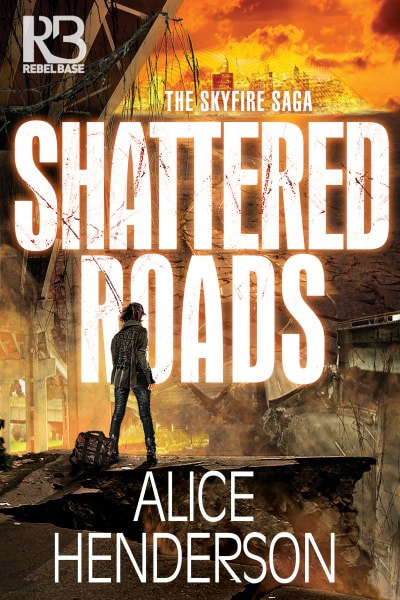
SHATTERED ROADS
The Skyfire Saga Book 1
by Alice Henderson
Genre: Science Fiction/Dystopian
In a future laid waste by environmental catastrophe, one woman in a shielded
megacity discovers a secret hidden within—and the nightmare of what lies
beyond.
Her designation is H124—a menial worker in a city safeguarded against the
devastating storms of the outer world. In a community where consumerism
has dulled the senses, where apathy is the norm and education is
a thing of the past, H124 has one job: remove the bodies of citizens when
they pass away in their living pods.
Then one night, H124’s routine leads
her into the underground ruins of an ancient university. Buried
within it is a prescient alarm set up generations ago: an
extinction-level asteroid is hurtling toward Earth.
When her warning is seen as an attempt
to topple the government with her knowledge of science, H124 is
hunted—and sent fleeing for her life beyond the shield of her
walled metropolis. In a weather-ravaged unknown, her only hope lies
with the Rovers, the most dangerous faction on Earth. For they have
continued to learn. And they have survived to help avert a terrifying
threat: the end of the world is near.

Excerpt

H124 waited outside the door, closing her eyes and concentrating on the theta wave receiver by the door lock. She mentally sent the message “unlock,” and the door hissed open. Quietly she stepped inside with her gear, then stopped as she heard noise coming from the main room. Someone still lived in this pod. Her employers had told her that the only way to access the corpse was through the neighboring pod. Weird, but she didn’t ask questions. Maybe the deceased’s lock was broken. Still, she’d never been inside someone’s place while they still occupied it, and she felt uncomfortable, a stranger in someone’s home.

She crept into the main room. Her instructions told her they’d created a hole in the wall there. A light flickered on the wall as she moved forward. Not wanting to disturb the occupant, she stepped lightly in her work boots. She knew she’d get in trouble if she interrupted him. She stepped around the corner and saw him, seated before his display, his button pad shimmering in midair just below his hands. The light from his display hovered in the air before him.

She knew about these display setups and button pads that most people were equipped with. But she’d only been in these living pods to clean out the previous tenants after they’d passed on, so she’d never seen the equipment turned on before.

Just ahead, she could see the ragged, dark hole in the wall, but her eyes returned to the floating display.

She’d never seen anything so beautiful. She knew she wasn’t supposed to, but she stopped before stepping through the hole. Unable to help herself, she stared at the display. Six windows filled the screen, and the man’s eyes darted from one to the other. Both hands fluttered over the button pad, fingers pressing down in such a rapid sequence, she didn’t know how he could possibly make sense of what he was doing. In one window he controlled an image of a little man who moved through different rooms of a building, pulling levers and pressing buttons on walls. In another flashed a sequence of unintelligible numbers. Another window held an animated avatar of someone else, a woman, with text flying across the screen just beneath her face. Every few seconds, his hands would stream over the buttons and more text would fly by. A group of people talked in yet another window, sitting around a table chattering about someone named Phil, and how they couldn’t believe that he had opted for the small swimming pool when he could have had the bigger one. Along the bottom of the screen scrolled more text: THIS YEAR’S MOST IMPORTANT DECISION! Pick the right candidate! Vote wisely! Watch the candidates’ videos! Yes! Vote for your favorite reality TV star in this all-important election to determine which show will be renewed!

In yet another window a little graph fluctuated up and down, beeping out sounds every now and then. Whenever it beeped, the man entered text in the window, pressing some more buttons until it stopped beeping. His eyes never left the display, and his fingers never stopped working at the keypad. It fascinated her that he could attend to so many things at once. What was he even doing in each of the windows? She had no idea.

He stood up suddenly, and she leaped back into the shadows. He walked to his wall slot as a delivery drone clattered in the vent and came through. The display followed in front of the man, while his fingers kept typing away. The drone hovered briefly, laid down the man’s new food tray with the food cubes, then took away his empty tray from earlier that day. It buzzed and vanished back into the vents. Rapidly the man reached out, grabbed the squares, and shoved them into his mouth. Then he returned to his seat, his attention on the display not once faltering.

Her face burning, H124 realized she’d been standing there far too long. If her employers found out, she’d be ticketed. Or worse. They could assign her even more extra duties. She was lucky the man hadn’t noticed her. She stepped forward quietly and reached the hole in the wall. Without a sound, she stepped through it into the dead man’s apartment.


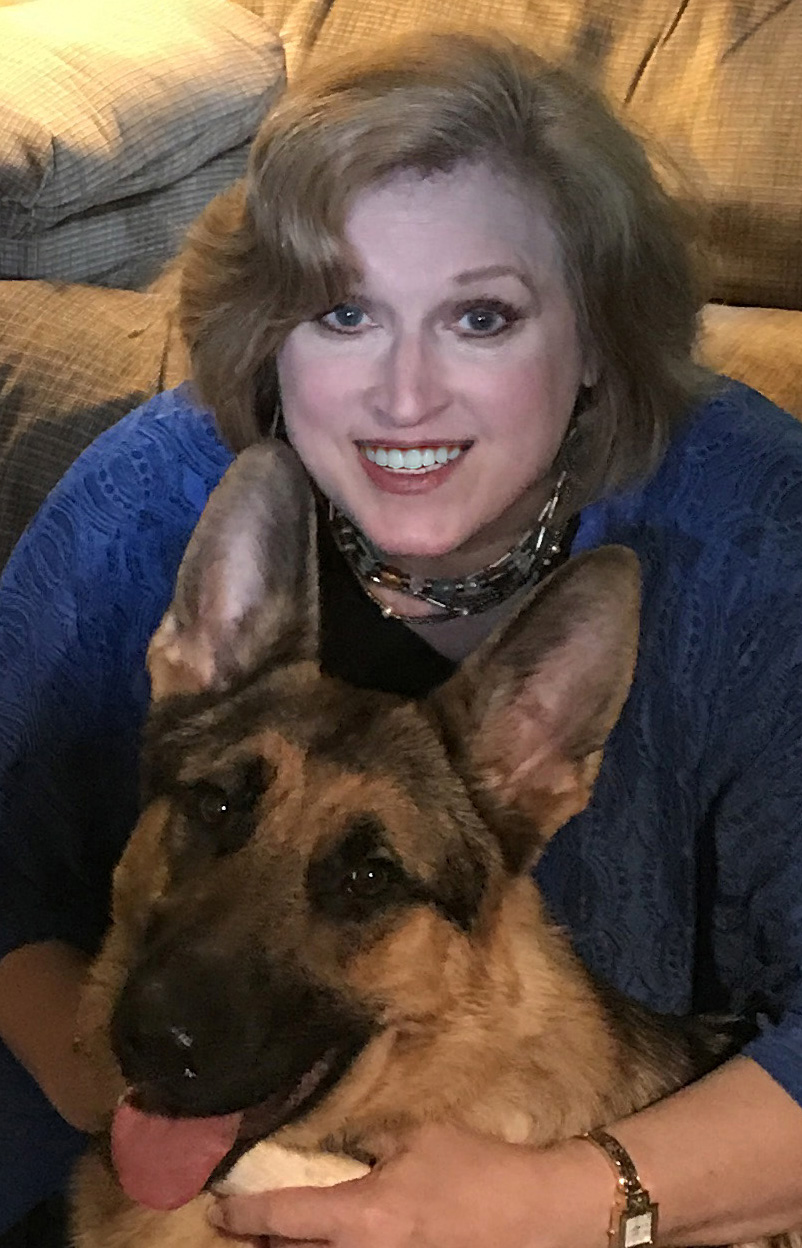
Alice Henderson is a writer of fiction,
comics, and video game material. She was selected to attend
Launchpad, a NASA-funded writing workshop aimed at bringing accurate
science to fiction. Her love of wild places inspired her novel
Voracious, which pits a lone hiker against a shapeshifting creature
in the wilderness of Glacier National Park. Her novel Fresh Meat
is set in the world of the hit TV series Supernatural. She
also wrote the Buffy the Vampire Slayer novels Night
Terrors
and Portal Through Time. She has written short
stories for numerous anthologies including Body Horror, Werewolves &
Shapeshifters, and Mystery Date. While working at LucasArts, she
wrote material for several Star Wars video games, including Star
Wars: Galactic Battlegrounds
and Star Wars: Battle for Naboo.
She holds an interdisciplinary master’s degree in folklore and
geography, and is a wildlife researcher and rehabilitator. Her novel
Portal Through Time won the Scribe Award for Best Novel.
Follow the tour HERE
for exclusive excerpts and a giveaway!

Book Details:

Book Title: ICE by Lauren Carr
Category: Adult fiction, 380 pages
Genre: Mystery, Crime Fiction, Police Procedural, Cozy
Publisher: Acorn Book Services
Release date: February 26, 2018
Tour dates: April 2 to 30, 2018
Content Rating: PG (It’s a murder mystery and there is mild violence. Very mild swearing no F-bombs. No on-stage sex scenes.)

Book Description:

The clues for a close-to-the-heart missing person’s case heat up when Chris Matheson starts chipping away at the ice on the cold case.

When Sandy Lipton and her unborn child disappear, the court of public opinion finds young Chris Matheson guilty. Decades later, the retired FBI agent returns home to discover that the cloud of suspicion cast over him and his family has never lifted. With the help of a team of fellow retired law enforcement officers, each a specialist in their own field of investigation, Chris Matheson starts chipping away at the ice on this cold case to uncover what had happened to Sandy and her baby and the clues are getting hot!

To read reviews, please visit Lauren Carr’s page on iRead Book Tours.


Buy the Book:


Watch the Book Trailer:


Author Interview:

When did you begin writing ICE?  What inspired this book and how much research was involved in writing it?

To tell you the truth, I began writing ICE in 2007. Really! I’m a writer hoarder. I never throw anything away. When I finish a book and find a subplot that doesn’t work, I’ll cut and paste it into a “cut scenes” file. Well, after I had finished Twofer Murder at the end of summer 2017, I went hunting for a Mac Faraday mystery that I had started over a year ago to resume working on for my next project. Yet, I couldn’t remember the working title I had given it. (I still can’t remember the working title!) While hunting, I found an unpublished Joshua Thornton book. Sometimes, I will write a book and think it’s not quite there yet. When that happens, I’ll set it aside until I figure out what is wrong with it. In this case, the mystery plotline was there, but the detective, in this case Joshua Thornton, was wrong. The date on that file was 2007—ten years ago!

At the same time, I was mentally working on a new series—Chris Matheson, a recent FBI retiree who teams up with a group of law enforcement retirees, to work on those cold cases that keep them up at night. During the summer, I had seen a true crime documentary called The Keepers, about a group of former students investigating the murder of their teacher, a nun killed in the 70’s. Now in their fifties and sixties, they have pooled their talents to find out what happened to their teacher. As a writer, I thought, “What if…” it didn’t take much research to find that many police departments across the country now bring in retired detectives to work cold cases.

The mystery in the Joshua Thornton book was a cold case. In November 2017, I went to work on converting the Joshua Thornton book to a Chris Matheson Cold Case mystery.

How many unpublished and half-finished books do you have?

Give me a minute and let me look.

(pause)

Several.

Is writing a career you originally chose to pursue or was it something you did as a hobby?  If a hobby what career path did you take instead?

Writers are born to write. They’re storytellers. Yes, there are technical things that every writer must learn to succeed—like proper grammar and punctuation—but you have to be born a writer.

Here’s how you can spot a writer. Ask them a question. How’s your day? How did you meet your husband? Anyone who is not a writer will tell you “Fine” and “We met on a blind date.” End of conversation.

But a writer! She’ll grab you by the throat with a hook and then proceed to tell you in detail to include who, what, when, where, why, and how. A writer will establish characters, setting, motives, and include a beginning, middle, and end with a smashing climax about how her husband almost had a stroke the morning after the wedding when her mother revealed that she had offered to give them a down payment on a house if they had skipped a formal wedding and eloped instead.

Writers are always writing. Even if their day job is waiting tables or working as a stock broker, they are spinning tales in their minds. As a child, I remember rewriting the Bobbsey Twin mysteries to include a kidnapping or changing the mysterious sea shell on the beach to a dead body.

For many years, my mystery writing was a hobby while I did editing. I didn’t actually start writing mysteries full time until after I had my son in 1998—six months after giving up my writing career to be a stay-at-home mom.

Writing is what writers do—even if they aren’t able to make a career out of it.

What was the first book you ever wrote about and was it ever published?

My first book was what I call the Great American Catastrophe. It was before work processors. I was nineteen and locked myself up one summer and worked on it day and night on an electric typewriter. It used up two reams of paper. It was a murder mystery set in Hollywood. It was never published because I did not know who to send it to and since it was over 900 pages, it cost a fortune to copy and mail. It is now in a basement or attic some place.

How many hours a day do you write?

Time actually spent writing? An average of six hours a day. I spend my mornings taking care of business. I answer emails. Do my social media. Argue with my business manager aka husband. Then, after lunch, I will write until it is time to start cooking dinner. After dinner, I will write for three to four more hours until I go to bed.

Do you have any writing habits that people might find unusual?

I write where I land? I have a writer’s studio. But as soon as I sit down to start working on something, I hate to be interrupted. So I’ll remain wherever I happen to be when I started writing until I am forced to move.

That’s another thing—once I get started on a scene or section, I hate to be interrupted. If I’m in the middle of a shootout and someone gets shot, I need to continue working on it. Whereas, a friend of mine who is also a writer says she can leave her characters bleeding out for weeks because they aren’t real. Me? I can’t do that. I need to keep on working until everyone is out of immediate danger.

What are you currently working on?

I am working on two books that I expect to be released early summer and another this fall.

Look for the third Thorny Rose Mystery early this summer. Murder by Perfection.

Frustrated with their busy schedules, Murphy Thornton and Jessica Faraday attempt to find togetherness taking a couple’s gourmet cooking course at the Stepford Kitchen Studio, taught by Chef Natalie Stepford.

As if spending her date night cooking isn’t bad enough, Jessica is further annoyed when the beautiful, talented, successful businesswoman starts paying too much one-on-one time with Murphy. When Natalie ends up dead, the Thorny Rose detectives find togetherness doing what they do best. As they peel back the layers of the Stepford marriage, they discover that the pursuit of perfection can be deadly.

But wait! There’s more! Look for a Mac Faraday Mystery this fall! The next installment in the Mac Faraday Mysteries will be coming out just in time for Christmas – A Murder for Christmas (working title).

About the Author:


Lauren Carr is the international best-selling author of the Mac Faraday, Lovers in Crime, and Thorny Rose Mysteries—over twenty titles across three fast-paced mystery series filled with twists and turns!
Now, Lauren has added one more hit series to her list with the Chris Matheson Cold Case Mysteries. Set in the quaint West Virginia town of Harpers Ferry, Ice introduces Chris Matheson, a retired FBI agent, who joins forces with other law enforcement retirees to heat up those cold cases that keep them up at night.
Book reviewers and readers alike rave about how Lauren Carr’s seamlessly crosses genres to include mystery, suspense, crime fiction, police procedurals, romance, and humor.
Lauren is a popular speaker who has made appearances at schools, youth groups, and on author panels at conventions. She lives with her husband, and three dogs on a mountain in Harpers Ferry, WV.
Connect with the author: Website ~ Twitter ~ Facebook ~ Instagram
 
Enter the Giveaway!
Ends May 5, 2018

CLICK HERE for the Rafflecopter giveaway